Trump’s cuts have exposed US to ‘cascade’ of El Niño dangers, experts warn
Sweeping cuts to the premier US climate agency under Donald Trump have severely hampered the country’s capacity to forecast, research and respond to extreme weather events, former government officials and scientists have warned, as the US faces a cascade of hazards fueled by a potentially historic El Niño this winter.
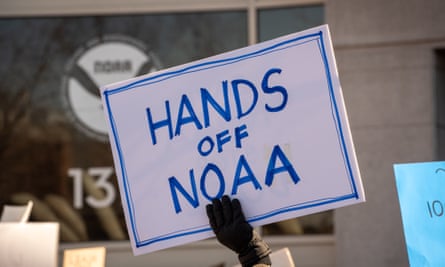
From the start of his second term, the president has taken aim at the National Oceanic and Atmospheric Administration (Noaa), slashing staff levels, canceling contracts and grants, and shutting down databases and research laboratories. The agency that has long been considered a global crown jewel in climate science and forecasting, has lost roughly 20% of its staff since January 2025.
The National Weather Service, which is housed within Noaa, has also taken a hit. Weather stations have had to delay data collection and cut operating hours, with hundreds of meteorological and other technical positions still vacant across its 122 forecast offices.
The effects have already been felt at Noaa, where a chaotic and volatile environment has plummeted morale, increased burnout and hampered vital work. While capacity has quietly unravelled, a large-scale disaster will quickly expose the most dangerous gaps.
“The system has not really been tested since all the cuts happened,” said Tom Di Liberto, a former Noaa climate scientist who now works as the media director of Climate Central.
That test could soon be coming.
This year’s super El Niño, a climate phenomenon characterized by warmer than average equatorial sea surface temperatures, has the ability to fuel extreme weather events around the world. It’s already climbing off the charts and is expected to strengthen through the northern hemisphere’s autumn and winter.
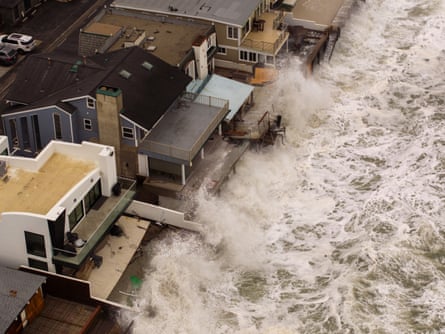
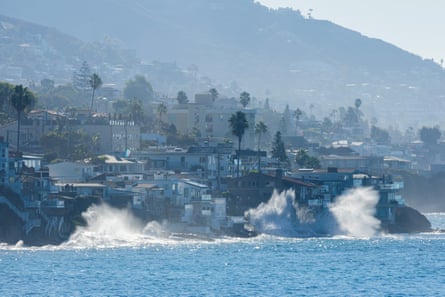
Along with dangerous spikes in temperature, El Niño will supercharge storms in parts of the American west, raise sea levels in California by up to a foot, and set the stage for debris flows, land slides and flash floods.
“Whether we as a country can handle the kind of coast-to-coast extremes that could potentially happen this winter is a big question,” Di Liberto said.
Noaa plays a pivotal role in public safety and provides key insights and forecasts relied upon by a vast array of communities and industries, from weather shifts that could affect crop schedules, to emergency response preparations when hurricanes are brewing or fire conditions are aligning. The agency operates early warning systems for tsunamis, monitors seafood supply chains and provides ocean data needed for safe shipping and port operators.
While the losses are expected to have a profound effect on the American public, they will be felt globally, too. Scientists and forecasters around the world depend on Noaa satellites, studies, and intelligence, including data-sharing arrangements that track severe weather across Europe, coordination for disaster response in the Caribbean and monitoring deforestation and the effects of the climate crisis in the Amazon rainforest.
“I worry about loss of life and about our inability to be protected at a time when we need our government the most,” said Monica Medina, who served as the principal deputy administrator of Noaa during the Obama administration.
The risks are but a taste of what’s to come as the world warms. “If this is a real test”, of a hotter, more precarious future, she added, “we’re going to flunk”.
Budget and research cuts
Gaps in staffing, operations, and engagement with the public are the top three concerns for Rick Spinrad, who spent three decades at the agency and served as Noaa administrator for the Biden administration.
The agency was already shorthanded in those areas when Trump took office, according to Spinrad. But since January 2025, Noaa has lost more than 3,000 staffers, according to workforce data from the US office of personnel management which was last updated in August this year.
It’s the biggest staffing drop in the last decade, and includes hundreds of people who lost their jobs during massive layoffs or who took incentives to retire or resign as the administration worked to systemically shrink the size of the federal government last year, along with those who left voluntarily.
Some departments have been hit harder than others.
The public affairs team that helps disseminate important information, was roughly halved. Information technology management workers, who provide vital support for forecasting and data infrastructure among other things, were reduced by roughly 27%. The data showed a loss of more than 500 staffers across a range of science positions with only 46 new hires.
There were also about 10% fewer meteorologists and meteorology technicians as the US went into autumn this year, even after the National Weather Service rushed to staff up in the aftermath of the Trump administration’s massive 2025 layoffs.
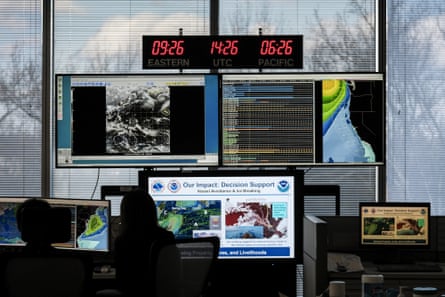
The NWS analyzes and collects roughly 6.3bn observations each day. They release 1.5m forecasts and up to 50,000 warnings each year. Cracks have begun to show, however, as the agency has tried to takes on its enormous and essential workload with fewer people.
Staffers had to work double shifts to keep some forecasting offices open, the Washington Post reported last September. Staffers who spoke to the Post at the time described an agency pushed to its limits.
Only 40 Meteorologists were added to the ranks across Noaa between January and August this year, with hundreds of vacancies across the country still open as a tumultuous winter approaches.
Overall, the agency was able to bring on just 525 new hires since January 2025, leaving a gaping 2,500-person deficit.
Already, staffing limitations have shown up in delayed or limited weather balloon launches that left parts of the Great Plains unprepared for tornadoes and limited warnings to rural communities in Alaska, where more than 1,500 people were displaced by floods earlier this year. The NWS also failed to adequately provide multilingual weather alerts due to staffing and funding cuts, the government accountability office (GAO) found, leaving 26 million people in the US at higher risk.
“There has been this hollowing out – there’s no time to do anything other than the very basics,” said Dr Anna Zivian, a climate researcher and policy expert. “I suspect we haven’t seen the worst outcomes from the loss of capacity yet,” she added. “You can’t pick up that kind of slack.”
Meanwhile, the Trump administration terminated dozens of grants representing a loss in more than $28m in funding for states, cities, non-profits and universities, according to calculations from Grant Witness, an organization that tracks science-related grant making by the federal government. Climate research has been the most affected, according to their analysis, which found that the number of grant awards in fiscal year 2026 was 37% lower than the 2021-2024 average.
Despite these concerns, the administration has outlined more plans to slash budgets and research capacity.
Trump has proposed cutting $1.6bn in Noaa funding – a 26% drop – for next year’s budget. While many of the cuts won’t make it through the budget process, they showcase how the president views the essential services the agency provides the American public and puts more pressure on the staff still working at Noaa.
“People at Noaa are nervous,” Di Liberto said, adding that employees across the organization are afraid they will get in trouble if they say something that conflicts with the administration’s anti-climate narrative.
“You want people doing their best work when we face these extremes,” he said. Denials of human-caused climate crisis coming from the top have only made their jobs harder, as scientists and forecasters work to put urgent information into context for the American public and others around the world.
“It’s incredibly difficult,” Di Liberto said. “Imagine being told the number six doesn’t exist and then being asked to do math.”
Requests for comment sent to Noaa and its parent agency, the Department of Commerce, were not returned before publication.
A missed learning opportunity
An El Niño year can be high risk, but it’s also an incredible chance to learn and prepare, offering a glimpse of what the world might expect as temperatures rise. In that regard, experts worry a shrunken Noaa is missing a vital research opportunity.
“This El Niño is so useful in a sense of getting an understanding about where we stand for dealing with extreme weather around the world,” Di Liberto said. “Unfortunately we’re going to learn a lot this winter about our ability to deal with multiple extremes happening at the same time.”
He and other experts have also expressed concerns that not enough has been done to ready communities for the coming hazards or capture important data that will inform the future. “When it comes to preparing for El Niño events – or any weather extreme – the preparation happens during the off season,” he said.
During the last strong El Niño a decade ago, the agency deployed planes, weather balloons, unmanned aircraft and a research ship to collect data. This year, only “a handful of unmanned watercraft”, will be deployed into the Pacific, NPR reported in September.
The Trump administration has also begun removing ocean monitoring systems that provide important data during El Niño and shaved roughly $6bn off of an investment secured for weather satellites that would have propelled major advancements in future weather predictions. The sharp reduction could create a gap in satellite coverage, according to an analysis from the government accountability office, severely disrupting data.
Funding for a decade-long project to monitor the oceans using autonomous robotic devices called Biogeochemical-Argo floats – part of a global effort – will also expire at the end of October.
“We are more capable than we have been in the past because of the developments in the technology, the satellites that were flying, the observing systems that we’ve put in place,” Spinrad said. “But everything that this administration is doing suggests that we cannot and will not sustain those capabilities. So the real question is – are we at a turning point now?”
KioskNews shows a cleaned-up reading view extracted from the publisher’s page — the original always lives on their site, not ours.