Stabbed, jailed, reborn: the chef who lost his love of food – then regained it behind bars

At first he thought it was just a nasty punch, but Nathaniel Mortley soon realised he had been stabbed in the back. This was true in two senses. Figuratively, because he had been set up by a friend, and quite literally – since his back was gushing blood, as he saw reflected in the pub toilet mirror.
It was 2010 and hours earlier, he had been at a street festival in south London. Life was looking up: he had just achieved good exam grades (14 GCSEs) and things were going well with his girlfriend. It was the final week before sixth form began and Mortley, who was 16 at the time, was due to continue his academic success, having signed up for five A-levels.
In the middle of the fun, his girlfriend’s friend directed Mortley down a street. There he found a group of boys waiting for him. In the past, he’d had verbal clashes with them, but this was different. It was an ambush. Realising he was in trouble, he ran around a car and felt a blow to his back. When he looked behind him, he saw three of the boys flashing knives.
Mortley ran into a pub and went straight to the toilet. His back “felt like it was on fire” and he lifted up his jacket and saw the wound. Panicked, he left the toilet and went into the packed pub seeking help. “I think I’ve been stabbed,” he said to the woman behind the bar, and she told him to sit down. The moments after are a bit of a blur. He was taken upstairs, downstairs, and then the ambulance arrived. Paramedics began cutting his clothes off. The next thing he remembers is waking up in a hospital bed.
The incident was “a major thing in my life,” says Mortley, 32. “It caused me to have a lot of anger, resentment and emotions that I’d never been through before.” I meet him early in the morning at 2210 By Natty Can Cook, his Caribbean restaurant in Herne Hill, south London. He asks how my weekend has been. Fine, but nothing too exciting, I say, and throw the question back to him. He doesn’t take days off, he says, preferring to keep busy. It’s prep day and there’s a snag before he can settle down for a chat: they’ve run out of carrots. He pops out to get some before taking a seat.
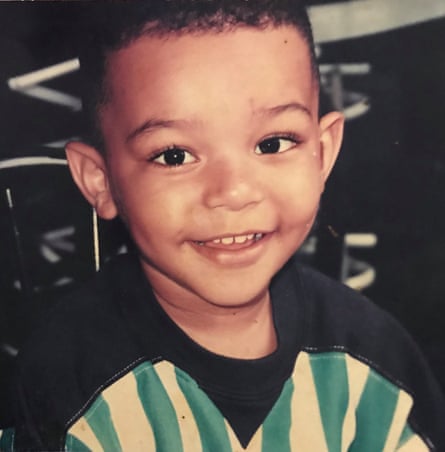
He might spend every day in a kitchen now, but while he was growing up it was the one room he avoided. “My first ever kitchen experience was me peeling potatoes for my granny,” he says – fiddly grunt work for most adults, never mind a six-year-old. He was more interested in the end result, feasting on fried chicken, brown stew chicken and, his favourite dish to this day, curry goat and roti.
Mortley was diagnosed with attention deficit hyperactivity disorder at four years old but still excelled in school. He came from a fairly well-to-do family and was a keen rugby player. “Everything was cushty – I was a happy-go-lucky type of guy,” he says. But shortly before being stabbed, he’d fallen in with the wrong crowd. “They were involved in gangs and had stabbed some guys,” he says. He remembers how “stupid” some of his friends were at the time, gleefully bragging about the bad things they did. He believes this is why his girlfriend’s friend set him up: for the glory.
After the stabbing, he changed. “I was rolling with a knife for protection, thinking I didn’t want this to happen again. I was paranoid. It wasn’t a good place to be in,” he says. Not long after, he was arrested for actual bodily harm after getting into a fight in a nightclub. He spent the night in Belgravia police station, looking up at the ceiling of the cell where a prescient message was plastered: Are you sick and tired of being sick and tired? “I was thinking: ‘This is mad,’” he says.
His family weren’t happy. “My mum tried her hardest to keep me on the straight and narrow. No matter what she did, I’d always waver back to the excitement,” he says. His grandfather threatened to “ship me back to Guyana” to instil some discipline. Mortley, however, soon found solace in cooking. He dropped out of sixth form and, encouraged by family, enrolled in catering college, where he learned the basics (and was given a seemingly random workshop hosted by Talk to Frank, a government anti-drugs campaign, which would become prescient a few years later).
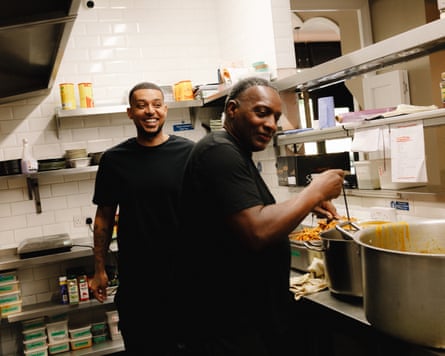
At 18, after graduating, he got some agency work cooking for athletes taking part in the 2012 London Olympics, where he earned about £800 a week. “I thought that this was what the cheffing world was like. I’d forever be making this type of money,” he says. But his next job catering for a university was a stark awakening. His income halved. Then he got a role as a commis chef at Oblix, a restaurant on the 32nd floor of the Shard, the tallest building in western Europe. “I went from knowing nothing to learning quite a lot very quickly,” he says. The head chef took Mortley under his wing, and he came in on his days off to learn the more skilled tricks of the trade, including butchery and fish preparation. “I really wanted to excel in it,” he says. By the age of 21, he was running the kitchen and regularly catering for about 450 customers a day. It was when he left Oblix that “things started to go a little bit left”.
His goal was to work in Michelin-starred kitchens, and over the next few years he moved around various jobs to make that happen. It was back-breaking work. Mortley often worked 110 hours a week and he was often the only black chef in the kitchen. This made him the target of racist comments. “They would say things like: ‘Which one of your friends have been stabbed today?’ It wasn’t funny because my everyday norm is what you’re joking about,” he says. He also witnessed “chefs get battered” in a number of ways. Some were slapped or punched by higher-ranking chefs; others were slammed with hot pans or burned with plates on purpose. It was in this environment, where he spent most of his waking hours, feeling out of place, that he lost his passion for cooking.
Another thing he’d observed was rampant class A drug use. “That’s when my attention got diverted,” he says. “I thought: why not try to make a bit of extra money at work?” It started off fairly small. He’d call a mate to facilitate a drug deal and earn an extra £50 or £100 here and there, which came in handy since, Mortley says, he was earning about £4 an hour when he broke down his hours. Soon, he got rid of the middlemen and things spiralled. “It went from something small to something big,” he says.
When I ask how much he was making, Mortley is coy, though he says it was a “substantial amount” (he prefers not to specify which drugs were involved, either). He began partying, enjoying himself after “five years of non-stop graft”, though he says he never took drugs himself. “It was a bit of fun until shit hit the fan,” he says.
One night in 2016, after leaving a party, he had some drugs on him. He was heading towards a car with a girl he had met when he was trailed by some shadowy figures. He was drunk, so it took him a moment to realise it was the police. They carried out a “random stop” and found drugs in his possession; an investigation of his phone also opened “a can of worms,” he says. The police drove to his mother’s house, where Mortley had been staying, and discovered more drugs and “a lot of money” in his bedroom. He was arrested on the spot. His mum, who had no idea what he was up to, was blindsided. “She couldn’t really believe it – the police had never come to the house before,” he says.

Mortley pleaded guilty and was released with a sentencing date pending. Trying to get back on the right track, he continued working in catering and impressed a high-end chef who put him forward for the World Young Chef award, where he was up against competition from top Michelin-starred kitchens. He took part in a cook-off, where he made a jerk chicken ballotine with a yam fondant, impressing the judges enough to make it to the final. But a week shy of the final showdown, Mortley was summoned to court for sentencing.
By now, it was 2019 and he was 24. He tried to make the argument that he had “lost his path because of the pressures of the kitchen” but the judge disagreed. He was given a five-year sentence and taken to HMP Belmarsh, a Category A prison.
The first night in his cell was cold, uncomfortable and noisy, but Mortley had made peace with his sentence. “I can’t be mad at anyone. It’s me who made this decision. I was very much a firm believer of: these are my consequences for what I’ve done,” he says. It also helped that he had a plan: to serve most of his sentence in HMP Brixton, where there is a Clink restaurant, where prisoners can hone their cooking skills and serve the public, who are allowed to dine within the prison walls.
After a few weeks of putting in transfer applications, Mortley’s wish was granted. At first, though, he thought he’d made a horrible mistake. Unlike Belmarsh, which opened in 1991, Brixton has housed prisoners for more than 200 years.
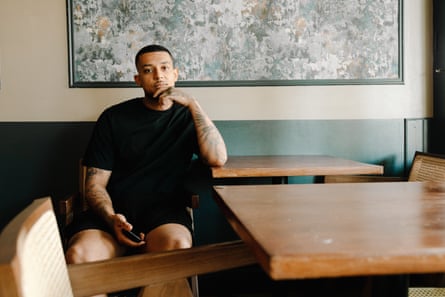
But he ran into people he knew from the local area, which made it “feel like school”. He was given a cell in the enhanced wing, where he had a separate toilet and a wooden bed. And he was given a job at the Clink, starting off on pot-washing before making his way up the ranks. “It helped me get back my passion and made me realise what I wanted to do with my life,” he says. Once he was spending most of his time in the kitchen, he says, the “days were just flying by”. He regularly cooked for higher-ups in the prison, including one staff member he calls his “number one guv” who “got to know his cooking really well”.
Mortley also sorted out his fellow prisoners, although with a far smaller culinary arsenal: a kettle and toaster. He would zhoosh up leftovers from the canteen and remake them into flavour-packed meals by adapting the kettle, cooking down spices with the covered coil. He also made poached eggs and even a cake in the kettle. On Sundays, he would use the toaster to re-grill marinated chicken, feeding about 20 of his fellow prisoners. “Food is a very big currency in jail because it’s the one thing they can’t take away from you,” he says.
He served two and a half years. After his release, in August 2021, he wanted to make up for lost time. Within three weeks he was back working in a kitchen again. In April 2022, he took the plunge and uploaded a cooking video to social media, something he had wanted to do for nearly a decade but hesitated about until now. “I didn’t want to look like an idiot. I was scared of putting myself out there,” he says. But he gained an audience fairly quickly, showing off his high-end culinary training while sharing his story, and was offered a residency at a pub, running the kitchen for a share of the revenue.
Mortley’s restaurant, 2210, opened last year. He admits the first day was “horrible”. With 12 starters, 12 mains and four desserts on the menu, it was too much for his kitchen to handle. “I put out a message on my social media after apologising and saying it’s my first time doing this,” he says. He has since scaled down the menu and now things have settled in nicely. He has even earned some plaudits, including from the Guardian: in November 2025 Grace Dent gave 2210 a rave review. The restaurant is also on the Michelin guide and Mortley hopes a star is soon on the cards. But he is just as happy feeding familiar faces.
As our interview comes to an end, a shipment of meat has arrived. It’s just turned noon and there’s a long day of prep still ahead. Mortley tells me that the other day, he received a call from his “number one guv” in HMP Brixton. They called to book a table.
KioskNews shows a cleaned-up reading view extracted from the publisher’s page — the original always lives on their site, not ours.