US-China-Russia talks: as Seoul fears ‘another Yalta’, could Pyongyang emerge the winner?
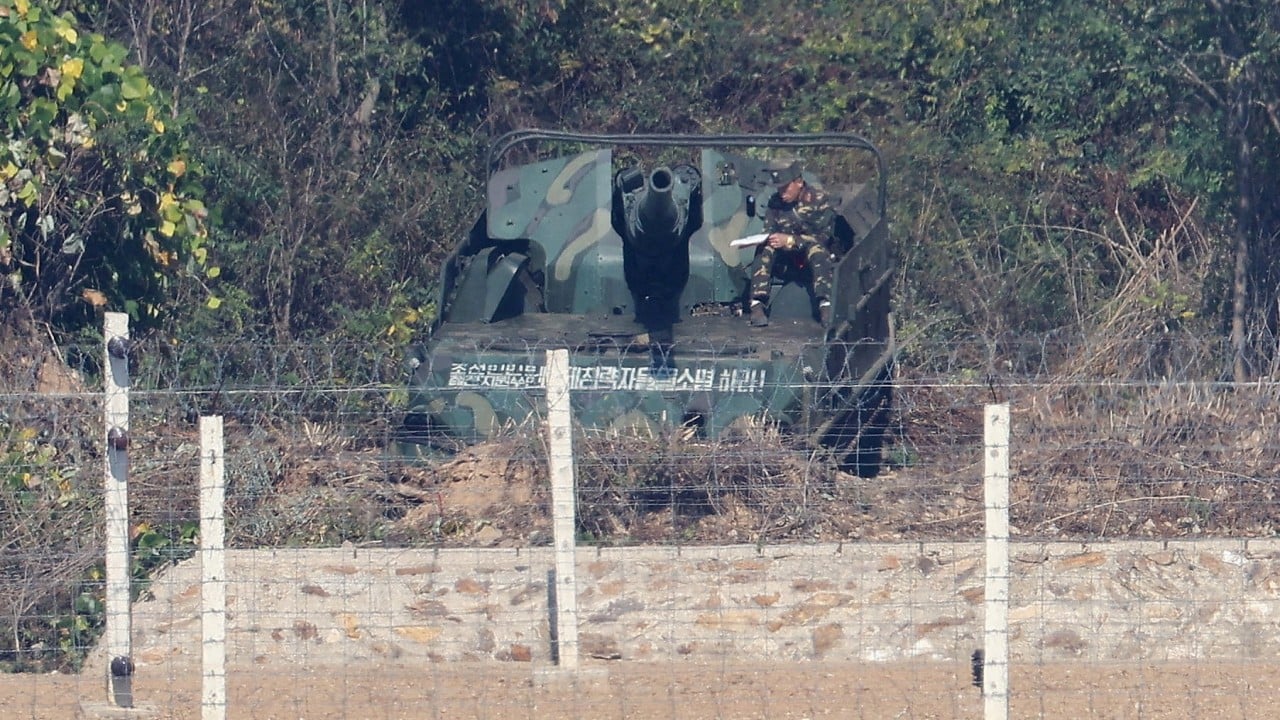
South Korea fears that nuclear arms talks this week between US President Donald Trump and his Chinese and Russian counterparts could undermine efforts to denuclearise North Korea, potentially leaving Seoul sidelined in decisions affecting its own security.
Analysts and South Korean officials have expressed concern that the talks may treat the North as an established nuclear power, weakening international pressure on Pyongyang to give up its weapons in favour of efforts to limit its arsenal.
The planned meeting between Trump, Chinese President Xi Jinping and Russian leader Vladimir Putin on Thursday has also revived memories in Seoul of the 1945 Yalta Conference, where great-power diplomacy helped shape the post-World War II order and set the stage for the eventual division of the Korean peninsula.
“South Korea is worried that the tripartite summit could be a repetition of the Yalta Conference, where major powers reshaped the world order without consulting countries such as Korea that were directly affected by their decisions,” Koh Yu-hwan, an emeritus professor at Dongguk University, told This Week in Asia.
On Saturday, a senior South Korean foreign ministry official said he had raised concerns about the US-China-Russia summit’s potential implications for Seoul during separate meetings with his American and Chinese counterparts.
“I explicitly told my Chinese counterpart that the US-China-Russia summit should not become another Yalta Conference,” the official said on condition of anonymity.
“We have emphasised that no decisions should be made – such as recognising North Korea as a nuclear-armed state or undermining efforts to establish a peace regime – that would run counter to our government’s objectives, and China understood this well.”
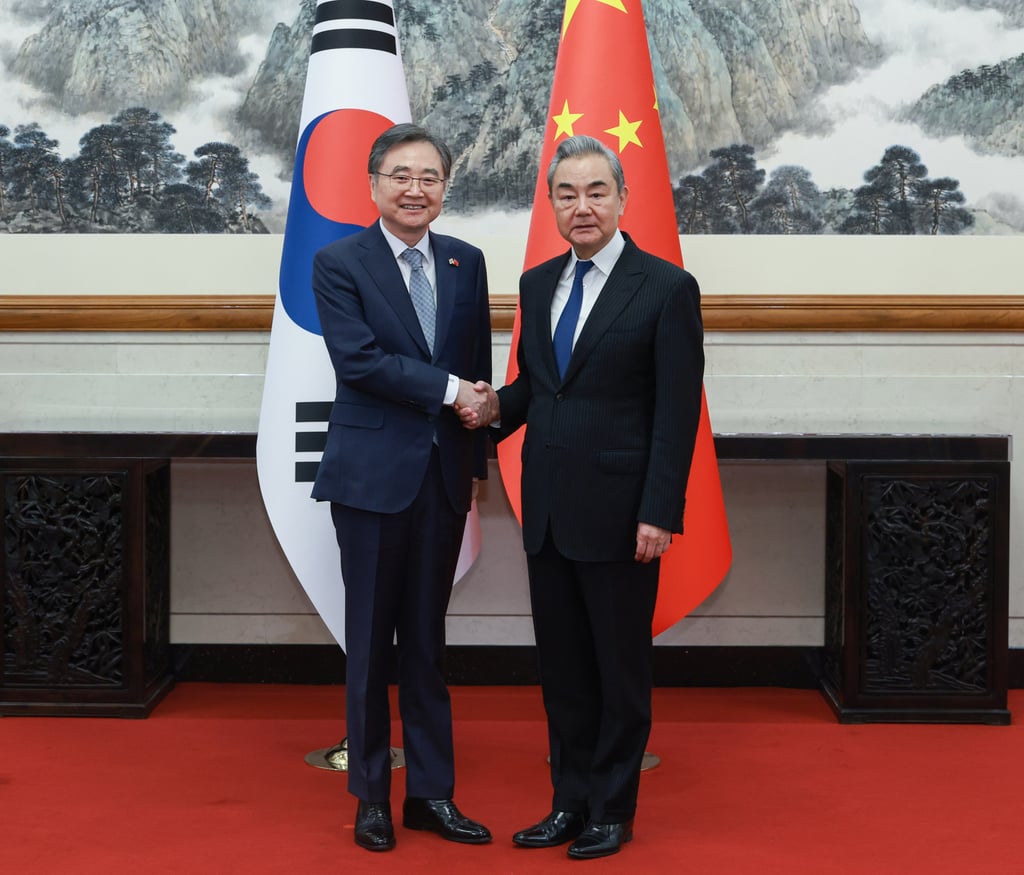
Last Friday, South Korean Foreign Minister Cho Hyun met his Chinese counterpart Wang Yi in Beijing, stressing that “the Korean peninsula issue is a matter of vital interest to us”.
The original Yalta Conference was held in February 1945, bringing together the leaders of the United States, Britain and the Soviet Union.
The three powers at the time discussed placing Korea, then under Japanese colonial rule, under a multilateral trusteeship before it gained full independence following Japan’s defeat.
Korea, however, had little say in the later division of the peninsula that saw the South placed under US military administration and the North under Soviet military rule.
For Seoul, the concern goes beyond the prospect of another Yalta-style agreement. Even without a formal deal, discussions that shift the focus from eliminating North Korea’s nuclear weapons to managing its arsenal could weaken the long-standing international commitment to denuclearisation.
Trump has made clear that he intends to discuss reducing nuclear weapons worldwide, arguing that their proliferation is “very dangerous”, White House spokeswoman Olivia Wales has said.
Iran is also understood to be on the agenda, while Ukraine is not expected to feature prominently.
No agreement is expected to emerge from the talks, an unnamed senior US official was reportedly quoted as saying.
01:51
North Korea’s Kim attends live-fire drone and rocket demonstration in Wonsan
Koh said the Korean peninsula issue was likely to take a back seat to the major powers’ immediate strategic priorities.
“But Seoul is concerned that its security interests could become subject to Trump’s transactional diplomacy, potentially reinforcing North Korea’s narrative that its nuclear weapons are necessary to defend itself against hostile forces,” he said.
Cha Du-hyeogn, a senior research fellow at the Asan Institute for Policy Studies, warned that China and Russia could use discussions on nuclear arms reduction to reinforce Pyongyang’s argument that its weapons were defensive and necessary to counter US hostility.
The concern is particularly acute because South Korea has traditionally taken part in multilateral negotiations over the North’s nuclear programme, but would have no seat at the trilateral summit.
Seoul’s unease has also been fuelled by signs that Beijing and Moscow are increasingly emphasising political negotiations rather than dismantling Pyongyang’s nuclear arsenal.
In a joint statement issued after their summit in May, Xi and Putin merely called for a “political solution” to issues surrounding the Korean peninsula, and voiced opposition to diplomatic isolation, economic sanctions and military pressure on North Korea.
For Seoul, the worry is that any shift towards accepting North Korea’s nuclear arsenal could influence Washington’s approach and make it easier for Trump to pursue a separate deal with North Korean leader Kim Jong-un that limits or freezes his nuclear programme, rather than requiring its dismantlement.
Kurt Campbell, a former US deputy secretary of state, said last week that North Korea’s apparent demand for recognition as a nuclear power could complicate Trump’s efforts to arrange another summit with Kim.
“My understanding, at least, is that the North Koreans have communicated to the United States that the only condition under which there could be consideration for a summit is if the United States accepted North Korea as a nuclear power,” Campbell said during a press briefing hosted by the Asia Group.
“Given the current circumstances, I think that would be almost impossible for President Trump to accept,” he said, noting that such a move could face opposition from both Republicans and Democrats in Congress.
Cha similarly saw little prospect of an early Trump-Kim summit, saying negotiations with Pyongyang were likely to rank below the conflicts in the Middle East and Ukraine on Trump’s list of priorities.
“Even if President Trump harbours a personal fondness for Kim and maintains an interest in negotiations, he must weigh what could realistically be gained from a US-North Korea summit,” Cha said.
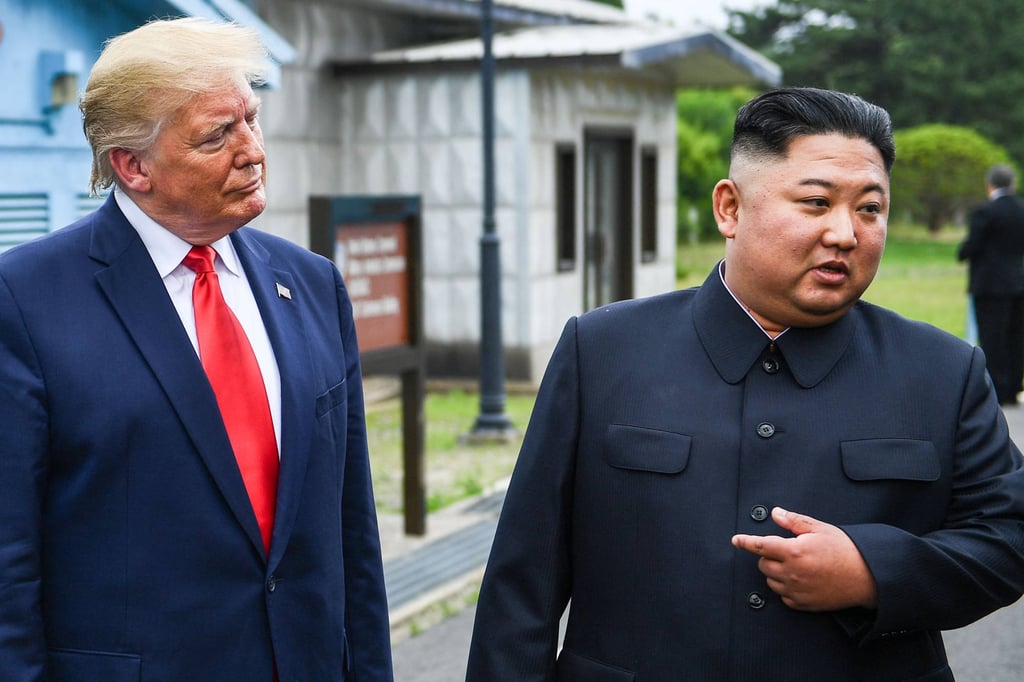
Unlike in 2018 and 2019, a meeting with Kim could no longer be touted as an achievement in itself, and North Korea was likely to demand a much higher price for returning to negotiations, he added.
Cha also warned that any deal effectively condoning North Korea’s nuclear arsenal could provoke backlash, particularly given Trump’s hardline stance towards Iran over its nuclear ambitions.
He said there was a remote possibility that Trump could pursue what he described as a “bad deal” with Pyongyang, but believed an early summit was unlikely.
The possibility of Washington shifting from denuclearisation to negotiating limits on North Korea’s arsenal has meanwhile prompted warnings in the South Korean media.
In an editorial published on Monday, the Korea JoongAng Daily urged Seoul to secure a firm commitment from Washington that future negotiations with Pyongyang “will not replace denuclearisation with a nuclear freeze or arms control arrangement”.
“The South cannot afford to become a bargaining chip in negotiations among nuclear powers. It must directly represent and protect its security interests throughout the diplomatic process,” it added.
The Korea Times argued on Sunday that South Korea “has both the standing and the means to make its voice heard” and its future “will be determined by the choices it makes today, not by agreements or treaties struck by other countries behind its back”.
KioskNews shows a cleaned-up reading view extracted from the publisher’s page — the original always lives on their site, not ours.