Limited access: Reducing mobility issues for people with physical challenges
After losing part of a leg following an accident as a teen, Juan Sánchez, 32, learned to adapt. He chose to use crutches instead of a prosthetic, and says he has gotten quite fast walking around his hometown of Tonalá. But tile floors, pieces of plastic on the ground and uneven sidewalks still cause problems.
“I’m careful,” he says. “I have slipped and fallen a few times.”
Sánchez is one of millions of people in Mexico living with mobility issues. According to the National Institute of Statistics, Geography and Informatics (INEGI), more than 6 million people in Mexico live with a disability.
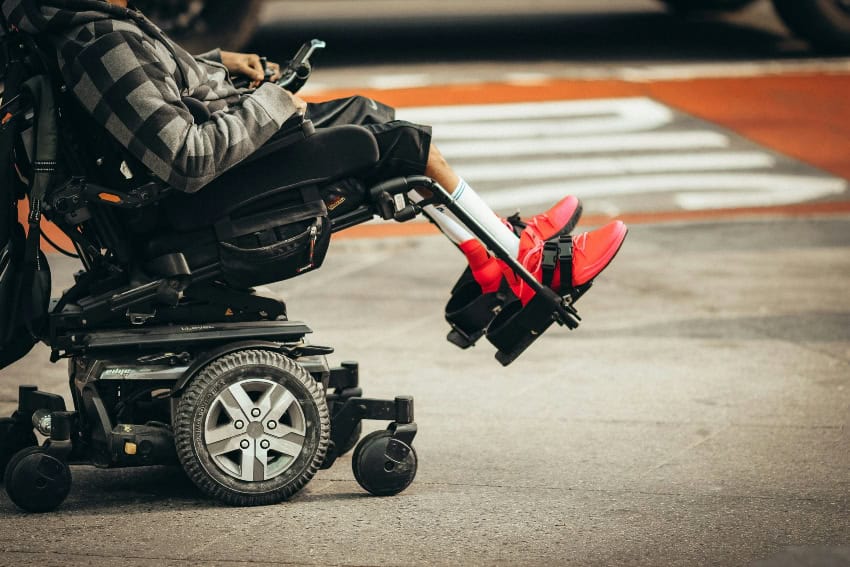
Mobility challenges, such as walking, climbing or navigating stairs, are the biggest issues for people with disabilities. Negotiating uneven sidewalks, cobblestone roads and public transit is also challenging and, for some, limits their independence. Impairment, meanwhile, can make it difficult to control body movements or posture and can affect basic daily activities. A person with impaired mobility may use a wheelchair, crutches or other aids.
Already, more than half of those with disabilities are over age 60, and the population continues to get older.
Supreme Court mandate sets a new baseline
Recognizing mobility as a human right, Mexico amended its constitution in 2020 to grant every person the right to safe, accessible and efficient mobility. Since then, many improvement projects have focused on public transportation.
In January 2026, Mexico’s Supreme Court (SCJN) issued a ruling intended to transform the nation’s public transit system. The ruling aligns with the equality and nondiscrimination principles outlined in the constitutional amendment.

It’s a welcome development in the nation’s capital, where 71% of the population uses public transportation.
For instance, Mexico City Metro was ordered to ensure total accessibility for riders. That means doubling the number of seats reserved for people with disabilities, older adults and pregnant women, as well as removing physical barriers inside stations to reduce obstacles that hinder movement. This sets a precedent that the rest of the nation will need to follow.
Desire and disability: Netflix México’s ‘Santita’ challenges everything we knew about taboos
Meanwhile, Metrobús is adding universal, inclusive design elements that anyone can use without assistance. Guadalajara is also improving public transit by modernizing and maintaining the elevators and escalators at transit stations. In preparation for the World Cup, Tlaquepaque trained hospitality workers to provide accessible and inclusive services.
A holistic approach to accessible infrastructure
While the SCJN ruling goes a long way toward improving transit systems, the bigger problem for many is getting to them.
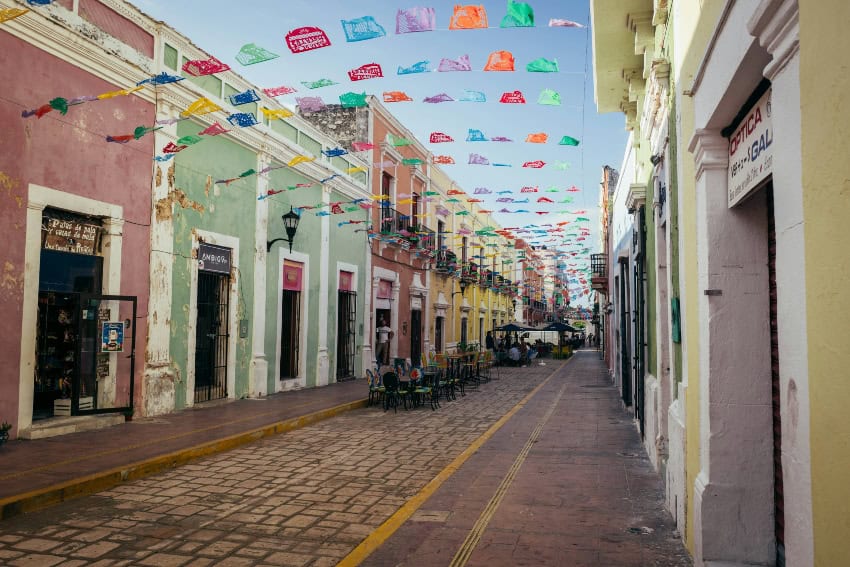
Sánchez’s experience with uneven sidewalks and surfaces that cause his crutches to slip is not unique. Many cities have sidewalks that are uneven, narrow, lack ramps for wheelchairs or are routinely blocked by vehicles or other barriers. Often, roads aren’t any easier to navigate because of cobblestones, potholes or unsafe traffic patterns.
“We have to think about the whole trip, from the moment the person leaves home until they reach their destination,” says Dr. Rigoberto Antonio Cisneros García. He is one of the authors of the recently published “Proposal for Addressing Motor Disabilities in Mexico,” created jointly by the Centro Universitario de Ciencias de la Salud (CUCS) and the Mexican Foundation for Health, A.C. (Funsalud). The proposal hopes to improve the care and understanding of mobility issues in Mexico.
He highlights the need for accessible infrastructure that would allow more independence without relying on others for assistance.
“Mobility is a precondition for exercising almost every other right,” Cisneros García says. This includes receiving medical care, attending school, keeping a job and spending time in the community. He highlights the need for a collaborative network that complements public services and addresses the needs of affected individuals.
Overcoming distance to access key services
The System for the Development of the Family (DIF) is an important piece of infrastructure for those with mobility challenges. With locations throughout the country, DIF works to improve quality of life for people with disabilities. It distributes free assistive devices, such as wheelchairs, walkers and canes, and provides rehabilitation therapy.
But accessing these services often requires significant travel.
“It would be good if these places were closer,” Sánchez says, “because sometimes they’re located very far away.”
The offices he needs to access for disability paperwork and other services are about an hour’s drive or roughly two hours by public transit. For those with mobility issues, long trips are a barrier, especially if they need someone to assist them. That person may have to take time off work or plan around other obligations.
Sánchez has adapted well to his mobility challenges over the years. He wants others to have the same success and for his fellow citizens to be considerate of those with mobility issues. He notes that people often block ramps and sidewalks, making it more difficult for him to maneuver.
The MND Mexico Well-being Series, Part 1: Health and healthcare
As a country, Mexico is making strides in accessibility but has much work to do. Prioritizing accessibility with a national network of services is key.
“We can’t expect to solve this problem if we design all our services from a desk or an office,” Cisneros García says. “Especially if we expect the most vulnerable people to come to us.”
KioskNews shows a cleaned-up reading view extracted from the publisher’s page — the original always lives on their site, not ours.