I grew up watching Mexican stereotypes. Hollywood hasn’t changed much
William Nericcio, like most of the roughly 500 million residents living in Mexico, the United States and Canada, grew up watching popular television shows and consuming major media outlets.
As a Chicano raised in Laredo, Texas — one of the most densely populated Latino cities in the U.S. — Nericcio regularly saw himself and his community reflected in popular media. Often, however, those portrayals weren’t very accurate or authentic, instead relying on repetitive tropes and one-dimensional stereotypes that Hollywood has been recycling for generations.
#NewProfilePic https://t.co/lbCa4WKiVl
— William Nericcio (@eyegiene) July 6, 2026
Nowadays, as a professor of English and comparative literature at San Diego State University and co-author of “Talking #browntv: Latinas and Latinos on the Screen,” Nericcio’s work largely focuses on the historical depictions and evolving complexities of his community on the screen.
Predictable stereotypes
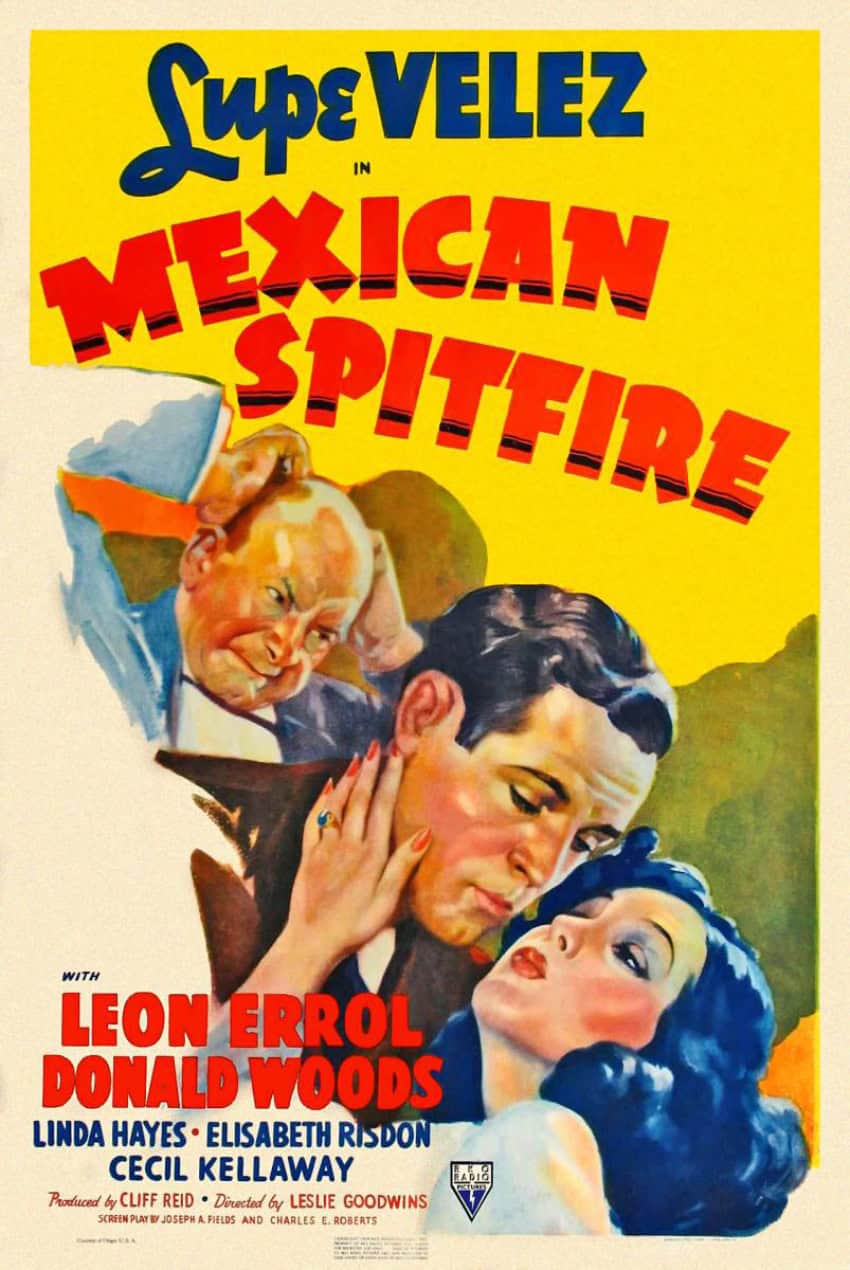
“There are particularly demented representations of your average Mexican (as being) violent, dirty, lazy,” Nericcio tells Mexico News Daily. “If they’re a woman, they like good sex. They’re gonna take things from you. They’re a spitfire. Temptresses (who) carry daggers. That’s the signifier of our violent deviance as Mexicans.”

While Nericcio admits that he likes shows such as “Breaking Bad” and “Narcos” — two popular series featuring prominent Latino characters — he says that representations of Latin Americans have largely remained stagnant and predictable.
“I watched ‘Better Call Saul’ (the ‘Breaking Bad’ spinoff) and after that, even I would cross the street (after seeing a Mexican person in public),” he jokes. “They don’t just kill. They kill with the artistic vision of Salvador Dalí. It’s killing cubed, masterful.”
Century-old tropes still being used
Of course, those kinds of derogatory character oversimplifications have existed for more than a century, going back to 1894, when the short film “Mexican Knife Duel” premiered, marking one of the earliest known forms of Mexican protagonists in U.S. media.
Quoting the scholar Gary D. Keller, the Library of Congress notes that “These films villainized Mexican men and sexualized Mexican women, a pattern that would recur all throughout the 20th century.”
My childhood through Hollywood’s Mexican lens
As a California-raised Mexican American myself, who came of age in the 1990s and 2000s, I can relate. For decades, Mexican characters have too often been minimized in U.S. media, flattened into binary archetypes. Think Speedy Gonzales, who’s portrayed as charming, quick-witted and brave, or his familial counterpart, Slowpoke Rodriguez, slow but cunning and dangerous.
Some of my earliest memories of action flicks are films like “Desperado” with Antonio Banderas and Salma Hayek. In it, Banderas plays El Mariachi, a stone-cold assassin who packs firearms in his guitar case. Hayek’s Carolina, meanwhile, causes car accidents when crossing the street because of gawking men.
Like Nericcio, however, I’ll admit that “Desperado” was one of my favorite movies growing up.
I can also recall films like “The Sandlot,” which featured the character Benny “The Jet” Rodriguez, a baseball-loving kid who, in retrospect, is arguably one of the most fleshed-out Chicano characters ever portrayed. Rather than focusing on his cultural differences or moral deficiencies, Benny is just a regular kid who dreams of making the big leagues. It felt relatable to me back then, and in many ways still does. Benny’s heritage is neither a strength nor a weakness, and besides the name on the back of his jersey, his latinidad was never a factor.
A.C. Slater, played by Mario Lopez in the popular TV series “Saved by the Bell,” was similarly down-to-earth in the ’90s.
Profit over authentic representation
But those examples of wholesome, fully dimensional Chicano and Chicana figures were hard to come by, in my memory.
“It’s called show business, not show ethnography,” Nericcio says. “It demands a profit. What gets a profit? What has worked before. Hollywood is about rebroadcasting images that are tried and true: the criminality of the Mexican.”
Nericcio goes on to say, “It’s how Trump blasted his way into office. He hoodwinked Latinos by saying he’s good for the economy (and fueling media stereotypes about the threat of Mexican immigrants). Folks fall for this.”
In that sense, what’s shown on the screen has real-world consequences and larger implications. It’s not simply about wanting to see more diverse representations of Chicanos and Chicanas in popular media; it’s about how, by not diversifying characters, beliefs can be formed and popularized to negative ends.
Amongst this deluge of negative portrayals, there have been several authentic representations that, unlike A.C. Slater or Benny Rodriguez, also reflect on the lived experiences of Latin populations.
Nericcio points to two of his favorite examples: 2006’s “Children of Men” and 2008’s “Sleep Dealer.”
Both films are set against a dystopian backdrop, allowing social commentary about immigration, exploitation and labor to be at the core of the films’ messaging.
Perhaps more importantly, though, each film was directed by Latinos, with Alfonso Cuarón helming “Children of Men” and Alex Rivera crafting “Sleep Dealer.”
“It’s sci-fi about the future,” Nericcio says of “Sleep Dealer.” “It follows a cyber-bracero who plugs into the matrix and sells his labor by staying in Mexico. The film broadcasts corporate America’s biggest wet dream. Labor without the Mexicans. We don’t want their bodies; we want their food and their labor … we don’t want to hear them speaking. The film is a brilliant portrayal of Mexican subjectivity on the border in its complexity.”
The push for change in writers’ rooms
Those films, though, don’t often generate as much box office success. “Children of Men” was considered a commercial disappointment and was unable to recover its production budget during its theater run. This, despite receiving fairly critical acclaim and a cult following, including three Academy Award nominations, while being retroactively lauded as one of the best thrillers of its time.
“Latino filmmakers are making stories that feature Latino and Mexican actors, but with storylines that aren’t ripped from the tabloid headlines,” Nericcio says. “But most people don’t watch. The progress that will come, if it will come, will come from numbers. Are more Chicanos in film school? Are more of them breaking into creative spaces? The key is the writers’ rooms.”
In that case, the present and future look as grim as the past.
Under-representation in the film industry
In 2021, the Los Angeles Times reported that “Latino representation among film writers is even worse than Latino representation on screen: Since 2008, Latinos have never constituted more than 5% of employed Writers Guild of America (WGA) film writers, according to the available data.”
Earlier this year, the University of California, Los Angeles shared statistics from the LA Times’ De Los, which found that “in 2024, only 1% of leading roles went to Latinos; less than 5% of directors were Latino; and approximately 2% of writers were Latino. Latinos make up nearly 20% of the U.S. population.”
Same old Hollywood
In 2015, Nericcio attempted to do his part by developing his own show, “Mextasy,” that sought to “rewrite televised borders, rethink televisual borders or fronteras, revealing the pulsing, growing body of Latin America alive and thriving within and outside of Uncle Sam’s unknowing body to celebrate the Latino experience throughout the world.”
The show never took off. But the concept — and the intent — remains as urgent today as it did more than 10 years ago, when Nericcio pitched his idea to networks.
“I’m a Chicano from Laredo, Texas, who thinks I’m Anthony Bourdain,” Nericcio jokes. “But it didn’t get picked up. Hollywood will crush your soul.”
As ever, it’s up to consumers to dictate, through our wallets and watching power, what we do or don’t want to see.
It’s something I think about whenever I have the urge to watch the latest hit show or visit a theater (rare for me as the dad of a toddler, but still). Putting our money behind genuine creatives in the communities we’re from is one of the only ways we have to shift the tides.
Until then, Hollywood will continue Hollywood-ing when it comes to its interpretations of Mexican and Mexican Americans.
Alan Chazaro is the author of “These Spaceships Weren’t Built For Us” (Tia Chucha Press, 2026), “Notes from the Eastern Span of the Bay Bridge” (Ghost City Press, 2021), “Piñata Theory” (Black Lawrence Press, 2020), and “This Is Not a Frank Ocean Cover Album” (Black Lawrence Press, 2019). He is a graduate of June Jordan’s Poetry for the People program at UC Berkeley and was selected as a Lawrence Ferlinghetti Poetry Fellow at the University of San Francisco. His work can be found in NPR, The Guardian, SLAM, GQ, L.A. Times, and more. He is currently based in Veracruz.
KioskNews shows a cleaned-up reading view extracted from the publisher’s page — the original always lives on their site, not ours.