Further rate rises risk tipping economy ‘over the edge’
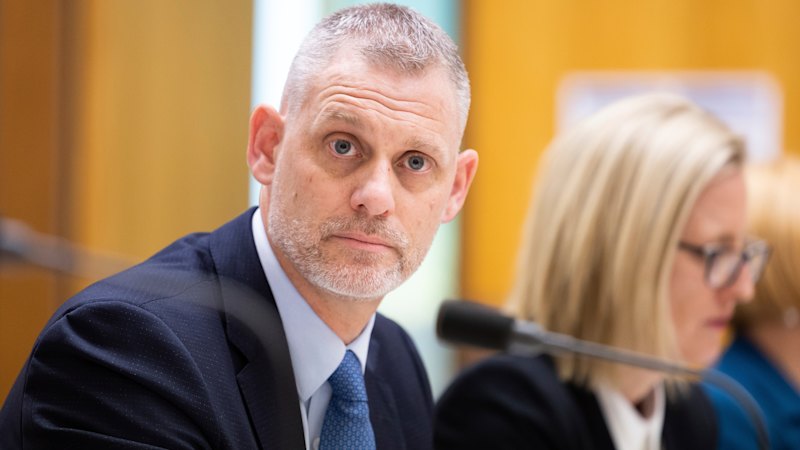
The chief economist of the nation’s biggest bank has warned the Reserve Bank could crash the economy if it pushes up interest rates much further amid signs oil prices could be stuck above $US100 a barrel in the run-up to Christmas, adding to inflation pressures.
Luke Yeaman, the Commonwealth Bank’s chief economist, said the RBA ran the risk of putting the country into a recession by jacking up rates when the full impact of its four rate hikes this year are yet to flow through the economy.
This masthead revealed on Monday that the RBA is concerned that high oil prices caused by the war in the Middle East and between Russia and Ukraine are making its job to bring down inflation more difficult, forcing the bank to consider further interest rate increases that it knows will hit the jobs market and broader economy.
The bank pushed the official cash rate to a 15-year high of 4.6 per cent at its most recent meeting in September. Markets put the chance of a follow-up rate rise at the bank’s November meeting at one-in-five.
That could change depending on September quarterly inflation figures due to be released next week.
Yeaman said the amount of economic uncertainty, and the lag between changes in interest rate settings and their impact on the economy, meant further tightening of monetary policy was fraught with risk.
“With households already under pressure and a depressed housing market, any further rate hikes risk tipping the economy over the edge,” he said.
“This argues for a conservative approach to policy, with the RBA staying in ‘fine-tuning’ mode to avoid crashing the economy. At most, they may have to hike one more time to bring inflation back to target in a reasonable time frame.”
Economic growth has slowed this year, expanding by 0.4 per cent in the June quarter. A recession is often defined by two quarters of negative growth, last seen during the early stages of the pandemic in 2020.
Yeaman said if the bank pushed up interest rates too far it could lead to the federal government lifting spending to protect consumers and the overall economy.
Treasurer Jim Chalmers has promised that his mid-year budget update, expected in December, will contain spending cuts. He has also played down the prospect of further cost-of-living relief.
“These are the right words, but delivering a ‘contractionary’ mid-year update that can take additional demand out of the system and support the RBA will be a hard task, given increasing stress on household budgets and ongoing structural pressures on the budget,” Yeaman said.
Oil prices remain a big problem. Brent crude at the weekend almost touched $US110 a barrel, its highest level since May.
Westpac’s head of business and industry economics, Sian Fenner, said it now appeared Brent will average $US101 for the final three months of the year before slipping to $US77 a barrel by late 2027. The Reserve Bank had expected Brent to ease to around $US81 a barrel this year.
Fenner warned that diesel and petrol prices were likely to take longer to ease, with a risk that if the war in Iran escalates it could set the price for Brent around $US150 a barrel, which would then leave inflation in Australia above 4.5 per cent for most of 2027.
“The RBA faces a difficult trade-off between much higher inflation and a significant hit to activity, as households cut discretionary spending and businesses defer investment,” she said.
Reserve Bank assistant governor Chris Kent, speaking at a Commonwealth Bank function in Sydney on Monday, noted that high oil prices were continuing to be a major factor in global and domestic inflation.
Noting the full impact of past interest rate increases were yet to flow through the economy, Kent said the Reserve Bank’s monetary policy committee was constantly facing the same question.
“Is it [monetary policy] restrictive enough?” he said.
Kent said that there were signs that the labour market was starting to slacken while household spending was also easing.
Central banks believe household spending is affected by the so-called “wealth effect”, under which consumers will increase expenditure if they are feeling more wealthy. A key source of wealth is property, with climbing house prices often associated with strong household spending.
Pressed on the government’s budget changes to negative gearing and capital gains tax, which many analysts believe have contributed to the fall in property values since the start of the year, Kent said they appeared to have reduced investor activity in the housing market.
Kent said the policies were aiding the Reserve Bank.
“I think it’s in a helpful direction, I think that’s hard to argue with,” he said.
Cut through the noise of federal politics with news, views and expert analysis. Subscribers can sign up to our weekly Inside Politics newsletter.
KioskNews shows a cleaned-up reading view extracted from the publisher’s page — the original always lives on their site, not ours.