Can Jakarta’s smart-city model help Nairobi tackle traffic, waste and bodaboda chaos?
JAKARTA, Indonesia, Sep 23 — A pile of garbage spills onto a street. A road is damaged. A public facility needs repair.
In Indonesia’s capital, Jakarta, a resident can take a photograph, report the problem through the city’s JAKI application, and track what happens next.
The complaint enters a digital system, is directed to the relevant government unit, and can be followed as it moves from pending to assigned, in progress, and, eventually, completed.
Officials can also upload photographic evidence once the work is done.
The system captures a central idea behind Jakarta’s smart-city model: technology is useful when it connects citizens to government action and makes responsibility visible.
For Nairobi, where traffic congestion, uncollected garbage, damaged roads and chaotic movement of motorcycles are familiar urban problems, the question is not simply whether the city needs another application.
It is whether technology can help government see problems faster, get them to the right department and show residents what happened afterwards.
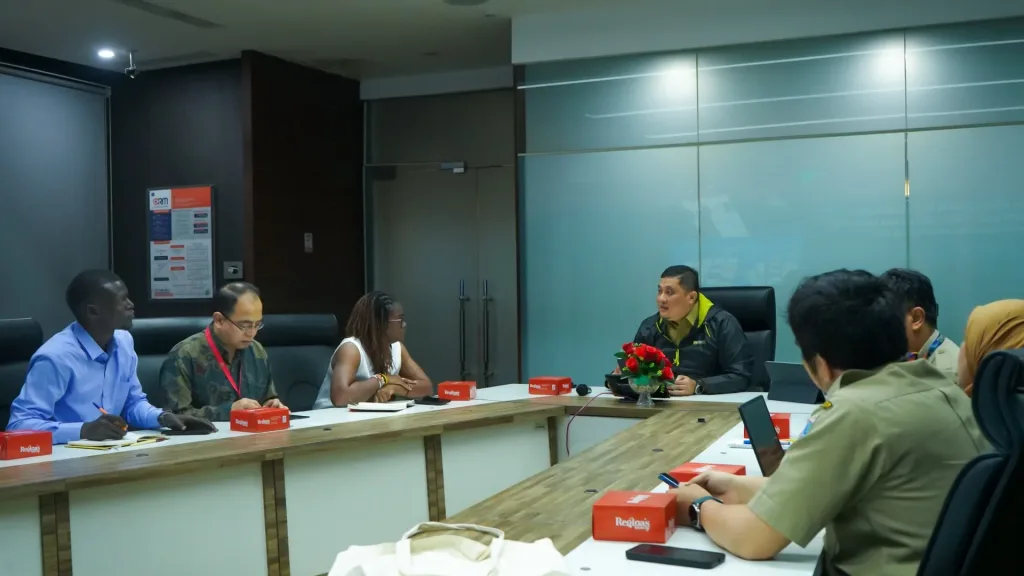
That question emerged during a familiarisation visit by Kenyan journalists to Jakarta, where Jakarta Smart City head Ponirin Ariadi outlined how the city combines citizen reports with information from government departments, CCTV cameras and sensors, while increasingly using artificial intelligence.
“We start from that… when we push the citizens to join us in the development of this city,” Ariadi said.
“By listening to the citizen, then we know what they want, what they care [about], what they have problems with.”
From complaints to action
JAKI allows residents to submit a photograph and details of a problem before the report enters the city’s backend system and is directed to the responsible agency.
The system can categorise complaints, identify duplicate submissions and route cases to the relevant field teams.
Residents can track their complaints using a unique report number, while officials upload photographic evidence after an intervention.
Jakarta officials told Kenyan journalists that some reported problems can be handled in about 14 hours, although the figure does not represent a universal resolution time for every complaint.
The process is designed to create a chain from citizen report to government action to verification.
That distinction matters for Nairobi.
Kenya already has eCitizen, a major platform for accessing government services.
But Jakarta’s experience points to another use of digital government: making residents active sources of information about what is happening on the ground and feeding that information directly into city operations.
Jakarta has also worked to reduce the separation between government departments.
“We also break the silos between the departments in Jakarta, so we put it together,” Ariadi said.
“And then we put AI inside so we can manage all the answers for the city.”
Artificial intelligence is being introduced into parts of the reporting and verification process, including the analysis of images submitted as evidence that a reported problem has been addressed.
The approach reflects a broader shift from simply collecting complaints to using data to organise government responses.
But the officials also acknowledged that the technology brings new challenges, including manipulated images, deepfakes and the rapid pace of change in artificial intelligence.
“Technology with AI is very fast. Every year it’s very fast,” Ariadi said.
When CCTV becomes a city sensor
Jakarta’s CCTV network has followed a similar evolution.
Ariadi said the city began working with the private sector in 2015, when it received about 500 cameras free of charge.
What began largely as a security tool has increasingly become part of wider urban management.
The city has set a target of about 30,000 CCTV cameras within two to three years, he said.
“We counted about 12 or 12 to 20 features in CCTV that we could manage,” Ariadi said, citing capabilities including counting people and vehicles.
The cameras can therefore generate information that feeds into wider decisions rather than simply recording events.
Traffic data can be analysed to identify alternative routes and adjust traffic movement.
“Every route is made by data analysis in Jakarta,” Ariadi said.
For Nairobi, the potential lesson is not simply to install more cameras. It is to connect the information generated by cameras and other sensors to the agencies responsible for managing traffic and public services.
Nairobi is already moving towards an Intelligent Transport System involving traffic monitoring, automated enforcement and traffic management.
The challenge is connecting the different systems, agencies and sources of information into a coherent response.
Integration is the transport lesson
Jakarta’s approach extends beyond digital platforms and surveillance.
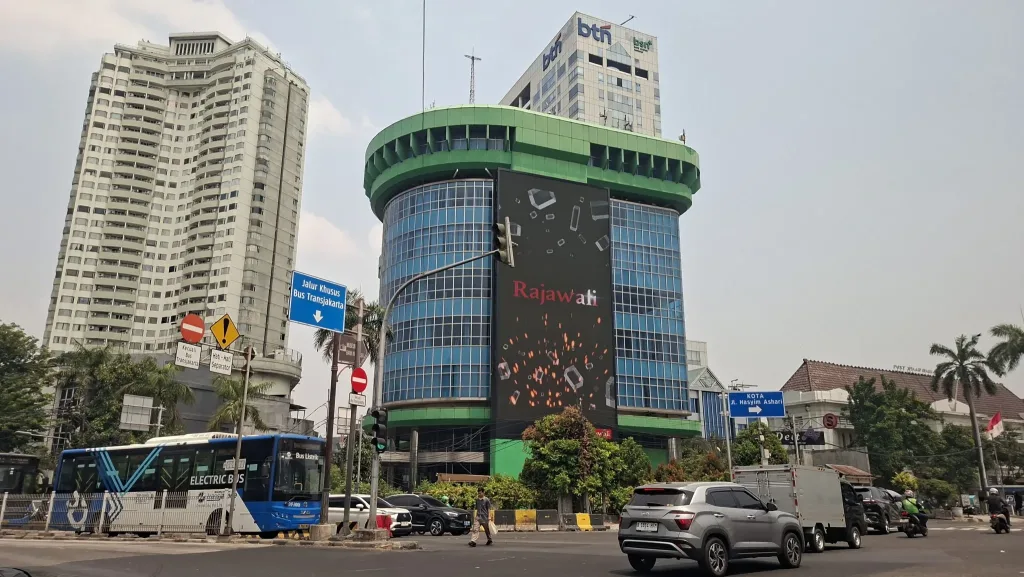
The city has sought to make different forms of public transport operate as a connected network.
TransJakarta is linked with the MRT and LRT, while traditional services such as Kopaja have been reorganised under the JakLingko system.
“We connected that,” Ariadi said. “Everything is connected.”
Payment has also been integrated, reflecting a principle officials say is central to the system: commuters should be able to move between different forms of transport without treating every stage as a separate journey.
Nairobi already has commuter rail, buses, matatus and boda bodas. But passengers can still encounter disconnected services, difficult transfers and separate payment systems during a single journey.
That means the technology question is also a transport-planning question.
An application can provide information, but it cannot by itself create a functioning interchange, reorganise routes or make different operators work as one network.
Waste management
A smart city still has to collect the garbage
Waste management illustrates the limits of technology.
Jakarta has invested in a Refuse-Derived Fuel facility in Cilincing and is seeking to expand its waste-processing capacity.
Officials have also emphasised household waste separation and citizen participation.
The technology can begin the process.
A resident can report a garbage pile. A camera or other data source can help identify a problem. An algorithm can route information to the responsible department.
But none of those systems collects the garbage.
That still requires workers, equipment, financing, and an institution capable of acting on the information.
The same principle applies to air pollution.
Jakarta uses sensors around the city to monitor pollution, with information made available through JAKI.
The application also provides information about infrastructure projects, allowing residents to see roadworks and anticipate possible traffic disruption.
“Citizens don’t know about the projects that we are doing or planning to do without us informing them,” Ariadi said.
The result is intended to be a two-way flow of information where citizens tell government what is happening, while government tells citizens what it is doing.
Nairobi is not starting from zero
Nairobi already has channels for reporting service-delivery problems, alongside digital systems for specific services such as water and sewerage.
The city is also developing systems for traffic monitoring and management.
The question, therefore, is not whether Nairobi has technology. It is whether the different pieces can work together.
Jakarta officials described their model as the product of years of investment in technology and transport, alongside changes in local-government financing and regulation that increased the city’s capacity to invest in infrastructure.
Technology, in that sense, was not treated as a substitute for governance. It was built into governance.
What Nairobi can take from Jakarta
Jakarta is not a template Nairobi can simply copy.
The two cities have different infrastructure, transport systems, institutions and urban histories. What works in Jakarta cannot simply be transplanted to Nairobi.
But its experience offers a practical test for any city pursuing a smart-city agenda.
A resident reports garbage. A camera detects traffic. A sensor records pollution. A transport system generates data.
The information reaches the right institution. Responsibility is assigned. Action follows. The citizen can then see what happened.
That is the point at which technology becomes more than a digital showcase.
For Nairobi, the difficult part may not be acquiring more applications, cameras or artificial intelligence.
It may be closing the gap between “we have received your complaint” and “the problem has been fixed.”
The real smart-city test begins after the citizen presses send.
KioskNews shows a cleaned-up reading view extracted from the publisher’s page — the original always lives on their site, not ours.