Explained: Why Climate Talks Failed At Longest COP31
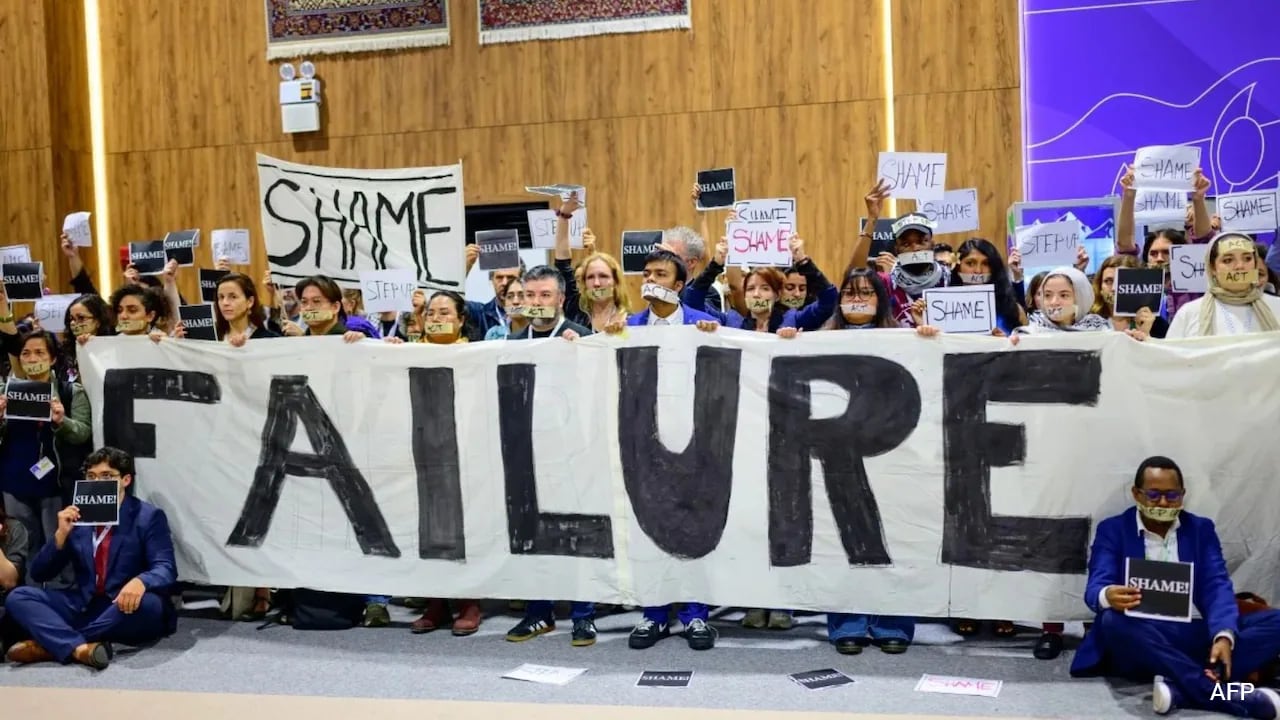
"Fossil fuels must go the way of the dinosaurs," UN Secretary-General Antonio Guterres said at the onset of COP31, the 2026 UN Climate Change Conference, urging governments to tax the windfall profits of oil companies. The idea is to transition away from fossil fuels, the main driver of climate change. But that is not how COP31, which ran two days over schedule, came to a close. The Conference ended without an agreement on a transition away from fossil fuels, and without agreements on finance, science and carbon-removing technologies.
Chris Bowen, Australia's COP31 president of negotiations, said the outcome was "very disappointing" and that disagreements over fossil fuels and climate finance had been obstacles to a deal.
READ | "Fossil Fuels Must Go The Way Of Dinosaurs": UN Chief At COP31
What Happened At COP31
The negotiations stalled as oil-producing states blocked any mention of phasing out fossil fuels in the final deal.
"We will not endorse a cover decision... that does not even mention fossil fuels, which is the key driver of climate change," said Ireland's climate minister, Darragh O'Brien, whose country holds the rotating EU presidency.
"And we will not accept a COP that greenwashes fossil fuel."
Panama, Vanuatu and the Marshall Islands also objected, and as the deal imploded, COP31 became the longest climate summit on record.
READ | "Oil States Hijacked COP31": Countries Blame Saudi For Failed Talks
Saudi Arabia and fellow members of the Organization of the Petroleum Exporting Countries have long opposed climate language targeting fossil fuels, saying they need to be part of the global energy mix for the foreseeable future.
Fossil fuels were explicitly mentioned in texts from previous COPs held in 2021 in Glasgow and 2023 in Dubai.
The failure to reach a consensus on the final agreement at COP31 comes at a time when the global temperature rise is set to exceed 1.5 degrees Celsius above pre-industrial levels.
Climate Finance Was Another Sticking Point
Climate finance was another sticking point that stalled consensus despite the draft decision titled the "Antalya Pact" acknowledging that developing countries need between $5.1 trillion and $6.8 trillion through 2030, or $455-584 billion annually. The draft also estimated adaptation finance needs at about $305 billion through 2035, highlighting the widening gap between available funding and what vulnerable countries require.
The text reiterates its commitment to at least triple adaptation finance by 2035, but does not specify a baseline against which progress can be measured.
"We need finance, yet our partners showed up to this COP with empty hands," said Jetnil-Kijiner of the Marshall Islands.
"We cannot do this on our own. We cannot survive on empty promises."
What Next For COP?
The failed talks at COP31 have renewed calls for a reform to consensus-based process, in which any one country, or a small minority, can block progress.
Calling the failure of COP31 "outrageous", former US vice president Al Gore put the blame on a "handful of petrostates" that he says have veto power over any mention of fossil fuels.
READ | Longest UN Climate Summit Ends Without A Deal Over Fossil Fuels Deadlock
"They want you to believe that the climate crisis is a problem that the world is unwilling to solve. But the outcome at COP31 shows the opposite. World leaders no longer want to settle for the lowest common denominator. They want real action to implement and finance a just transition away from fossil fuels. And where national governments have moved slowly, progress at the local level and in the private sector continues to accelerate," he wrote in a post on X.
Calling for significant reforms to the COP process, Gore urged a "reinvigorated multilateral process that reflects the latest science and represents the will of the majority of the world."
The failure of COP31 is an outrage — it is outrageous that a handful of petrostates have veto power over any mention of fossil fuels. They want you to believe that the climate crisis is a problem that the world is unwilling to solve. But the outcome at COP31 shows the opposite. World leaders no longer want to settle for the lowest common denominator. They want real action to implement and finance a just transition away from fossil fuels. And where national governments have moved slowly, progress at the local level and in the private sector continues to accelerate. It has been clear for years that the COP process is in need of significant reform. The vast majority of countries came together in Antalya over the past two weeks to negotiate and move forward in good faith. It's time that we empower those leaders with a reinvigorated multilateral process that reflects the latest science and represents the will of the majority of the world.
— Al Gore (@algore) November 22, 2026
But as Bowen noted, "you also need consensus to change consensus". Simply put, all countries would have to agree to those reforms.
READ | Key UN Climate Talks That Ended In Deadlock Or Failure
Lavanya Rajamani, a professor of international environmental law at the University of Oxford who helped draft the Paris Agreement, told Time that the failure to reach an agreement will simply bring the issues back to COP32, scheduled to take place in November 2027 in Addis Ababa, Ethiopia.
"Parties will return for the next round of the boxing match in Addis Ababa next year," Rajamani said. "In the meantime, growing frustration and exasperation with the multilateral negotiating process are likely to drive greater attention towards climate litigation-which has yielded far more progressive and climate-friendly outcomes, including at the highest judicial level, the ICJ-and climate action beyond the state."
Can't Reform COP. What's The Other Option?
While there are calls for reforms to COP, there are also suggestions for advancing climate change action, including legal suits.
"If the negotiations are not delivering what individual states need, then they'll certainly consider turning to the International Court of Justice (ICJ) and other international courts," said Harj Narulla, an international lawyer who advised the Solomon Islands at COP31.
Others expect growing interest in agreements made outside the COP process, like the Santa Marta initiative, which brings together countries committed to phasing out fossil fuels.
KioskNews shows a cleaned-up reading view extracted from the publisher’s page — the original always lives on their site, not ours.