Germany faces historic test over rise in antisemitism, Merz says in Kristallnacht speech

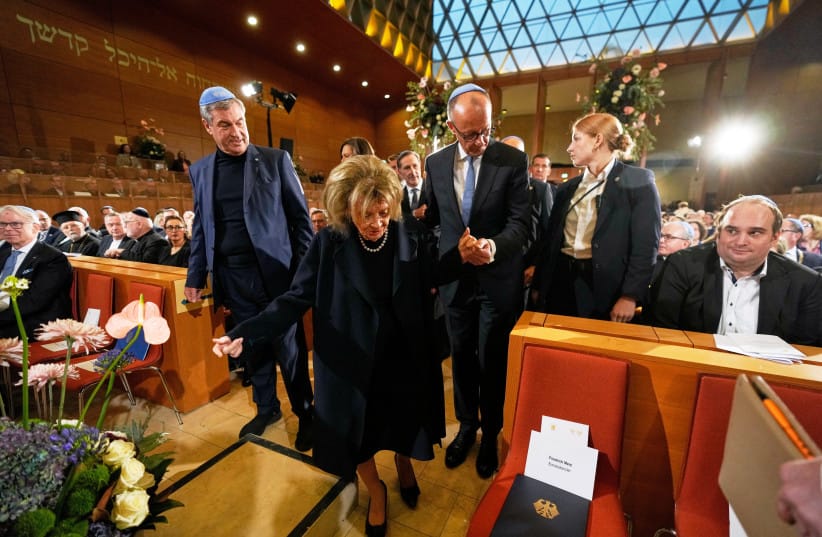
Speaking at a Munich synagogue on the anniversary of the "Kristallnacht" pogrom in 1938, German Chancellor Friedrich Merz said his government is committed to protecting Jewish life in Germany.

Chancellor Friedrich Merz said on Monday that Germany faced a test of its commitment to protecting its Jewish community as he decried the "horrifying sight" of kindergartens and synagogues protected by bulletproof glass and armed police.
Speaking at a Munich synagogue on the anniversary of the "Kristallnacht" pogrom in 1938, which foreshadowed the Nazi Holocaust that would eventually slaughter more than 6 million European Jews, Merz said antisemitism had become "omnipresent."
"We see and hear it on our streets, in our towns and cities, in the towns and cities of our European neighbors and around the world, in parliaments, in clubs and in schools," he said.
"And that is why this is now the moment of truth for the 'Never again' that we utter so often," he said.
He said his government would do everything in its power to protect Jewish life in Germany and abroad, and restated Germany's longstanding support for Israel, which he said "is part of our historical responsibility."
Merz's predecessors made similar commitments
In previous years, Merz's two predecessors as chancellor, Angela Merkel and Olaf Scholz, made similar commitments to protect Jewish life and institutions in Germany and to combat antisemitism.
According to the most recent annual report from RIAS, a monitoring group, antisemitic incidents have been occurring on a "dramatic scale" since the start of the Israel-Hamas War in 2023, with 8,725 reported last year, more than three times the number in 2022, or around 24 every day.
Ilse Aigner, the Bavarian parliament speaker nominated earlier in the day by Merz as the conservatives' candidate to become Germany's first female head of state, said the insecurity felt by many Jews in Germany was "a disgrace for our country."
"Kristallnacht," or the "Night of Broken Glass," was a wave of killings of Jews and looting and destruction of their property that began on November 9, 1938. The name refers to the broken glass that littered streets outside synagogues and Jewish shops and homes.
KioskNews shows a cleaned-up reading view extracted from the publisher’s page — the original always lives on their site, not ours.