Malaysia is building a new research corridor across Asia to meet China’s rise: scientists
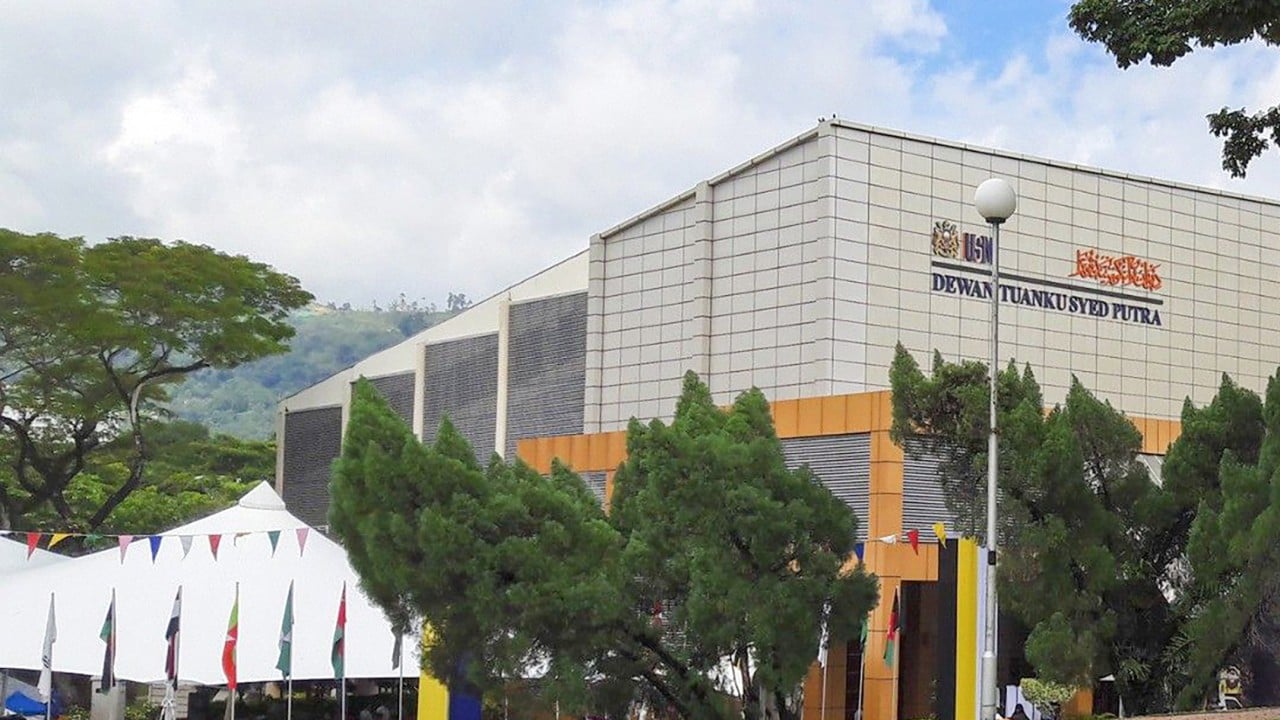
When chemical engineer Ahmad Zuhairi Abdullah joined Universiti Sains Malaysia (USM) 22 years ago, Western institutions dominated the field, from global research infrastructure and high-impact publications to the greatest breakthroughs.
Two decades later, the centre of gravity has moved eastward, says Zuhairi, now a professor with the USM school of chemical engineering in Penang.
“[Not much was known] about China at that time when I joined the university. I knew that they had quite a number of good universities and I was aware of their publications because some of them I referred to in my research work,” he said.
“But definitely nothing much was heard in terms of collaboration with Chinese counterparts. Now, you see a lot [of scientists and students] coming here,” for studies, research and fostering collaborations, Zuhairi added.
“Chinese scientists are very advanced in materials science,” he said, pointing to the high volume of publications and contributions to scientific journals.
02:36
Chinese mathematicians Wang Hong and Deng Yu win prestigious Fields Medal
As China rises as a scientific powerhouse and Malaysia diversifies its research networks to find collaborators closer to home, partnerships in critical domains – from semiconductors to sustainable energy materials – are increasingly shaping regional innovation.
“China is very aggressive and opening its doors to collaborations, which is shifting from probably 10 years back [when] it was quite close to their own things,” Zuhairi said.
He also observed that China was making an effort to include Southeast Asian partners in its research ecosystem, with some provincial funding programmes requiring Chinese scientists to work with researchers from the region.
At the Joint Laboratory of Biomass Chemical Engineering, inaugurated in January, researchers from USM and Huaqiao University in China’s southeastern coastal province of Fujian are working together to turn organic waste and plant material into useful products, as well as developing sustainable energy materials and low-carbon technologies.
According to Zuhairi, one of the common research interests between the two countries lies in combining Malaysia’s abundant agricultural waste with China’s advanced process engineering.
Malaysia’s massive palm oil sector generates vast quantities of biomass, including pressed fibre and kernel shells which contain lignin, a bonding agent in plants that was traditionally treated as a low-value by-product in the pulp and paper industry.
Zuhairi’s research aims to develop specialised catalysts to break down the lignin – the second most abundant biopolymer after cellulose – into smaller molecular fragments.
“Lignin is converted into phenolic substances, [which] will be a feedstock for the conversion into something more valuable,” he said.
These valuable renewable chemicals include adhesives and fuel additives to improve fuel performance and reduce emissions.
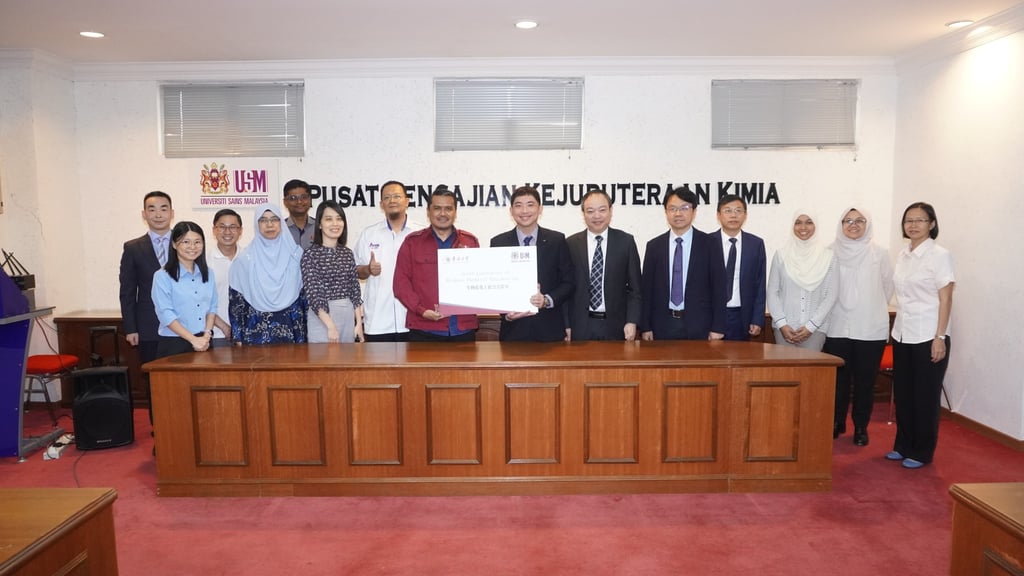
While chemical engineering lays the foundation for sustainable materials, advanced hardware and semiconductors are pushing the Malaysia-China corridor into critical hi-tech domains.
At USM’s Institute of Nano Optoelectronics Research and Technology (INOR), director Mohd Zamir Pakhuruddin is leading research into wide-bandgap semiconductors like gallium nitride, solar cells and nanophotonic devices.
The institute has broadened its international research partnerships over the past two years to work with scientists in China, Japan and Saudi Arabia, diversifying beyond its long-standing ties with research institutions in Germany and France.
It has established collaborations with leading Chinese institutions in semiconductor research, such as Chongqing University, Fudan University, Harbin Institute of Technology, Hunan Institute of Technology and Nanjing University.
For Zamir, an associate professor in advanced photovoltaic materials and devices, working across borders is a necessary step towards advancing technology, with the global supply and manufacturing chain for chips an example.
“To be able to realise high-end semiconductor devices, there is no one country that can do that alone. The same goes for the collaboration of the academy as well,” he said.
“We need our partners to be able to complement somewhere across the value chain of the fabrication.”
Malaysia aims to move beyond its back-end chip assembly and testing role towards integrated circuit design, high-end manufacturing and niche equipment, as outlined in its 10-year road map, the National Semiconductor Strategy released in 2024.
“The very goal of the national semiconductor strategy is to enhance the capacity of the nation to be stronger in the front end while leveraging the current strength in the back end,” Zamir said.
When asked about the growing trade friction and technological competition between Washington and Beijing, Zamir said that science and collaborations “should remain open”.
“Malaysia is in the neutral position politically because we do not favour sides. We do not choose sides anyway. The same goes for our academic collaboration. It is more of a diversification of our international partners that we have done in recent years,” he said.
Among INOR’s Chinese collaborators is the Harbin Institute of Technology (HIT), an institution subject to US sanctions and one of the “Seven Sons of National Defence” – universities directly under China’s Ministry of Industry and Information Technology.
In this partnership, the Malaysian and Chinese researchers are co-developing space solar cells with high radiation resilience for low Earth orbit satellite applications.
Asked about how the institute manages its partnership with HIT, Zamir said jointly agreed proposal terms defined the scope of their cooperation.
“In the areas that we agreed to collaborate, I believe these are the areas that are open for collaboration and we should leverage as long as the areas are open for exploration,” he said.
Zamir acknowledged that some fields were restricted but emphasised focusing on open avenues: “For the areas that are open for collaboration, we go by the first principle [that] science should be open and let’s leverage each other’s strengths to win together.”
Over his multiple trips to various Chinese cities in the past two years, Zamir said he observed that Western export controls and sanctions had accelerated China’s push towards domestic self-sufficiency.
“But in science, I think the bright side is it is pushing the capability of the nation to develop your very own technology – from science to technology, to eventually realising technology on the production floor,” he said.
02:04
Amazing feats and epic fails at the World Humanoid Robot Games in China
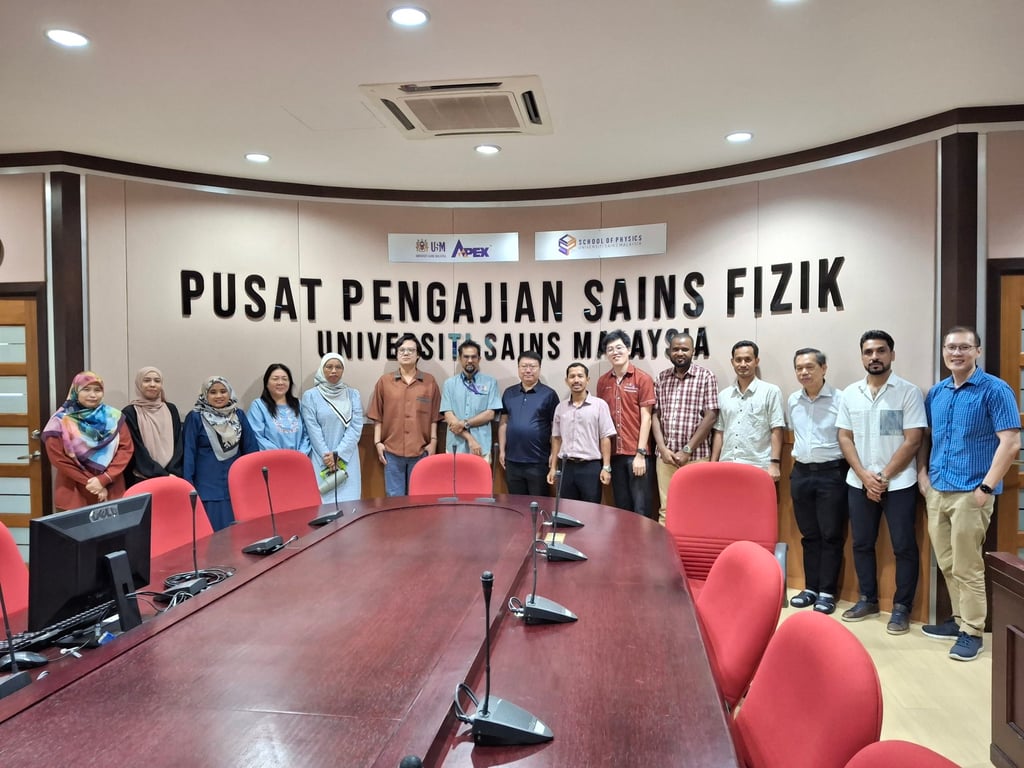
At USM’s school of physics, deputy dean and associate professor Ahmad Fairuz Omar said that global cooperation endured as fundamental scientific inquiry continued to transcend borders.
“Science is very universal,” Fairuz said. “From our engagement with all different parts of the world, including China … everybody is passionate about knowledge.”
In May, the school hosted scientists from the Nanjing University of Aeronautics and Astronautics’ College of Physics, who shared insights into using AI in research, nuclear physics and quantum-enabled space exploration technologies.
They also explored potential collaborations in fields such as cosmology and materials fabrication.
Fairuz pointed to his research using optical spectrometers to measure fruit quality metrics like sweetness, pH and firmness across different wavelengths as an area of potential for collaboration with China.
“The final intention is [to] find out several wavelengths that can specifically cater for the measurement of that particular quality of the fruit. That is what we are looking for. But the tricky situation is that fruits are really diversified.”
Looking to build “common understanding on this diversified world”, he said, “we can see that there are many researchers from China also working on visible near-infrared spectroscopy, particularly on agriculture”.
“[With] the growing number of people working in this area, hopefully that will be some sort of meeting point.”
Passionate about science? Dive deeper with the Dark Matters newsletter, a weekly in-depth analysis on China’s rise in science, technology and military that goes beneath the surface. Sign up for free now.
KioskNews shows a cleaned-up reading view extracted from the publisher’s page — the original always lives on their site, not ours.