Govt outlines domestic feedstock plan for E10, E50 fuel
Jakarta (ANTARA) - Indonesia is mapping out key agricultural hubs in Java, Sumatra, and Papua to supply feedstock for its planned E10 bioethanol rollout, as the government accelerates efforts to curb fuel imports and strengthen energy independence.
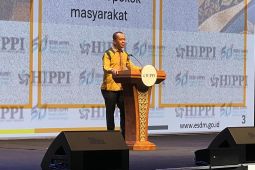
Coordinating Minister for Energy Downstreaming and Transition Bahlil Lahadalia confirmed the regional mapping on Monday, on the sidelines of the Indonesian Indigenous Entrepreneurs Association (HPPI) national working meeting in Jakarta.
Bahlil, who also serves as Energy and Mineral Resources (ESDM) Minister, disclosed that the government is currently finalizing plans to transition toward E50—a blend containing 50 percent bioethanol mixed with gasoline—while carefully evaluating domestic industrial capacity through 2028.
"For up to 2028, we are assessing our current industrial capacity. We want to ensure that introducing this mandate does not force us to import ethanol. That is unacceptable,” he stated.
The push for bioethanol comes as Indonesia seeks to bridge a severe gap between domestic oil production and national consumption.
Indonesia currently consumes approximately 1.6 million barrels of fuel per day (bpd), while national crude oil lifting stands at roughly 600,000 barrels daily—leaving a deficit of about 1 million barrels per day supplied through imports.
Bahlil pointed to Indonesia's success in achieving self-sufficiency in diesel fuel through its B50 biodiesel program, which relies on palm oil, as a blueprint for the gasoline sector.
"We import approximately 1 million barrels per day. But we are grateful that for diesel, we already have B50, so we no longer import diesel fuel," Bahlil noted.
Following the success of the biodiesel program, the government is accelerating plans for E50 fuel sourced from sugarcane, cassava, and corn.
According to Bahlil, the mandatory shift will open new regional economic growth centers and establish dedicated off-takers for cassava farmers.
“So far, the issue was that if people planted cassava, who would buy it? This is the answer: make ethanol. We will begin mandatory implementation starting in 2027, creating a major business opportunity to build processing infrastructure," he said.
Related news: Indonesia seeks to utilize degraded land for biofuel production
Related news: B50 biofuel program allows Indonesia to stop diesel imports: expert
Translator: Putu Indah Savitri, Yashinta Difa
Editor: Rahmad Nasution
Copyright © ANTARA 2026
KioskNews shows a cleaned-up reading view extracted from the publisher’s page — the original always lives on their site, not ours.