Why Singapore’s PAP internal vote is the wrong place to look for signs of leadership renewal
Singapore’s ruling People’s Action Party (PAP) has retained its core executive team in what is seen as a cautious approach despite pledges of renewal, with observers pointing to ministerial promotions as a better indication of leadership plans.
The PAP emerged from an internal election on Sunday with an unchanged slate for the Central Executive Committee (CEC), its highest decision-making body, as rising ministers Jeffrey Siow and Jasmin Lau failed to secure seats, though four remaining co-opted positions could yet provide an opening for fresh faces.
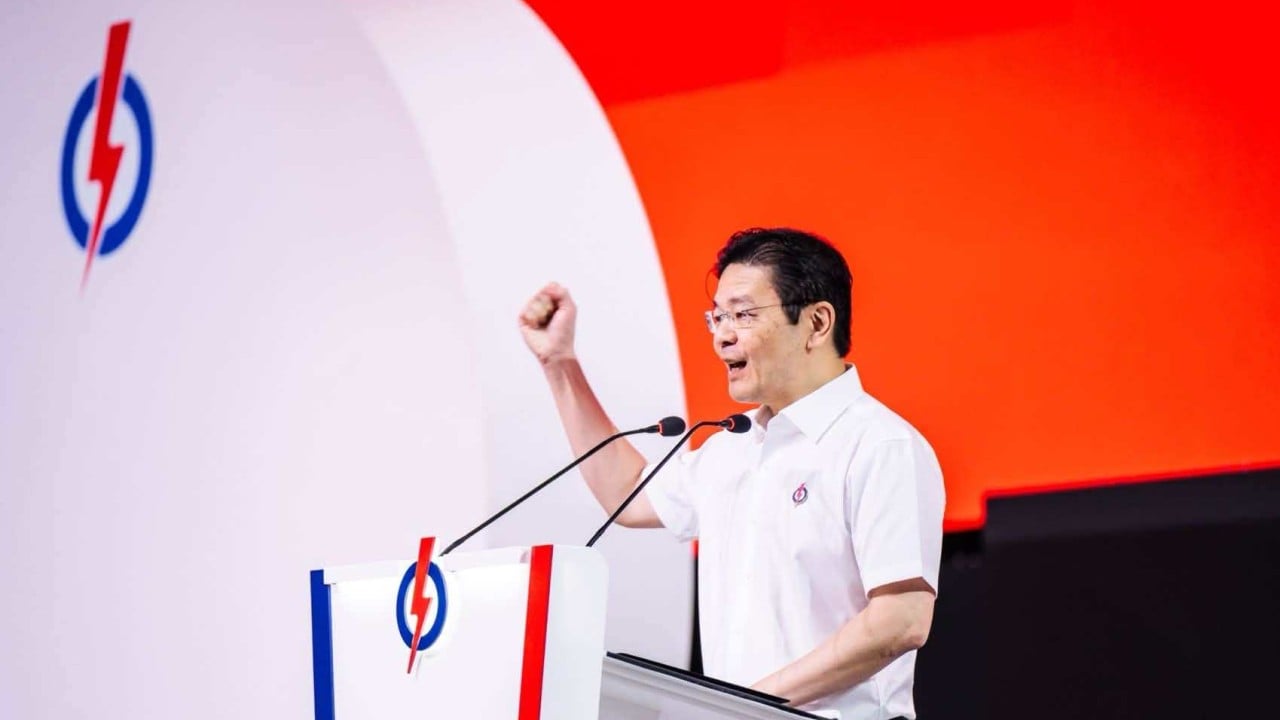
Sunday’s vote – the first since PAP’s massive victory at the 2025 general election – saw some 2,000 cadres return Prime Minister Lawrence Wong and senior ministers Lee Hsien Loong and K. Shanmugam to the apex of the party’s power structure.
Ministers Desmond Lee, Chan Chun Sing, Masagos Zulkifli, Grace Fu, Chee Hong Tat, Edwin Tong, Indranee Rajah, Ong Ye Kung and Vivian Balakrishnan rounded up the 12, which did not feature any newcomers.
Out of 19 candidates, seven were marked on the ballot paper for cadres to consider – inclusive of Wong, Lee Hsien Loong and Shanmugam, the others were Chan, Desmond Lee, Fu and Masagos.
Transport minister Siow and acting manpower minister Lau – both first-term MPs – were among the 19 nominated but not voted in.
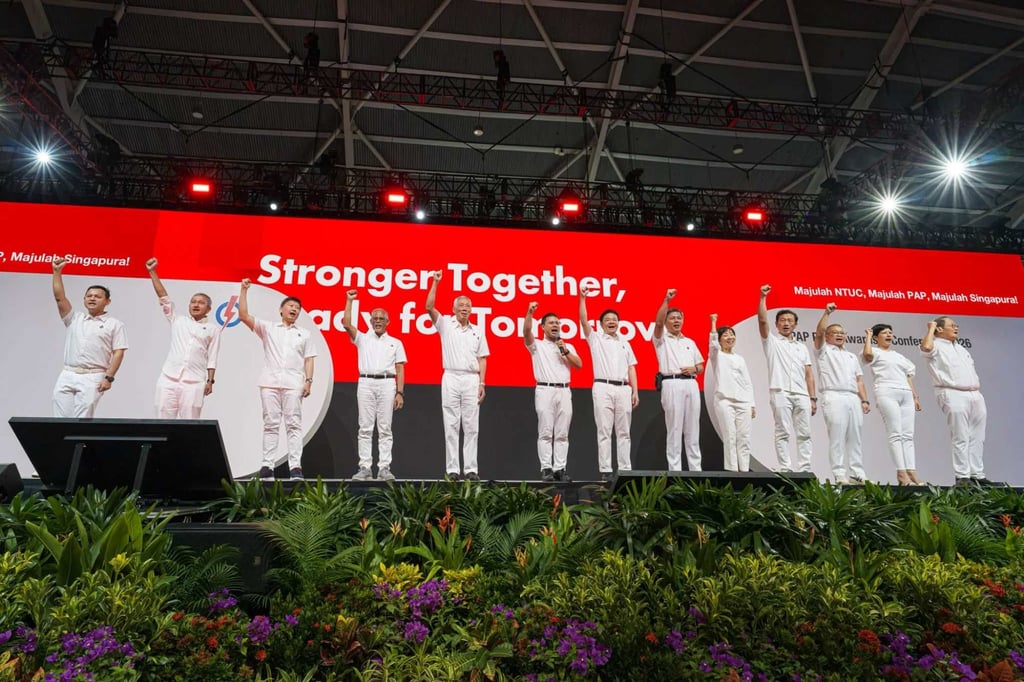
Internal elections at the PAP, which has been in power since 1959, are designed to ensure top leaders are picked only by the most senior rank-and-file members, known as cadres.
There are 12 elected seats in the party’s CEC, which can co-opt up to six more members into the committee – two of these will be cadres with the 13th and 14th highest number of votes, and the remaining four are chosen by the new CEC.
Energy and Industry Minister Tan See Leng and acting minister-in-charge of Muslim Affairs Zaqy Mohamad were co-opted into the committee with the 13th and 14th highest vote counts on Sunday.
Promotions a ‘better indication’
Nydia Ngiow, managing director at strategic advisory firm BowerGroupAsia, said the internal poll did not throw up surprises and closely mirrored its 2024 precedent, reflecting stability and policy continuity.
“The co-opting process lets the leadership maintain flexibility on who it ultimately brings in,” Ngiow said. “How the four remaining slots are filled in the coming weeks will signal the pace of renewal.”
Mustafa Izzuddin, a senior international affairs analyst at Solaris Strategies Singapore, described Sunday’s election as “non-pivotal” and said the current CEC “only partially reflected” the party’s future.
“We may however see changes in 2028, which is around the midway [point] of the current term in office, with the general election slated to take place in 2030,” he said.
While the CEC was a reflection of party leadership at the particular point of time, it was not necessarily indicative of who would rise to the highest level of government or take the helm, said independent political observer Felix Tan.
“I would be cautious about reading too much into current CEC results as an indication of PAP’s longer succession plans,” he said. “Political trajectories can change considerably over time.”
Felix Tan noted that the PAP “is voting for that status quo for now, and seeing what the new faces can contribute in the coming year because the CEC will be refreshed again”. He predicted Siow and Lau “will be co-opted, as members who have no important role to play yet and more like accepted members, but it’s still a good start somewhere”.
In July, Siow was made a full minister 14 months after taking office, and Lau rose to acting minister after being appointed minister of state following the 2025 election.
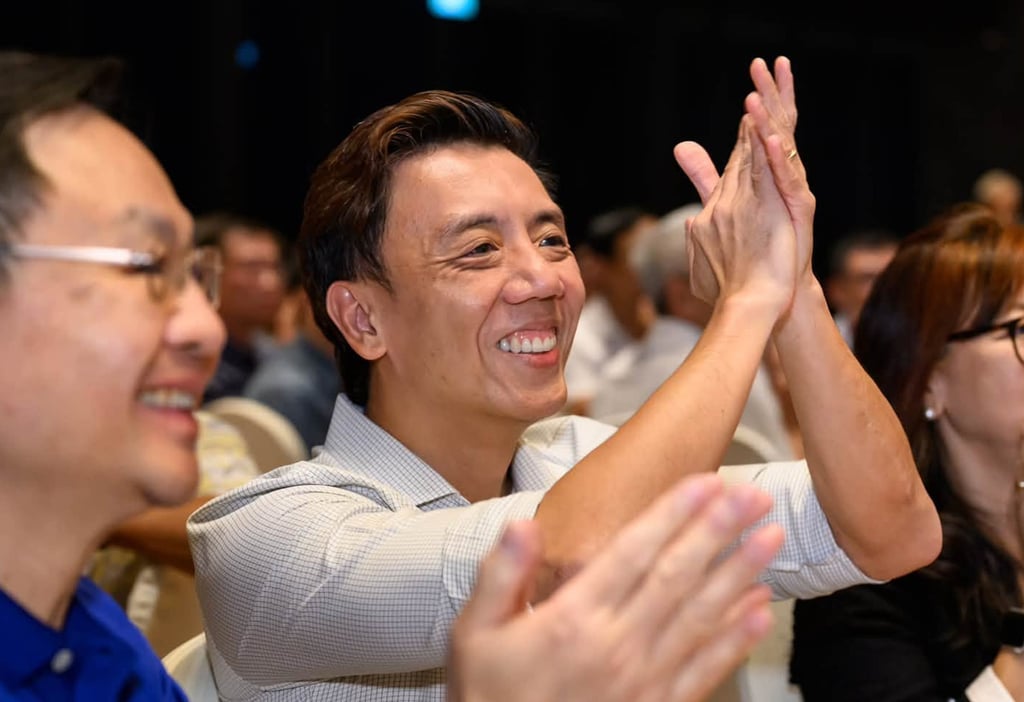
“The promotions tend to be a better indication of how political office holders are regarded,” Ngiow said, pointing to how Deputy Prime Minister Gan Kim Yong assumed the No 2 position in 2024 even after stepping down from the committee in 2022.
Of the 32 new PAP candidates fielded in 2025, five – including Lau – have been made ministers of state. Like Siow, Minister for Culture, Community and Youth David Neo also became a full minister in July, 14 months after taking office.
It marked the biggest number of new faces taking political office since 2001, when then prime minister Goh Chok Tong similarly inducted seven new MPs, including Balakrishnan and Tharman Shanmugaratnam – now Singapore’s foreign minister and president respectively.
Six new faces took office in 2020 and five each were inducted after elections in 2015, 2011 and 2006.
On Sunday’s internal vote, Walid Jumblatt Abdullah, a political scientist at Nanyang Technological University, said the marked names on the ballot sheet for cadres were a common practice indicating office holders singled out by the party for cadres to consider.
“It was a curious choice to have Masagos instead of Zaqy Mohamad as the Malay representative in the seven when the latter is the current acting minister in charge of Muslim affairs,” he said on social media.
“Perhaps, like Lau, Siow and David Neo, the party feels Zaqy and the newer ministers have to earn their stripes first.”
Shots fired
In his speech before the vote on Sunday, Wong took aim at the city state’s main opposition party for its policy positions.
The Workers’ Party (WP) was “not always consistent or coherent” when taking policy positions, which seemed to “shift with the political winds”, the prime minister said.
“The opposition has taken different positions at different times, depending on the concerns of the day or what they believe will be popular,” he said, citing issues such as public housing supply and foreign worker intake as areas the opposition had shifted its stances on.
“But these positions do not always add up to a coherent approach that takes account of the trade-offs or the longer-term consequences, and this is part of opposition politics.”
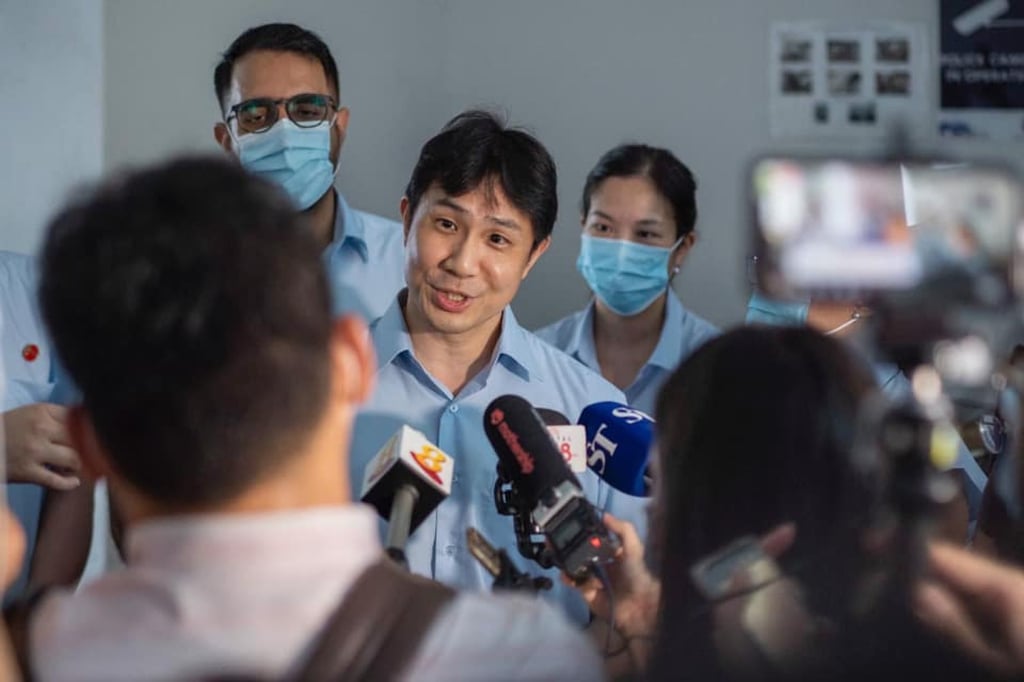
Hours after Wong delivered his address, WP MP Jamus Lim posted a rebuttal on social media, calling the prime minister’s remarks “an incredible double standard”.
The ruling party was known for “massive U-turns in policy”, Lim pointed out, including on issues such as minimum wages and the colonial-era Section 377A law that criminalised sex acts between consenting men.
Lim described Wong’s views as “disappointing”.
“It belies a lack of understanding of how Singaporeans would like to see their political leaders tackle constructive challenges to the policy choices of the ruling party,” Lim said.
“Adjusting one’s position is a mark of wisdom and maturity, not opportunism … It is this sort of back-and-forth debate that refines policy, and keeps it relevant.”
During the conference in 2024, Wong said opposition parties had tried to exploit cost-of-living concerns to turn public sentiment against the PAP, despite not having good solutions themselves, but did not name the WP explicitly.
Observers said PAP’s criticism of the WP for inconsistent policy positions could be expected more frequently in the future as the opposition gained ground.
Such exchanges had increased over the years with the WP’s growing influence, Felix Tan said. “You can’t dismiss the fact that during last year’s general election itself there was already a significant shift towards the WP, as seen by some constituencies which were very close.”
While the PAP increased its vote share to 65.57 per cent in 2025, the WP repeated its 2020 feat of winning more votes than the PAP in the constituencies it retained. The WP held onto its 10 seats in parliament after narrow losses in group representation constituencies like Tampines and Punggol.
Ngiow said the consistency charge had resurfaced time and again. “Parties can revise their positions, but with information so easily accessible, both parties will increasingly need to show how the pieces add up when those positions change.”
KioskNews shows a cleaned-up reading view extracted from the publisher’s page — the original always lives on their site, not ours.