Runaway run-off?
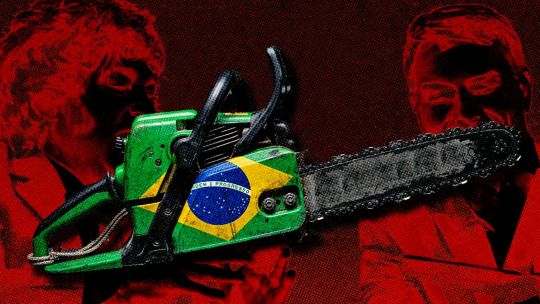
Nothing premature about President Javier Milei’s celebration of last Sunday’s Brazilian election results with the run-off now only a fortnight away seemingly in far-right presidential candidate Flávio Bolsonaro’s bag – or are things so simple?
At first sight the two-point difference between Bolsonaro and incumbent President Luiz Inácio da Silva (after the Liberal senator tasted first-round victory with an absolute majority of the vote in the early counting) might seem to promise an open contest but any first-round lead for Bolsonaro was not in any Lula victory scenario. The experts calculated that Lula would have needed a lead of some five percent to stand a chance, given that the eight percent of the vote going elsewhere in this polarised race all went to third parties right of centre.
Even this factor would not seem to doom Lula, who was able to oust his opponent’s father Jair Bolsonaro from the Presidency in 2022 thanks precisely to a coalition with the centre-right (Lula’s vice-president is Geraldo Alckmin, the centre-right’s standard-bearer in the 2006 presidential elections). Nevertheless, neither Lula nor his Partido Trabalhista (Workers’ Party, PT) have governed in much of a coalition spirit in the past four years, which might well be a significant factor in their defeat. This precedent might work against the credibility of Buenos Aires Province Governor Axel Kicillof here as he seeks to broaden his support beyond a Kirchnerite core more attuned to detained former two-term ex-president Cristina Fernández de Kirchner.
Since those not voting were tenfold the difference between the two main candidates, Lula supporters might entertain hopes of closing the gap there but the turnout in 2022 was almost identical at just over 79 percent so the disenchantment among those voters would seem to be permanent. Perhaps Lula’s best bet would be to accept last Sunday’s verdict as a protest against his administration and change the question for the run-off, asking those who did vote if they really want to elect an extremist president.
The dice are loaded in Bolsonaro’s favour for the run-off but the margins remain slender – not only was the turnout almost identical to 2022 but only a couple of Brazil’s 27 states switched hands in a country divided between a PT north and a south wedded to a market economy (including the pivotal Minas Gerais). Yet what does remain irreversible from last Sunday is the Congress result and should Lula snatch victory out of the jaws of defeat in the run-off, his parliamentary position would be as precarious as that of Milei in 2023 – only nine PT senators out of the 81 and 70 of the 513 deputies.
All in all, Milei would seem to have every right to fancy his chances of soon having a kindred spirit in Brazil’s Planalto presidential palace but does this give him every reason to celebrate? Quite apart from losing his status as Donald Trump’s top gun in this subcontinent to the leader of our giant neighbour, Brazil and Argentina would seem to be not only opposites when it comes to football – Lula’s heiress Dilma Rousseff’s 2014 win was followed the next year by the triumph of Mauricio Macri’s centre-right coalition here; the elder Bolsonaro’s victory in 2018 contrasted with the Kirchnerite Frente de Todos demolishing Macri in 2019; Lula’s 2022 comeback against Jair Bolsonaro came just 10 months before Milei’s win. On this basis the ideological overlaps between Mercosur’s two main economies would not seem to last very long, boding ill for Milei’s re-election chances.
While Bolsonaro’s win last Sunday can be read as yet another brick in a blue wall after Bolivia, Ecuador, Chile, Peru and Colombia and hence as a steady trend towards the right, it can also be seen as a backlash against incumbent governments in a troubled world. This backlash would seem to be concentrated in a middle class in crisis worldwide. Lula won comfortably among the poorer classes with his package of electoral goodies and often finished ahead in the neighbourhoods of the trendy rich – where the wheels came off was among the sectors in between, especially the lower middle class, the key to Bolsonaro’s win along with Minas Gerais. Nor should the impact of the rightist’s harsh law and order message be underestimated in zones ravaged by the organised crime of the drug-trafficking rings.
Yet forecasting the future remains a fool’s game – if a week is a long time in politics, as Britain’s Harold Wilson said half a century ago, even longer is a fortnight in Brazil and over a year here.
KioskNews shows a cleaned-up reading view extracted from the publisher’s page — the original always lives on their site, not ours.