The 8 Best Films of the 1970s, Ranked

Luc Haasbroek is a writer and videographer from Durban, South Africa. He has been writing professionally about pop culture for eight years. Luc's areas of interest are broad: he's just as passionate about psychology and history as he is about movies and TV. He's especially drawn to the places where these topics overlap.
Luc is also an avid producer of video essays and looks forward to expanding his writing career. When not writing, he can be found hiking, playing Dungeons & Dragons, hanging out with his cats, and doing deep dives on whatever topic happens to have captured his interest that week.
Sign in to your Collider account
Many people consider the 1970s to be the greatest decade in movie history, and for good reason. In America, the collapse of the old studio system and the rise of New Hollywood meant filmmakers had unusual creative freedom, while audiences proved willing to embrace films that were darker and stranger than ever before.
Narrowing such an extraordinary decade down to just a few movies means leaving out plenty of masterpieces. Nevertheless, the titles below represent some of the era's most daring, influential, entertaining, and unforgettable creations, all of which continue to influence the medium today.
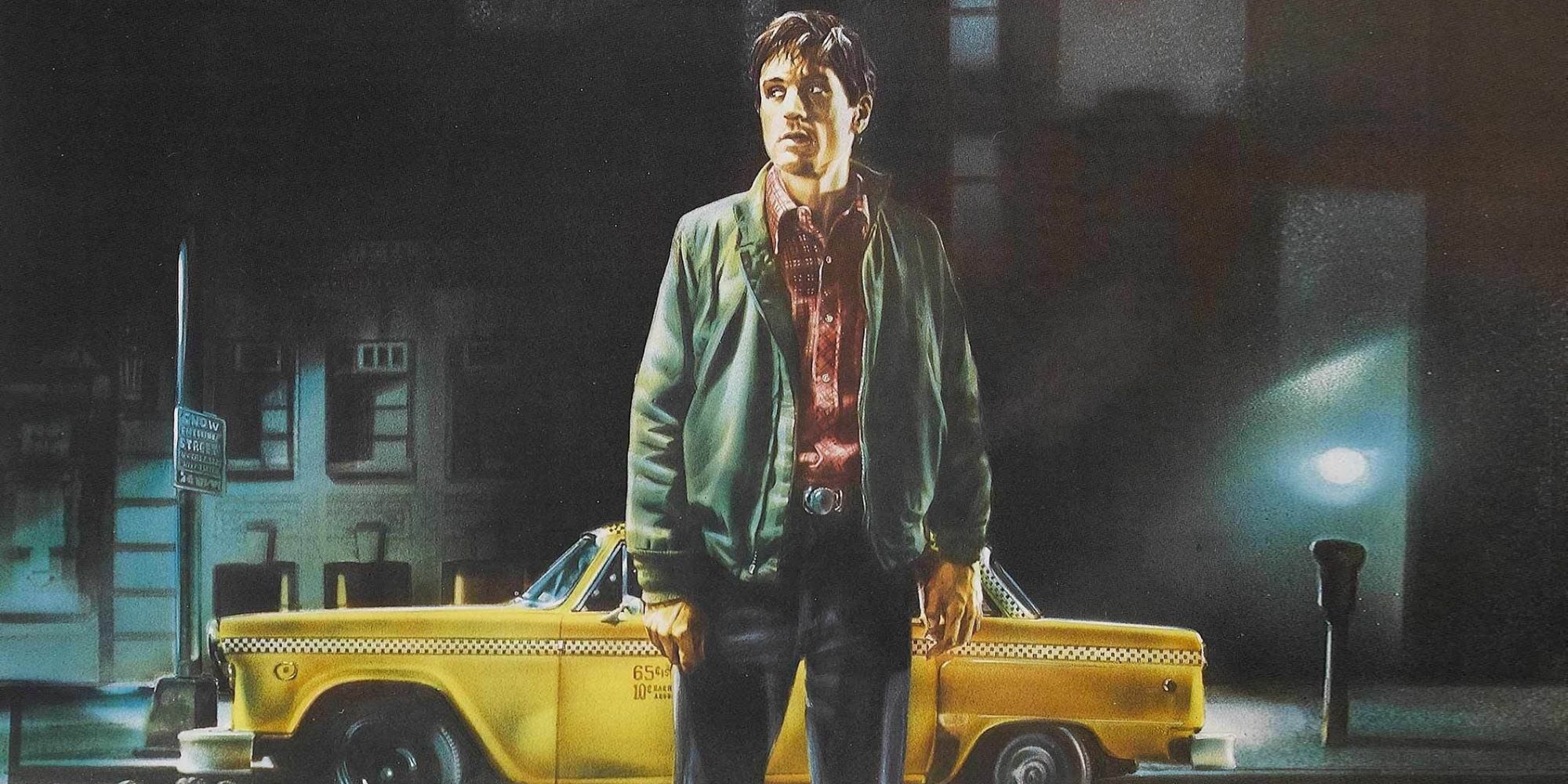
8 'Taxi Driver' (1976)
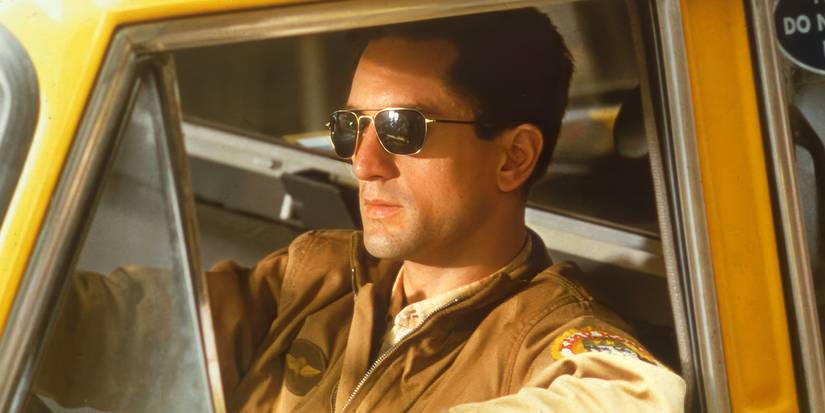
“You talkin' to me?” Taxi Driver is deeply uncomfortable because it forces the viewer into Travis Bickle's (Robert De Niro) head, making us understand how he sees the world. In the process, it laid the blueprint for countless twisted character studies to follow, though none has yet surpassed it. Guided by Scorsese and screenwriter Paul Schrader, we follow the lonely Vietnam vet through nighttime New York as his insomnia, alienation, sexual frustration, and disgust gradually harden into fantasies of violence.
A big part of the movie's greatness lies in its complexity and contradictions. Travis desperately wants connection but seems incapable of achieving it, and his later fixation on rescuing Iris (Jodie Foster) allows him to recast his destructive impulses as something heroic. In short, Travis correctly recognizes the ugliness around him, but is profoundly wrong about what it means and what should be done about it.
7 'One Flew Over the Cuckoo's Nest' (1975)

“But I tried, didn't I? Goddammit, at least I did that.” Here, Randle McMurphy (Jack Nicholson) gets himself transferred to a psychiatric hospital, only to come face-to-face with Nurse Ratched (Louise Fletcher), who exercises suffocating authority over the institution. She controls the ward through rules, medication, shame, and the calm insistence that everything being done is supposedly for the patients' benefit.
McMurphy's small rebellions therefore acquire enormous emotional weight, whether he's organizing a basketball game, taking the patients fishing, or pretending to watch a baseball game on a TV that Ratched refuses to turn on. Rather than playing this as a cartoon or caricature, director Miloš Forman tells a genuinely touching and frequently uproarious story about freedom, one with hard-hitting political undertones. His movie bottled the counterculture spirit of its era.
COLLIDERInteractive
Ballot sealed
Movies/Academy Awards/Best Picture
Collider · Best Picture
Which Oscar Best Picture
Is Your Perfect Movie?
Five winners · ten questions · one envelope
Five Oscar Best Picture winners. Five completely different visions of what cinema can be and what it can do to you. One of them is the film made for the way your mind works, and ten questions will work out which. The nominees
2020Parasite
2023Everything Everywhere All at Once
2024Oppenheimer
2015Birdman
2008No Country for Old Men
Reel01 / 10
Question 01 of 10TONE
01 What kind of film experience are you really after? The best movies do not just entertain. They leave something behind.
Keys 1 to 5 or A to E · Enter to advance
Reel02 / 10
Question 02 of 10THEME
02 Which idea grabs you most in a film? Great films are driven by a central obsession. What is yours?
Keys 1 to 5 or A to E · Enter to advance
Reel03 / 10
Question 03 of 10STRUCTURE
03 How do you like your story told? Form is content. The way a story is shaped changes what it means.
Keys 1 to 5 or A to E · Enter to advance
Reel04 / 10
Question 04 of 10VILLAIN
04 What makes a truly great antagonist? The opposition defines the protagonist. What kind of opposition fascinates you?
Keys 1 to 5 or A to E · Enter to advance
Reel05 / 10
Question 05 of 10ENDING
05 What do you want from a film's ending? The final note is the one that lingers. What do you want it to sound like?
Keys 1 to 5 or A to E · Enter to advance
Reel06 / 10
Question 06 of 10WORLD
06 Which setting pulls you in most? Where a film takes place shapes everything: mood, stakes, what is even possible.
Keys 1 to 5 or A to E · Enter to advance
Reel07 / 10
Question 07 of 10CRAFT
07 What cinematic craft impresses you most? Every great film has a signature, the element that makes it unmistakable.
Keys 1 to 5 or A to E · Enter to advance
Reel08 / 10
Question 08 of 10PROTAGONIST
08 What kind of main character do you root for? The protagonist is the lens. Who you follow says something about you.
Keys 1 to 5 or A to E · Enter to advance
Reel09 / 10
Question 09 of 10PACE
09 How do you feel about a film that takes its time? Pace is a choice. Some films sprint. Others let tension accumulate slowly, deliberately.
Keys 1 to 5 or A to E · Enter to advance
Reel10 / 10
Question 10 of 10AFTERMATH
10 What do you want to feel walking out of the cinema? The best films leave a mark. What kind of mark do you want?
Keys 1 to 5 or A to E · Enter to advance
The envelope, pleaseAnd the Oscar goes to
★ Best Picture, 2020 Parasite Bong Joon-ho, 2019 A film that hides its true intentions until the moment it is ready to reveal them.
You are drawn to films that operate on several levels at once, that begin in one genre and quietly, brilliantly migrate into another. Bong Joon-ho's Parasite is a film about class, desire and the architecture of inequality that manages to be darkly funny, deeply suspenseful and genuinely shocking across a single extraordinary running time. Your instinct is for cinema that rewards close attention and punishes assumptions, right up to its devastating final image. From the Collider file
- The first film not in the English language to win Best Picture, in the Academy's 92-year history to that point.
- It took four Oscars in one night: Picture, Director, Original Screenplay and International Feature.
- It won the Palme d'Or at Cannes in 2019 by a unanimous jury vote, the first Korean film to do so.
- The Park family's modernist house was not a location. It was built from scratch on an outdoor lot.
Reads between the lines Loves a reveal Attention to detail
★ Best Picture, 2023 Everything Everywhere All at Once Daniel Kwan and Daniel Scheinert, 2022 A film that refuses to choose between being entertaining and being meaningful.
You want it all, and this one gives you all of it. The Daniels' Everything Everywhere All at Once is among the most maximalist films ever made: action comedy, multiverse science fiction, family drama, existential crisis, and an emotional core that sneaks up on you in the middle of the chaos. You respond to ambition. Being overwhelmed is the design, not the side effect, because the feeling of being crushed by infinite possibility is exactly what the film is about. From the Collider file
- Seven Oscars, including three acting wins for Michelle Yeoh, Ke Huy Quan and Jamie Lee Curtis.
- Michelle Yeoh became the first Asian woman to win Best Actress.
- The visual effects were handled by a team of fewer than ten people, most of them self-taught.
- Ke Huy Quan had all but left acting for two decades before this role brought him back.
Wants everything Big swings Soft center
★ Best Picture, 2024 Oppenheimer Christopher Nolan, 2023 A film about the gap between what we can do and what we should do.
You are drawn to cinema on a grand scale, films that treat history not as a backdrop but as a force, then place their characters inside that force and watch what happens. Christopher Nolan's Oppenheimer sits inside one of the most consequential moments in human history and refuses to look away from it. You want your films to feel important without being self-important, earning their ambition through craft and the gravity of the subject. This one is enormous, complicated, and offers no easy comfort. From the Collider file
- Seven Oscars, including Nolan's first wins for directing and for Best Picture.
- Cillian Murphy and Robert Downey Jr. both took their first Academy Awards for it.
- Kodak engineered a black-and-white 65mm stock that did not previously exist so Nolan could shoot those sequences on IMAX.
- A three-hour, R-rated drama about theoretical physics that passed 950 million dollars worldwide.
Thinks in decades Scale and weight No easy comfort
★ Best Picture, 2015 Birdman Alejandro G. Iñárritu, 2014 A film doing something that probably should not be possible.
You are drawn to films that foreground their own construction, where the how of the filmmaking becomes part of the what it is about. Alejandro G. Iñárritu's Birdman, stitched to appear as one continuous take, is cinema examining itself through the cracked mirror of a fading actor's ego. You respond to formal daring. Michael Keaton's performance and Emmanuel Lubezki's restless camera make something unlike anything else: a film about creativity, relevance, self-destruction and never quite knowing whether your work means anything at all. From the Collider file
- Four Oscars, among them Best Picture and Best Director for Iñárritu.
- Emmanuel Lubezki's win here was the middle of three consecutive cinematography Oscars, after Gravity and before The Revenant.
- Antonio Sánchez's improvised drum score was ruled ineligible for the score category, which caused a minor uproar.
- The long-take illusion was built from a handful of extended shots joined by hidden cuts.
Formally daring Camera as character Ego and art
★ Best Picture, 2008 No Country for Old Men Joel and Ethan Coen, 2007 A film that treats dread as a form of meaning.
You are drawn to cinema that trusts silence, refuses to explain itself, and lets unease do the talking. The Coen Brothers' No Country for Old Men is about the arrival of a new kind of evil: implacable, arbitrary, and indifferent to the moral frameworks we use to make sense of things. It is one of the most tightly controlled films ever made, and that control is the source of the terror. You want your films to haunt you rather than comfort you, and you have no interest in a resolution that would be a lie. From the Collider file
- Four Oscars: Picture, Director, Adapted Screenplay, and Supporting Actor for Javier Bardem.
- Adapted from Cormac McCarthy's 2005 novel, with much of his dialogue carried over intact.
- Carter Burwell's score runs about sixteen minutes and is nearly inaudible by design.
- Roger Deakins was nominated twice that year, for this and The Assassination of Jesse James, and won for neither.
Trusts silence Dread over answers No tidy endings
Ballot tally · your top three
1
2
3
Copied to your clipboard
Ballot counted byCOLLIDERCollider.com · The Awards Desk
6 'Star Wars' (1977)
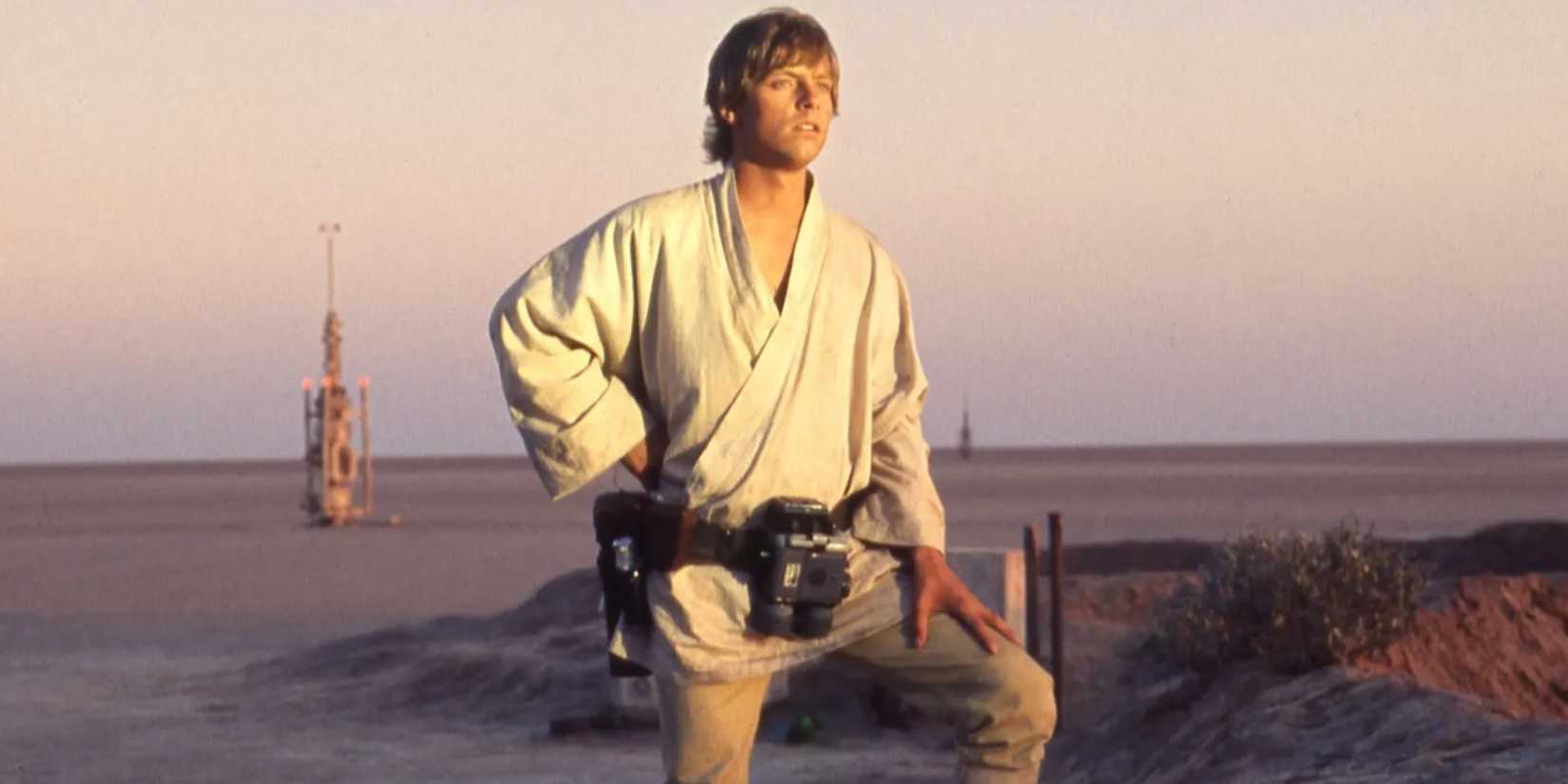
“May the Force be with you.” It's almost impossible to separate Star Wars from everything that came afterward. The sequels, prequels, television series, toys, expanded universe, imitators, and enormous influence on Hollywood can obscure how impressively self-contained George Lucas's original movie remains. At its core, it's simply a great adventure, borrowing shamelessly but brilliantly from old movie serials, westerns, samurai cinema, mythology, World War II films, and fantasy.
Luke Skywalker (Mark Hamill) is an archetypal young hero longing to escape an ordinary life, but the universe surrounding him immediately feels much larger than his individual journey. A cantina filled with aliens, references to the Clone Wars, the ruins of the Jedi, and the enormous machinery of the Empire imply histories the movie doesn't stop to explain. The world is colorful but lived-in, brought to life through special effects that were groundbreaking for the time.
5 'Alien' (1979)

“In space no one can hear you scream.” Star Wars opened up new possibilities for cinematic sci-fi, kicking off a boom for the genre. Perhaps the greatest film to come out of that era was Alien, Ridley Scott's haunted-house movie in space. Where Star Wars showed up the future could look dusty and worn out, Alien took that even further, giving us a grungy, industrial spaceship crewed by blue-collar workers and, eventually, stalked by a hideous predator.
While the production design is immersive and Sigourney Weaver's lead performance is fantastic, it's really the monster design that elevates Alien into the pantheon of all-time great sci-fi horror. H.R. Giger's biomechanical Xenomorph is unlike anything else in 1970s cinema, a nightmare of acid blood and multiple mouths. The chestburster scene alone forever altered what audiences thought a mainstream sci-fi movie could show.
4 'Jaws' (1975)
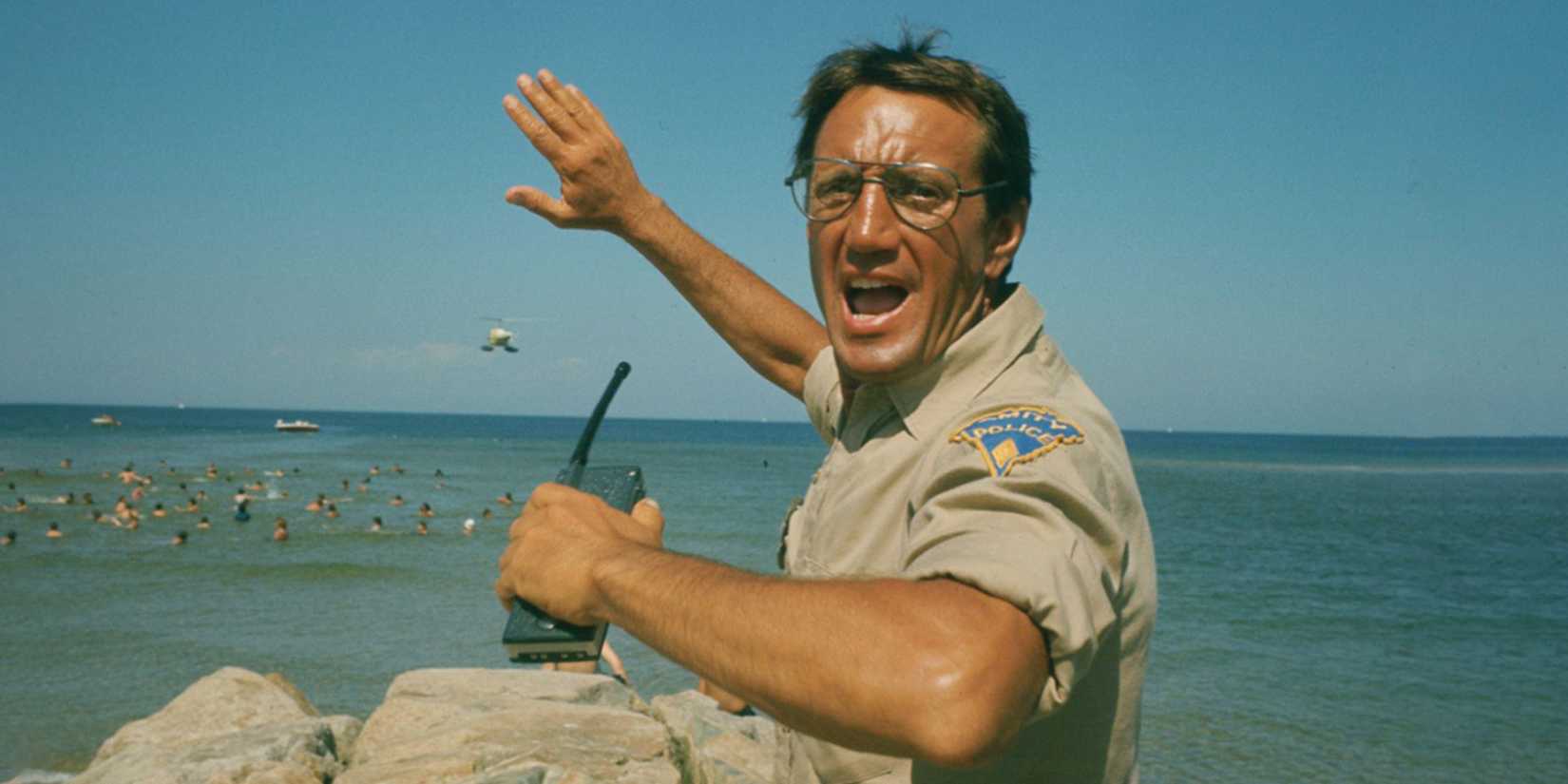
“You're gonna need a bigger boat.” With this one, Spielberg helped create the modern blockbuster as we know it (and made an entire generation wary of the ocean). The core of the plot is about a town menaced by a shark, but Jaws is a masterpiece because the monster isn't the only attraction. For example, Roy Scheider's Martin Brody, Richard Dreyfuss' Matt Hooper, and Robert Shaw's Quint are such distinctive personalities that the final stretch becomes as much about three incompatible men trapped aboard a small boat as it is about killing a giant predator.
Likewise, elements like Quint's Indianapolis monologue briefly transform an adventure movie into something closer to a ghost story, and John Williams' famously simple score turns two alternating notes into an announcement of approaching death. Finally, the visual storytelling is extraordinarily economical: Spielberg wrings enormous suspense out of things like a yellow barrel or a point-of-view shot moving through the water.
3 'Apocalypse Now' (1979)

“I love the smell of napalm in the morning.” Here, Captain Willard (Martin Sheen) is sent into Cambodia to assassinate Colonel Walter Kurtz (Marlon Brando), a decorated American officer who has apparently gone rogue and established himself as something resembling a demigod. However, War already looks insane in Apocalypse Now before Willard gets particularly far upriver. It's a cavalcade of surfing soldiers and Wagner blasting from loudspeakers while helicopters lay waste to the ground below.
Along the way, Francis Ford Coppola takes Joseph Conrad's Heart of Darkness, relocates it to Vietnam, and twists it into an increasingly surreal descent through violence, colonialism, madness, and darker demons of human nature. This was a staggeringly ambitious project, and one that almost destroyed both cast and crew, and yet the finished product is a genuine landmark, the zenith of gonzo 1970s auteur filmmaking.
2 'Chinatown' (1974)

“Forget it, Jake. It's Chinatown.” Chinatown initially gives J.J. "Jake" Gittes (Nicholson) exactly the sort of case a private detective expects: follow a married man and determine whether he's having an affair. Then Jake discovers that the woman who hired him wasn't actually the man's wife, the supposed adulterer turns up dead, and a relatively petty scandal begins expanding into something a lot more sinister, involving the water supply and land speculation.
Indeed, Robert Towne's exceptional screenplay takes classic noir structures and takes them to new heights and arranges them in new shapes, as well as a modern sheen, making for one of the era's punchiest, most cynical statements. The final scene is devastating because the detective actually does solve the mystery, but it does him virtually no good. In this nihilistic world, understanding isn't enough to thwart the shadowy forces pulling the strings.
1 'The Godfather Part II' (1974)

“I know it was you, Fredo. You broke my heart.” Coppola strikes again (his run of movies during this decade ranks among the greatest ever). The Godfather Part II expands and complicates the original, serving up an ambitious parallel narrative about two generations of the Corleone family. One storyline follows Michael Corleone (Al Pacino) consolidating his power in the late 1950s, while another traces his father Vito's (Robert De Niro) rise decades earlier.
The juxtaposition is devastating. Vito builds power through relationships and favors. Michael, by contrast, possesses vastly greater wealth and influence, yet every attempt to protect his family leaves him more isolated from it. His marriage disintegrates, and suspicion consumes him. Worse still, the movie shows us that the downfall of the son was sown by the father's success. A Shakespearean tragedy in a '70s crime package.
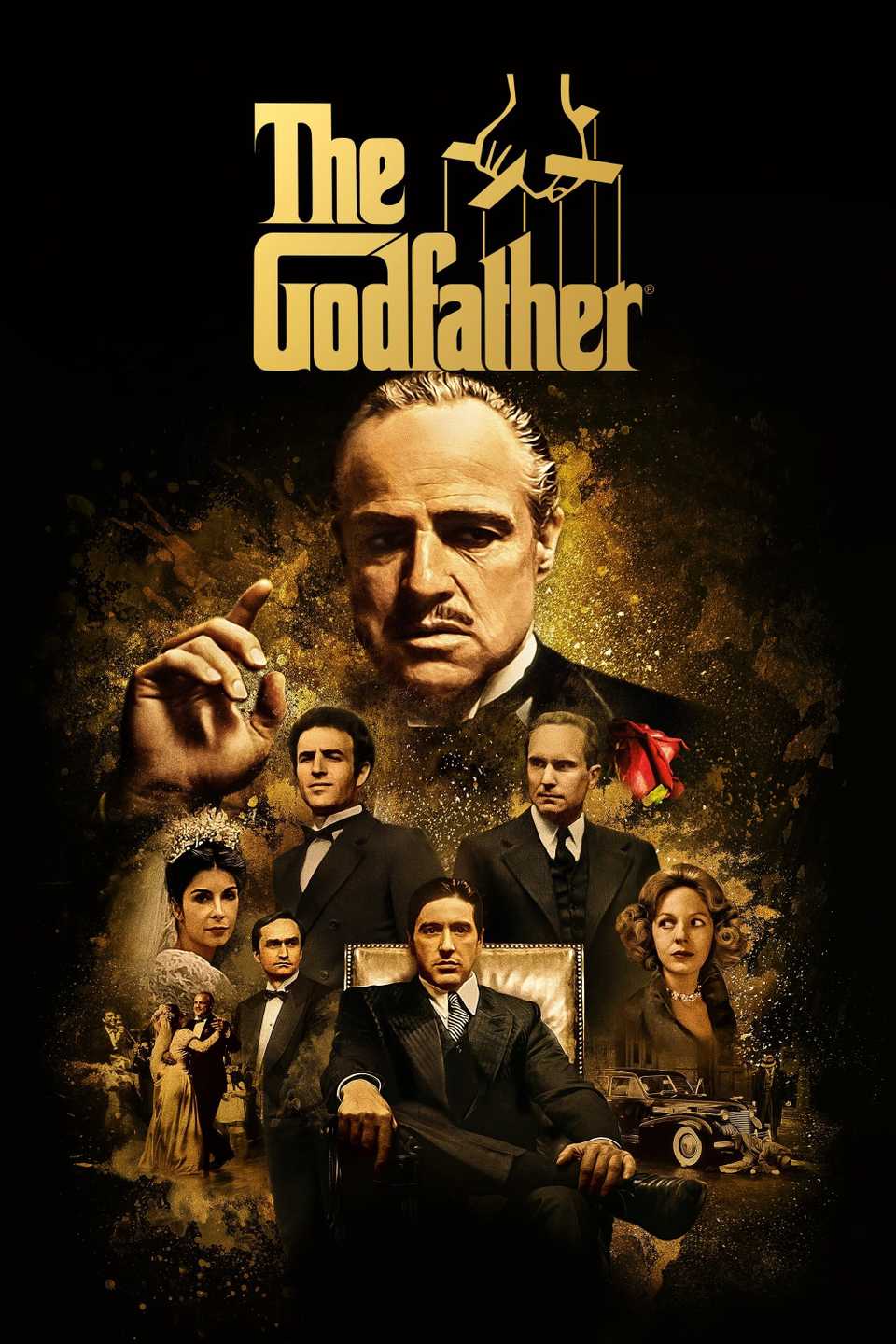
The Godfather
- Release Date
- March 24, 1972
- Runtime
- 175 minutes
- Director
- Francis Ford Coppola
- Writers
- Mario Puzo, Francis Ford Coppola
KioskNews shows a cleaned-up reading view extracted from the publisher’s page — the original always lives on their site, not ours.