Lai announces NT$10,000 cash handout
2027 BUDGET: Given the nation’s strong economic growth, the government has proposed the universal cash handout to allow everyone to share in the ‘AI dividend’
By Chen Yun and William Hetherington / Staff reporter, with staff writer


The government would allocate NT$235.7 billion (US$7.4 billion) in next year’s budget to fund a NT$10,000 cash payment for every citizen next year as the economy continues to grow, President William Lai (賴清德) announced yesterday.
Lai made the announcement after being briefed on the Executive Yuan’s proposed central government budget for next year for the second time.
The government would still maintain a balanced budget with no net increase in debt after incorporating the universal cash handout into the general budget, he said.
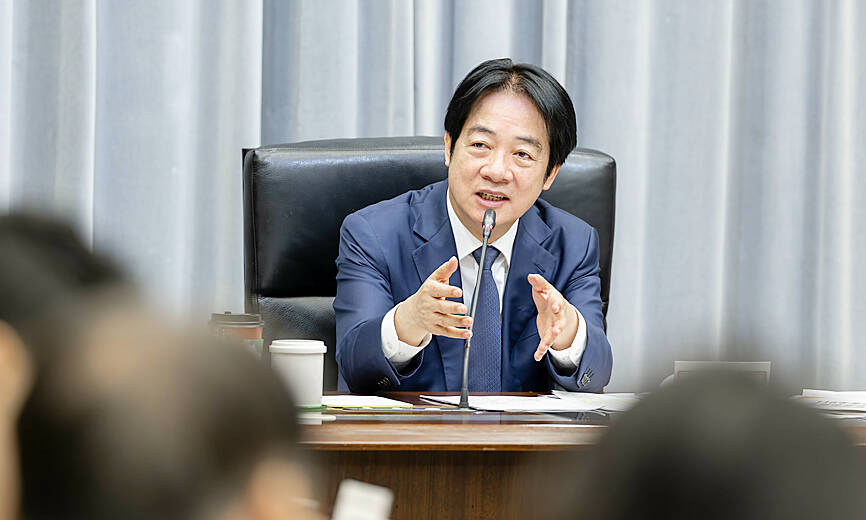
President William Lai speaks after hearing a second briefing at the Presidential Office yesterday.
Photo courtesy of the Presidential Office
The latest statistics from the Directorate-General of Budget, Accounting and Statistics show Taiwan’s economy performing more strongly than previously forecast, he said.
First-quarter growth was revised up to 15.43 percent, while preliminary data put second-quarter growth at 12.93 percent, marking three consecutive quarters of double-digit growth, he said.
Economic growth reached 14.15 percent in the first half of the year, the strongest performance for the same period in five decades, he said.
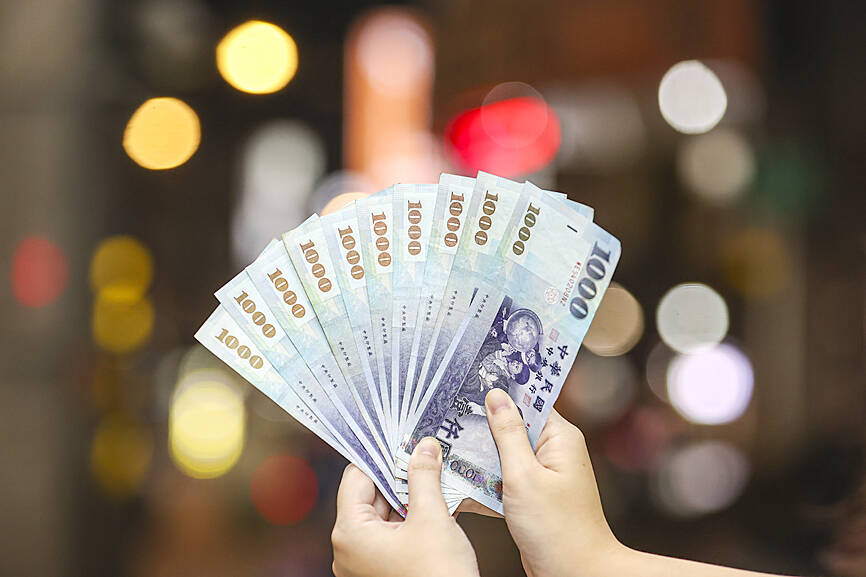
A person holds NT$1,000 notes in an undated photograph.
Photo: CNA
Full-year economic growth forecast has been raised from 9.64 percent to 11.05 percent, which would be the highest in 39 years, he added.
He attributed the strong performance to the semiconductor, information and communications technology and manufacturing supply chains, as rising global demand for artificial intelligence (AI), high-performance computing and cloud services have driven growth in orders, exports and investment.
The booming AI industry and strong technology exports present an opportunity for Taiwan that the government must seize, he said.
The government would not focus solely on the high-flying technology sector, but would also ensure that every family working hard to make a living benefits from the economic growth, he said.
Given a higher economic growth forecast, the central government’s projected revenue for next year has been raised to NT$3.9266 trillion, he said.
With revenue and expenditure expected to remain balanced and no net borrowing, the government has decided to allocate NT$235.7 billion of next year’s budget for a NT$10,000 cash handout to every person next year, allowing everyone to share in the “AI dividend,” he said.
An Executive Yuan official said that based on the procedures used for the previous NT$10,000 cash handout, if the central government’s proposed budget for next year clears its third reading in the Legislative Yuan by the end of this year, people could receive the NT$10,000 cash payout before the Lunar New Year next year.
The president identified five major priorities for next year’s budget, as the government continues efforts to raise wages, cut taxes, expand welfare, ease financial burdens and boost infrastructure development.
The first is a family-support strategy under its population policy, he said.
A total of NT$373 billion would be allocated, including a new allowance for children from birth to age 18 that would not require separate legislation and would be included directly in next year’s budget, he said.
Other measures include expanded childcare leave benefits and longer marriage and maternity leave, he said, adding that the government aims to shift from a subsidy-based childcare system to one based on broader public support.
The second priority is national defense.
Total defense spending, including the regular and special budgets, is expected to reach NT$1.12 trillion for the first time, exceeding 3 percent of GDP, he said.
“Investing in national defense is investing in peace,” Lai said.
The government will continue bolstering Taiwan’s defense capabilities to maintain peace and stability across the Taiwan Strait and the wider region, he added.
The third priority is the development of “Smart Nation 2.0” and helping small and medium-sized businesses upgrade, he said.
The government plans to allocate NT$229.2 billion to technology development programs next year, a 12.7 percent increase from this year, he said.
Of that amount, NT$40.6 billion would go toward the “New 10 Major AI Infrastructure Projects,” covering research, computing capacity, talent and key technologies.
The government would also seek legislative changes to provide an additional NT$100 billion over the next eight years through expanded financing, investment tax credits and assistance with access to AI computing resources, he said.
The fourth priority is accelerating infrastructure development and promoting more balanced regional development, Lai said.
Public infrastructure spending is expected to reach NT$728.8 billion, including NT$147.2 billion for the Balanced Taiwan program, he said.
The government plans to invest in railways, roads, sewage systems, flood control, water supply and national resilience, while promoting six major regional industrial and living-area development plans, he said.
The fifth is providing greater financial support to local governments, he said.
Central government transfers to local governments, including tax-sharing revenues and general and project-based subsidies, are expected to reach NT$1.36 trillion next year, an increase of NT$192.9 billion from this year, he said.
The additional funding would give local governments more resources to develop infrastructure, promote economic growth and address residents’ needs, he said.
Central government spending would increase from about NT$1.9 trillion in 2016 to NT$3.93 trillion next year, he said, adding that the doubling of spending over the past decade reflected Taiwan’s increased national strength.
“Let technology drive the economy, let the economy strengthen the nation, and let national progress return to people’s daily lives,” Lai said.
KioskNews shows a cleaned-up reading view extracted from the publisher’s page — the original always lives on their site, not ours.