Glory at 11,000ft: Cusco’s Cienciano aim to bring Peru continental success once again

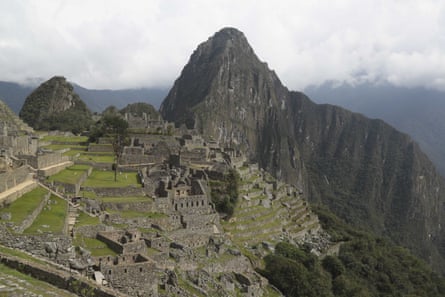
It was one of those nights when Cusco shifted the spotlight from its tourism engine to football. At a stadium named after Garcilaso de la Vega – celebrated for his chronicles about the Inca empire – around 30,000 people gathered to witness something far more immediate than nearby Machu Picchu, arguably the best-known archaeological site in the Americas.
Cusco’s biggest team, Cienciano, were set to play in the first leg of the Copa Sudamericana quarter-final, 23 years after they became the first Peruvian club to lift an international trophy.
“Don’t you love a story that reminds you that you were once the best among the best?” said Victor Estrada, 44, clapping feverishly as Cienciano’s starting XI entered the field to warm up.
“This is not just about football. This is about who we are; you can’t be from Cusco and not be a Cienciano fan. We were born a small club, but anything is possible with Cienciano and the Copa Sudamericana.”
As is the case with football in large parts of Latin America, British immigrants had much to do with Cienciano’s origins. An Englishman, William Newell, introduced football to his students at Cusco’s National School of Science and Arts, which opened shortly after Peru gained independence from Spain. They founded what is now Cienciano, and the club played its first match in 1902. It remained in amateur and regional divisions for seven decades before entering the country’s professional league in the early 1970s.
A few hours before Cienciano, whose home stadium is at an altitude of 11,030ft (3,353m), kicked off their quarter-final against Uruguay’s Montevideo City Torque, the school that inspired the club’s name stood empty. Its walls carried reminders that this is one of Peru’s oldest public schools from the republican era. Murals featured Copa Sudamericana trophies and players kicking a football.
Outside the school, fans began arriving in droves. They carried drums and huge flags that read Papá de América (America’s Dad). These small groups made up La Furia Roja, or the Red Fury, the official title for its barra brava. Cienciano’s red jerseys contrasted with the Plateresque facade of the Church of San Francisco and the cloudy sky behind them.
Some fans said they were too young to remember Cienciano’s 2003 Copa Sudamericana campaign. Others grew up hearing stories about an invincible club from Cusco. In a city where history and mysticism merge, the legend was true: the International Federation of Football History & Statistics named Cienciano the best team in the world for December 2003.
That year, Cienciano shifted from representing a school and a city to unifying an entire country shaken by political instability, according to Paolo Sosa, who recently published a book about the rivalry between Cienciano and another Cusco team, Real Garcilaso (now known as Cusco FC).
“In the early 2000s, Peru was overwhelmed with corruption scandals and its morals were put into question. Then a club from outside the capital appeared to beat the greatest teams in the continent,” says Sosa. “Cienciano wrote the most epic story in the country’s sports history, and that is why, 23 years later, that memory remains more vivid than ever.”
Only two other Peruvian teams have reached a final in an international competition. Universitario de Deportes and Sporting Cristal, both from Lima, were Copa Libertadores runners-up in 1972 and 1997 respectively. Then, in 2002, Conmebol introduced the Copa Sudamericana, roughly equivalent to Uefa’s Europa League. After their victory in 2003, Cienciano stunned Boca Juniors, one of the most celebrated teams in South America, in the Recopa Sudamericana, a competition pitting the winners of the Copa Sudamericana against the Copa Libertadores champions.
During their 2003 Sudamericana campaign, Cienciano’s roster had an average age of 28. The club’s budget and income were small compared to Peru’s biggest teams. Cienciano had never won a national championship, yet they achieved the improbable. They beat Universidad Católica from Chile, Brazil’s Santos and Colombia’s Atlético Nacional de Medellín on the way to the two-legged final, where they shocked Argentina’s River Plate. The decisive second leg was held in the Peruvian city of Arequipa, more than 500 kilometers south of Cusco, for capacity reasons.
Last week, as Cienciano and Montevideo City Torque waited for the opening whistle, Estrada seemed lost in time and memory. He stared at La Furia Roja as they made a blaring entrance on the north side of the stadium. The energy was electric, infecting everyone. Estrada said he had been part of La Furia Roja and traveled with them to Arequipa to see the biggest night in Cienciano’s history.
“I had no money, but we were told that we could get there by train – on top of the train. I studied at Cienciano, and it was my school and my team in the eyes of the world. The winning goal made the whole journey worth it,” says Estrada.
“I know some people say football is just a game, but that’s because they don’t understand how a team can define you. If Cienciano reach the final again, I will go wherever, but hopefully I won’t have to sleep at a park again.”
Between 2010 and now, Cienciano didn’t attain the success many anticipated. They struggled financially, and were relegated to the second division in 2015 before they returned four years later. Despite the rise of teams such as Cusco FC and Deportivo Garcilaso, Cienciano remain one of Peru’s five most popular teams.
In the first leg against Montevideo City Torque, tens of thousands of fans believed history could repeat itself. On the way to the quarter-final, Cienciano had beaten Lanús, the 2025 Copa Sudamericana champions, and Botafogo, one of Brazil’s most famous clubs.
In the last five minutes, Cienciano led by two goals. Still, the crowd demanded more and urged the players forward in the hope of increasing their advantage before the away match in Uruguay, which takes place this Thursday. The chants and pressure intensified as the visitors resisted and prevented goals the locals had celebrated too early.
In the stands, complaints ranged from Spanish to Quechua, the most widely spoken indigenous language in the Andean region. One chant stood out even when the referee blew the final whistle: “Sí se puede” – “Yes, we can”. For Cienciano fans, that chant captured the club’s past – and their hopes of another improbable run.
KioskNews shows a cleaned-up reading view extracted from the publisher’s page — the original always lives on their site, not ours.