Here's how much Apple AirPods cost in 2016 vs. 2026
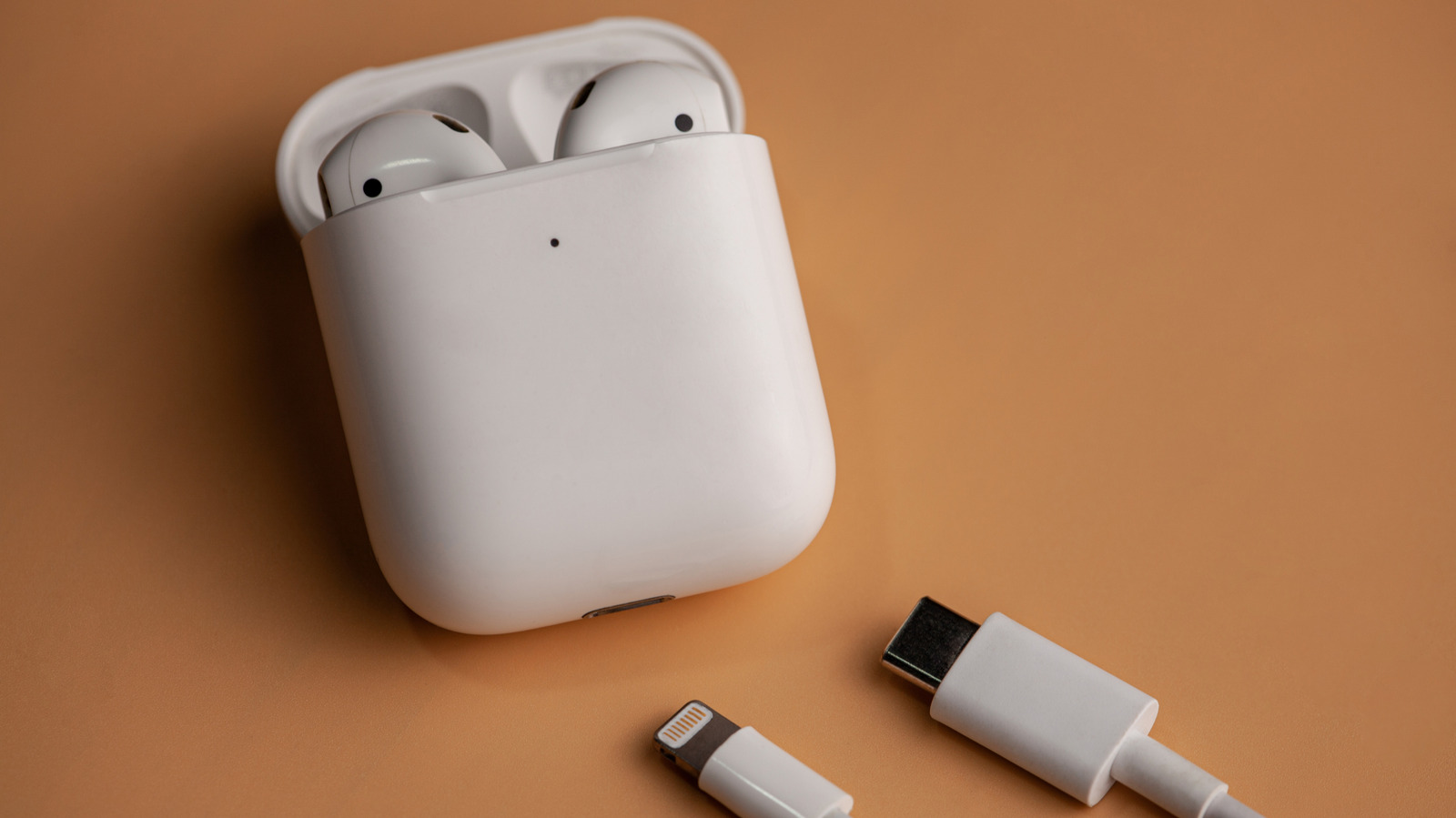
AirPods are one of the few products that haven’t seen an insane price climb.
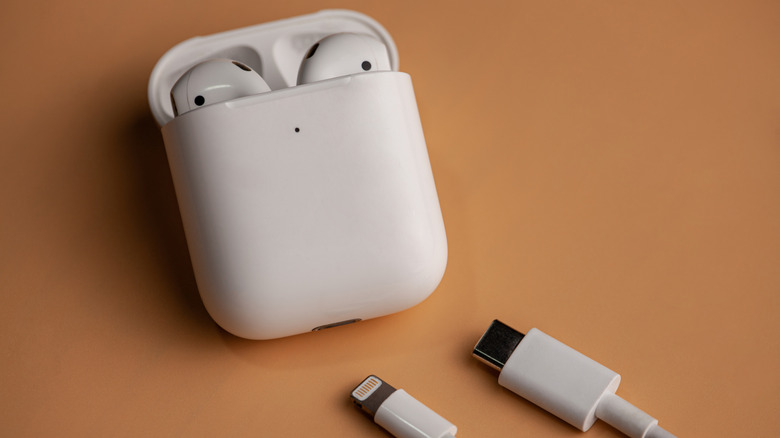
Bucsa Nicolae/Getty Images
It's been just over 10 years since Apple announced AirPods, the company's first wireless earbuds. They were revealed alongside the iPhone 7 during September 2016's Apple event, accompanying the shocking removal of the headphone jack from the iPhone. AirPods have since become a huge seller for Apple and are often the standard against which other earbuds are judged.
Despite their popularity, AirPods are one of the few tech offerings that haven't radically gone up in price over the last decade. In fact, they offer more value now than they did years ago.
The history of early AirPods
9091086/Shutterstock
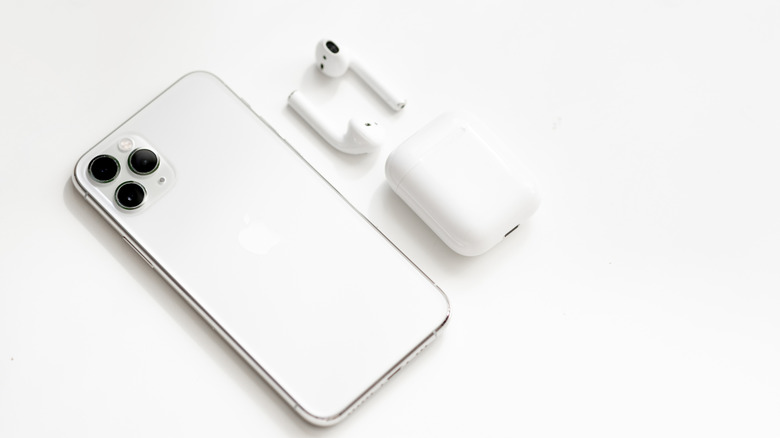
The original AirPods hit shelves in December 2016 after their Apple event reveal earlier that year, costing $159 for a then-new fully wireless experience.
The original buds were succeeded by the second-gen AirPods, which arrived in March 2019. These used an identical design to the first iteration and came with the same $159 price tag, though there was also a wireless charging case option available for $199. Without this, the only way to charge your AirPods case was the Lightning port. Those with original AirPods could order a standalone wireless charging case for $79.
In October 2021, Apple upgraded AirPods to the third generation, which brought some of the perks from the AirPods Pro to the core line — along with a higher price of $179. The stems were shortened compared to the first two releases, while they also gained spatial audio support and better battery life. Wireless charging was included on all models instead of requiring an upgrade, though Apple later bizarrely offered a model with a case that lacked wireless charging for only $10 less.
Pricing of more modern AirPods
Julija Matuka/Getty Images
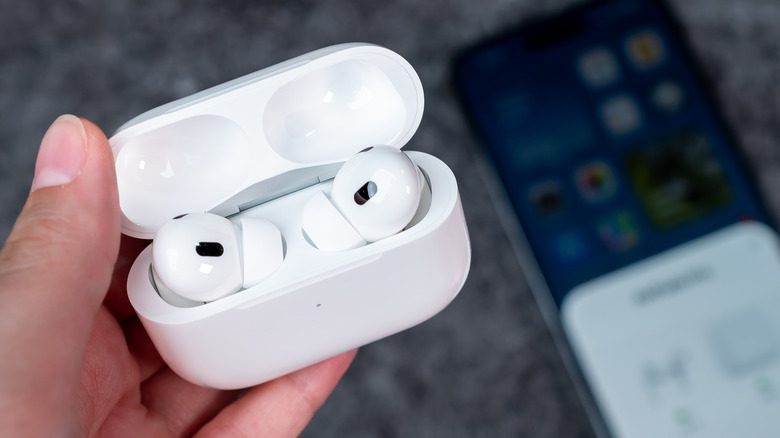
The third-gen AirPods marked the only time Apple kept selling the previous generation of AirPods alongside the latest release. At this release, AirPods 2 (without wireless charging) dropped to $129 and weren't discontinued until AirPods 4 were released in September 2024. That generation kept the more affordable price, starting at $129 and offering a $179 model with ANC and a wireless charging case.
Finally, the current AirPods 5 arrived in September 2026, starting at the same $129 baseline price along with an improved $149 model. We recommended avoiding the cheaper model, since the extra $20 gets you better battery life, volume adjustment controls on the stems and wireless charging support.
Meanwhile, the AirPods Pro and AirPods Max lines have had much simpler prices. All three AirPods Pro models (first-gen in 2019, second in 2022 and third in 2025) have cost $249 with no variations. AirPods Max have similarly come with a price tag of $549 on both releases (2020 and 2026).
AirPods pricing hasn't gone through the roof
The original AirPods' price of $159 in December 2016 is equivalent to roughly $222 today when adjusted for inflation. Furthermore, $249 for the original AirPods Pro in October 2019 would be $326 now, and the AirPods Max's hefty $549 price tag from December 2020 equals $710 at the time of writing.
In an era where every subscription and tech device seems to be endlessly increasing in price, it's refreshing that AirPods have effectively become cheaper since their introduction. They're spared from the current RAM crisis since the chips have integrated memory and they don't need storage.
AirPods also encourage users to stay in the Apple ecosystem: If you have an iPhone and buy AirPods, you're more likely to, say, consider a Mac for your next computer so your AirPods are fully compatible. It's thus in Apple's best interest to keep the cost of at least the base AirPods reasonable.
While Apple doesn't discount AirPods on its storefront, they regularly go on sale at other retailers. If you're interested in a pair, wait until events like Black Friday or Prime Day, and you should find all levels of AirPods at a decent discount. Though we found the AirPods Max 2 impressive, their price is way too much for most people.
What AirPods have gained since 2016
Dontree_M/Shutterstock
In addition to a lower effective price, AirPods have picked up a lot of new features and improvements in their decade of existence. One of the biggest is active noise cancellation (ANC), which captures incoming noise and plays an inverted sound to cancel it out. This first appeared on the original AirPods Pro in 2019 and has been available on the base AirPods since the fourth gen.
The chip inside AirPods has also gotten more powerful since the first model's W1 chip. AirPods 2-3, as well as AirPods Pro 1 and AirPods Max 1, all used the H1 chip, which works with "Hey Siri" commands instead of having to touch your earbuds to activate it. Later models have an H2 chip, with all but the base AirPods 4 providing the Adaptive Audio mode that blends Transparency and ANC depending on noise around you.
These models also have Conversation Awareness, where the audio level of your buds drops when you start talking, and the microphones focus on the person speaking in front of you. Modern AirPods also detect your head movements, letting you nod your head to accept a call or shake your head to stop an alert that's being read. And the AirPods Pro 3 can track your heart rate without an Apple Watch.
Even the AirPods case has gotten better over the years. AirPods Pro 2-3 and the higher-end AirPods 4-5 models have speakers in their cases to help you find them when misplaced. They also work with Find My, so you can track down your AirPods if you leave them on a bus or similar. OG AirPods didn't have a wireless charging-capable case, which is available with all current models. Like the rest of Apple's devices, USB-C is now the charging method instead of the original's deprecated Lightning port.
Today's AirPods benefit from Siri AI if your connected iPhone is compatible with Apple Intelligence, so you can use more natural language with the assistant and even translate conversations in real time.
KioskNews shows a cleaned-up reading view extracted from the publisher’s page — the original always lives on their site, not ours.