Opinion: Opinion | The Trump-Xi Summit, And India's Many Worries Of Its Own
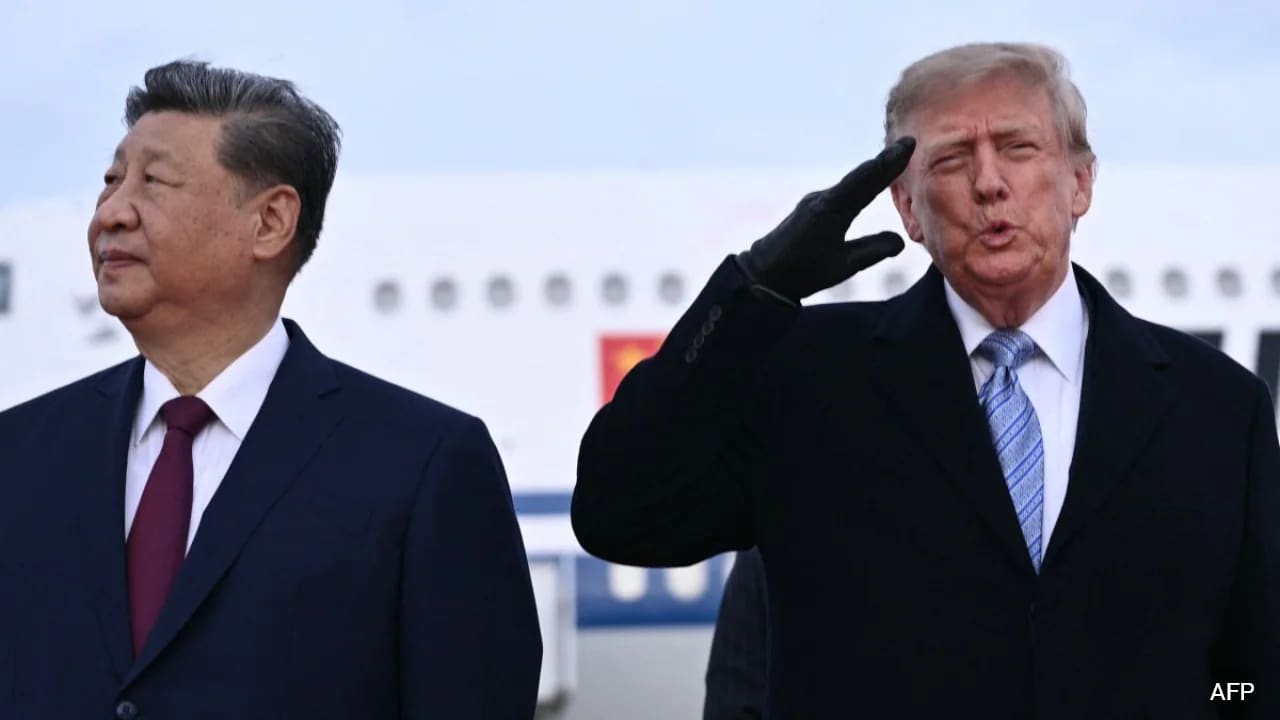
The ongoing high-stakes summit between President Donald Trump and President Xi Jinping has signalled a crucial phase in the recalibration of global geopolitics, with significant implications for the rest of the world, and in particular for India.
Designed primarily to manage systemic friction between the world's two largest economies, the interaction yielded a pragmatic, albeit fragile, framework of managed interdependence between the two countries that President Trump, perhaps in a rash moment, had last year dubbed the “G-2”. Rather than orchestrating a grand economic reset or resolving fundamental ideological divides, let alone consecrating a grand condominium to divide up the world as the term “G-2” implies, the discussions focused on tactical stabilisation, mitigating immediate economic disruptions, and setting clear boundaries around strategic escalation.
Advertisement - Scroll to continue
For the broader international community, the summit confirmed that while Washington and Beijing remain locked in intense structural rivalry, neither superpower currently desires an uncontained crisis that could destabilise global markets or trigger unintended military friction. For India, the questions it prompts are somewhat different.
A Temporary Pause
At the heart of the summit's outcomes was an agreement to extend the existing trade truce between the two economic giants, staving off a renewed spiral of punitive tariffs and reciprocal supply chain disruptions. The temporary reprieve addresses immediate domestic economic pressures facing both leaders. Washington secured commitments regarding agricultural exports and predictable flows of critical minerals, while Beijing achieved a degree of tariff relief and a pause on several expanding American export controls targeting non-sensitive technological sectors. This can be seen as mutually satisfactory outcome that staves off the prospects of a trade war between the number 1 and 2 ranked economies on earth.
Advertisement - Scroll to continue
Beyond commerce, the two leaders established preliminary channels for communication on artificial intelligence safety and guardrails, acknowledging the systemic risks posed by unchecked technological proliferation. On security issues, particularly regarding Taiwan and regional maritime posture, both sides maintained firm boundaries while agreeing to keep military-to-military dialogue active to prevent tactical miscalculations.
So far, so good. But the tone and scope of the summit carry profound implications for India's strategic calculations. In New Delhi, the primary concern leading into any major high-level engagement between Washington and Beijing is the spectre of a superpower condominium (the so-called G2 arrangement), wherein the United States and China might seek to divide spheres of influence and manage regional security over the heads of other powers, with the US essentially ceding Asia to China. The limited, transactional nature of the Washington summit effectively dispelled these immediate fears.
The Big Quad Question
Could it be even more encouraging than that? Some observers suggest that by failing to forge a sweeping geopolitical consensus, the summit demonstrated that Washington's old strategy of ensuring the structural containment of China remains fundamentally intact. This seeming outcome, if confirmed, would reassure Indian policymakers that the strategic rationale underpinning the Indo-Pacific architecture, including the Quadrilateral Security Dialogue, retains its core purpose in counter-balancing Chinese influence across the region.
But the proof of that pudding still lies in the eating. After President Biden convoked the four countries for the 2024 Summit in Delaware, India was expected to host the Quad Summit in 2025, except that President Trump showed no interest in attending. Hopes were expressed that this could now take place in 2026, but there are no signs of one being scheduled this year either. The real worry remains whether New Delhi would have to hand over the chairmanship without having hosted a summit at all, an unprecedented humiliation that would severely undermine the value of the Quad for India. Indians will wait keenly for any reaffirmation of the US's continued commitment to the Indo-Pacific and to the salience of the Quad in Washington's vision of the region. A statement that President Trump looks forward to the next Quad summit once his other priorities (notably a settlement in the Iran War ) are taken care of, would go a long way towards reassuring foreign policy watchers in New Delhi.
From a macroeconomic perspective, the outcomes present a nuanced matrix of opportunities and challenges for the Indian economy. The decision by the United States and China to stabilise trade flows without completely dismantling protective tariffs or technology restrictions means that the case for a global push toward supply chain diversification (away from over-reliance on China) remains compelling. Foreign investors and multinational corporations seeking to hedge against persistent US-China friction will continue to look toward alternative manufacturing hubs, reinforcing India's position within the “China Plus One” strategy.
India's Concerns
However, the tactical pause in trade hostilities prevents an immediate, aggressive flight of capital out of Chinese manufacturing, helping the Chinese economy. Furthermore, any calibrated US tariff reductions or specific exemptions for China, negotiated on the sidelines of the summit between Washington and Beijing, could place Indian exports at a relative tariff disadvantage. This would be exacerbated if New Delhi faces tighter trade scrutiny or elevated duty structures from the United States in the wake of the Russian Sanctions Act - unless those sanctions are applied to China too.
In terms of regional security and strategic autonomy, the summit offers New Delhi both tactical breathing room and a reminder of its long-term challenges. A stabilised US-China relationship reduces the immediate risk of an escalating global crisis that could force India into uncomfortable geopolitical choices, allowing New Delhi to maintain its preferred posture of multi-alignment and strategic autonomy in order to manage its own problems along the disputed border. At the same time, the absence of explicit US leverage forcing major concessions from Beijing means that China's regional posture in South Asia and along the disputed Himalayan border will remain a direct operational concern for India. A China that successfully manages its front with Washington will feel all the more politically unencumbered to maintain its increasingly assertive stance in its immediate neighbourhood, ensuring that New Delhi must rely primarily on its own national defence capabilities and domestic resources to secure its borders and maritime interests.
Ultimately, the Trump-Xi summit underscores the current state of the international order as one defined not by ideological convergence or outright decoupling, nor by a revival of the binary Cold War era, but by the competitive management of coexistence. For India, the outcome reinforces the necessity of continuing its current foreign policy trajectory of multi-alignment in quest of increased global multipolarity.
On the economic lessons of the summit, New Delhi must accelerate its internal economic modernisation, strip away regulatory sclerosis, strengthen domestic manufacturing capabilities, and deepen technology partnerships with developed economies, while maintaining a wary, pragmatic line of communication with Beijing. By navigating the spaces created by a managed, long-term US-China coexistence-amid-rivalry, India can continue to explore and expand its role as an indispensable pole in a multipolar world.
(Shashi Tharoor has been a Member of Parliament from Thiruvananthapuram, Kerala, since 2009. He is a celebrated author and a former diplomat)
KioskNews shows a cleaned-up reading view extracted from the publisher’s page — the original always lives on their site, not ours.