POWER GUZZLERS OP-ED: Approved in the dark — the hidden environmental toll of SA’s data centre boom
/file/dailymaverick/wp-content/uploads/2025/10/label-Op-Ed.jpg "Signpost-Op-Ed")
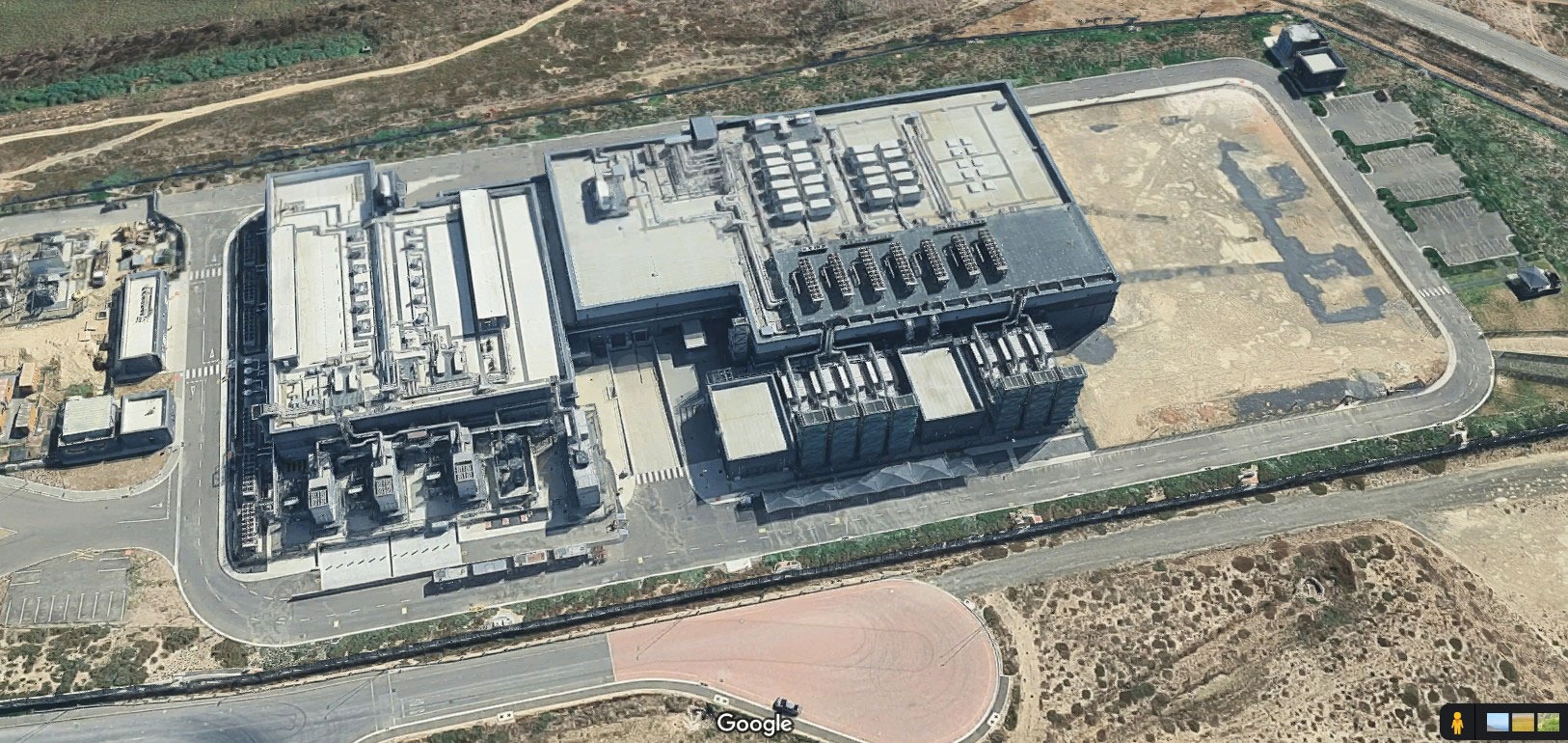
When the City of Cape Town’s planning tribunal approved the land-use changes for a second Equinix hyperscale data centre in July, one member of the tribunal voted no. The information missing from the application, about the facilities’ water and electricity use, he warned, “should not be ignored”.
But it was. While the approval went through on the King Air Industria site, next door, residents of Bishop Lavis and of Barcelona and KTC informal settlements in Gugulethu remember queueing for water during Cape Town’s water crisis of 2017-2018. When the developer was asked how much water the facilities would use, the answer was that this would be confirmed after approval.
That single sentence tells you most of what you need to know about how South Africa is handling the fastest data centre expansion on the African continent. This is why our five organisations have filed a joint submission to the South African Human Rights Commission (SAHRC), which is investigating the human rights implications of that boom.
Our argument is straightforward. Data centres are the physical backbone of the digital economy and South Africa needs digital infrastructure. But these are not ordinary buildings, and we are approving them as if they were, without the most basic information about what they will take from our water sources, our grid and our land.
Before scale, a question: what is all this for? Even the industry’s own lobby, the Digital Council Africa, puts South Africa’s current capacity near 500MW – capacity that already carries our online life with good latency and redundancy. Yet the pipeline of announced projects would more than triple it, and as Pitso Tsibolane notes, at industry gatherings investors and engineers are “notably reluctant to bet on demand at that scale arriving within five years”.
The frontier large language models driving the AI race aren’t currently trained outside of the US or China. So what is all this proposed compute for? We are being asked to hand over land, water and power now, for demand the industry itself cannot confidently identify or explain.
Now, scale. The 500MW are hosted across about 60 known data centres, whose combined load is equivalent to more than a quarter of Cape Town’s peak electricity demand. Yet there is no public register of these facilities and where they are, no requirement that operators disclose their water or electricity consumption, and no regulator, anywhere in government, that sees the sector’s full footprint.
Next, water. The racks of servers inside a data centre run hot and have to be cooled continuously, and the cheapest, most common way to do that is to evaporate water. In the world’s 30th-driest country, in cities that have queued for water to avoid Day Zero and others that are watching their water infrastructure fail, every one of these developments is being weighed without the numbers.
Developers may well say that their data centres won’t use direct evaporative water cooling, but until they say what they will do, and commit to it in legally binding terms, we will respectfully consider that to be so much hot air (or perhaps steam?).
The ‘benefits’
Then the benefits, which are asserted far more often than they are demonstrated. Data centres are among the least efficient job creators per rand invested. The Wall Street Journal has reported on the “Job Creation Bust” of data centres in the US, and the Financial Times has done the same for the UK, saying: “There might be good reasons to build data centres in Britain. Job creation isn’t one of them”. To be sure of how entirely automated these facilities are, both Elon Musk and George Bezos have proposed launching them into space.
Consider what stood in for evidence in Cape Town. The tribunal said that approval delivers “a positive socioeconomic impact given that employment opportunities will be created” and that the development will “support digital infrastructure and downstream industries”, promoting the city as “a global, competitive, and innovation-driven hub”. Not one of those phrases carries a number: not how many jobs, of what kind, for how long, or for whom.
“Downstream” is doing an enormous amount of work, and it is the one word in the sentence nobody can be held to. Instead of regurgitating Big Tech spin, it is the tribunal’s duty to assess whether or not a data centre is a desirable development in the public interest – particularly for the people of Cape Town.
As noted by the Constitutional Court in the Tafelberg matter, the City of Cape Town needs to ensure that resources are distributed in a manner that “actively dismantles historical inequalities shaped by race and class along geographical lines”. In a province whose housing waiting list stands at 431,902 households, it is hard to see how a data centre on this well-located land is a more desirable use than housing for the surrounding communities.
There is a deeper incoherence here too: the “boom” is sold along with promises to upskill youth with the “digital skills they’ll need for the future”, while the chief executives of the very companies building these facilities boast that the technology inside them will make white-collar work obsolete within years if not months.
Profits leave SA
So which future are we choosing to trust with our water? Most operators in South Africa are US-owned. The specialised chips inside come overwhelmingly from a single US company. The profits are concentrated and offshore; the costs, in water, power and grid upgrades, stay here.
While what’s printed on the tin looks different, South Africans will recognise the extractive logic inside. Yet data centres sidestep the obligations we impose on other heavy users like mining and renewable energy: their vast racks of servers are permitted to hum warmly without a social and labour plan or any form of community ownership.
Then the electricity. Eskom has staged a remarkable recovery: more than 400 consecutive days without load shedding, and a forecast surplus of around 6GW at peak. That surplus is a hard-won national achievement, which is now the focus of Eskom’s in-house commercial unit.
The Financial Times reports that Eskom is courting data centre operators as anchor customers for that spare power: power generated overwhelmingly by coal, since it is the recovery of the coal fleet that produced the surplus. Sit that alongside one of the industry’s favourite talking points, that data centres will fuel South Africa’s just energy transition to renewables, and the contradiction is apparent.
If the boom’s first big act will be to buy up coal-fired surplus, not to build renewables, then it will lock in demand for coal at precisely the moment our commitments require it to decline. A surplus belongs to the public that paid for it. Whether it powers factories, connects households or feeds server halls is exactly the kind of choice that should be made in the open, not settled quietly in supply agreements nobody sees.
President Cyril Ramaphosa has said this expansion must respect human rights, protect the environment and benefit host communities. We agree with every word. Unfortunately, there is very little forthcoming from the industry to assure the public that the President’s vision is shared, and none of those would-be commitments can be honoured, or even verified, in the dark.
Regulation has not driven investment away elsewhere. Singapore paused new data centres, wrote the rules and remains a global hub. The Netherlands and Ireland did versions of the same. In July, New York became the first US state to pause approvals while it studies the sector, and passed a law making data centre companies, not households, pay for the powerlines and water pipes they need. Each was a pause that let regulation catch up. South Africa has something very rare in this moment: the chance to learn from everyone else’s mistakes before the biggest facilities are built.
Four issues
Our submission asks the SAHRC to consider four things. The first is a participatory national inquiry into the need, scale and impacts of data centre development – not as an end in itself, but as the foundation for something South Africa does not have: a national regulatory framework for this sector, rooted in constitutional rights.
Today, various separate regimes each catch a fragment of a data centre – including environmental, water, planning, electricity and data law – and none of them sees the whole facility or reconciles the obligations that should govern their approval, construction and operation.
The other three follow from the first consideration:
Second, an independent assessment of the sector’s human rights, ecological and economic costs and benefits, so that decisions rest on a factual baseline rather than on calculations done by the companies that stand to profit from them.
Third, that the government openly considers a pause on new hyperscale approvals and on expansions of existing facilities until that inquiry, framework and baseline are in place.
And fourth, an independent panel to monitor water, electricity and land use on an ongoing basis, and compliance with the law, with real penalties for operators who ignore it.
We know the counter-argument, because it is already being made: that civil society scrutiny will scare off investment and cost the poor their jobs. It has things backwards. Unverified promises cost the poor; binding, transparent commitments are how benefits actually reach them. A country with our level of inequality cannot afford to sign away scarce land, water and electricity for benefits nobody has checked. Scrutiny is not the enemy of development; secrecy is.
The commission’s call is a rare opportunity to get ahead of a boom rather than clean up after one. We have put the evidence – and the lack of it – before the commission. Our ask is modest: tell the public the truth about what these buildings take and what they give back, before deciding. Because you cannot consent to what you cannot see. DM
• The full submission to the SAHRC is available here.
• The submission is made jointly by five civil society groups: housing movement Housing Assembly, technology accountability non-profit Foxglove, economic crimes investigator Open Secrets, climate research group Research + Action, and the University of Edinburgh’s Planetary AI Collective. Legal guidance was provided by Open Secrets and the Legal Resources Centre (LRC).
• Daniel Hartford is the South Africa lead at Foxglove; Ariella Scher is the head of Legal at Open Secrets; Kimal Daniel Harvey is an attorney at the Legal Resources Centre; Mohammad Amir Anwar is the principal investigator at Planetary AI Collective; and Kashiefa Achmat is the chairperson of Housing Assembly.
KioskNews shows a cleaned-up reading view extracted from the publisher’s page — the original always lives on their site, not ours.