Boeing's 777 freighter output stalled by supplier dispute, threatening deliveries
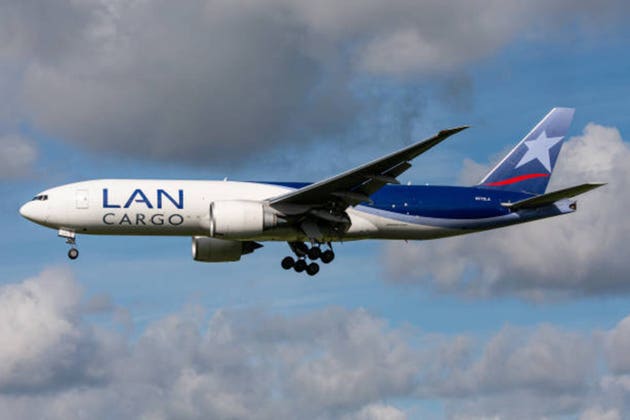
Bjoern Wylezich/iStock Editorial via Getty Images
Boeing (BA) has suspended production of its 777 freighter for nearly two months amid a dispute with a Florida-based parts supplier that also has disrupted manufacturing of its 767 aircraft and KC-46 military refueling tankers, Reuters reported, citing company workers and court documents.
The aerospace manufacturer sued supplier Vaero in August after the company allegedly stopped delivering trailing-edge rib kits, essential components used in aircraft wing assembly. Boeing (BA) claimed the interruption at its Everett, Washington, facility was costing it as much as $6.5 million daily.
Although the companies settled their dispute in late September, production of the 777 freighter hasn't resumed.
For investors, the prolonged shutdown raises concerns about Boeing's (BA) ability to meet delivery schedules, generate cash flow and improve manufacturing efficiency. The disruption also underscores the risks of relying on a single supplier for critical components, particularly as the company works to stabilize production and capitalize on demand for cargo aircraft.
Boeing (BA) is seeking to manufacture the affected components internally to reduce its dependence on Vaero. Some parts deliveries have resumed for the 767 program, but the shortage forced Boeing (BA) to remove two partially assembled 777 freighters from its production line.
Reuters identified one of those aircraft as intended for FedEx (FDX), citing aviation consultancy IBA. The company's newer 777X program, which uses different wing technology, hasn't been affected.
Boeing (BA) has delivered 21 of its 777 freighters this year and may still complete additional deliveries before year-end using aircraft whose wings were assembled before the disruption. Boeing (BA) declined to comment on the dispute, while Vaero and FedEx (FDX) didn't respond to Reuters' requests for comment.
KioskNews shows a cleaned-up reading view extracted from the publisher’s page — the original always lives on their site, not ours.