46 days and counting: Lok Sabha’s longest adjournment in Modi era
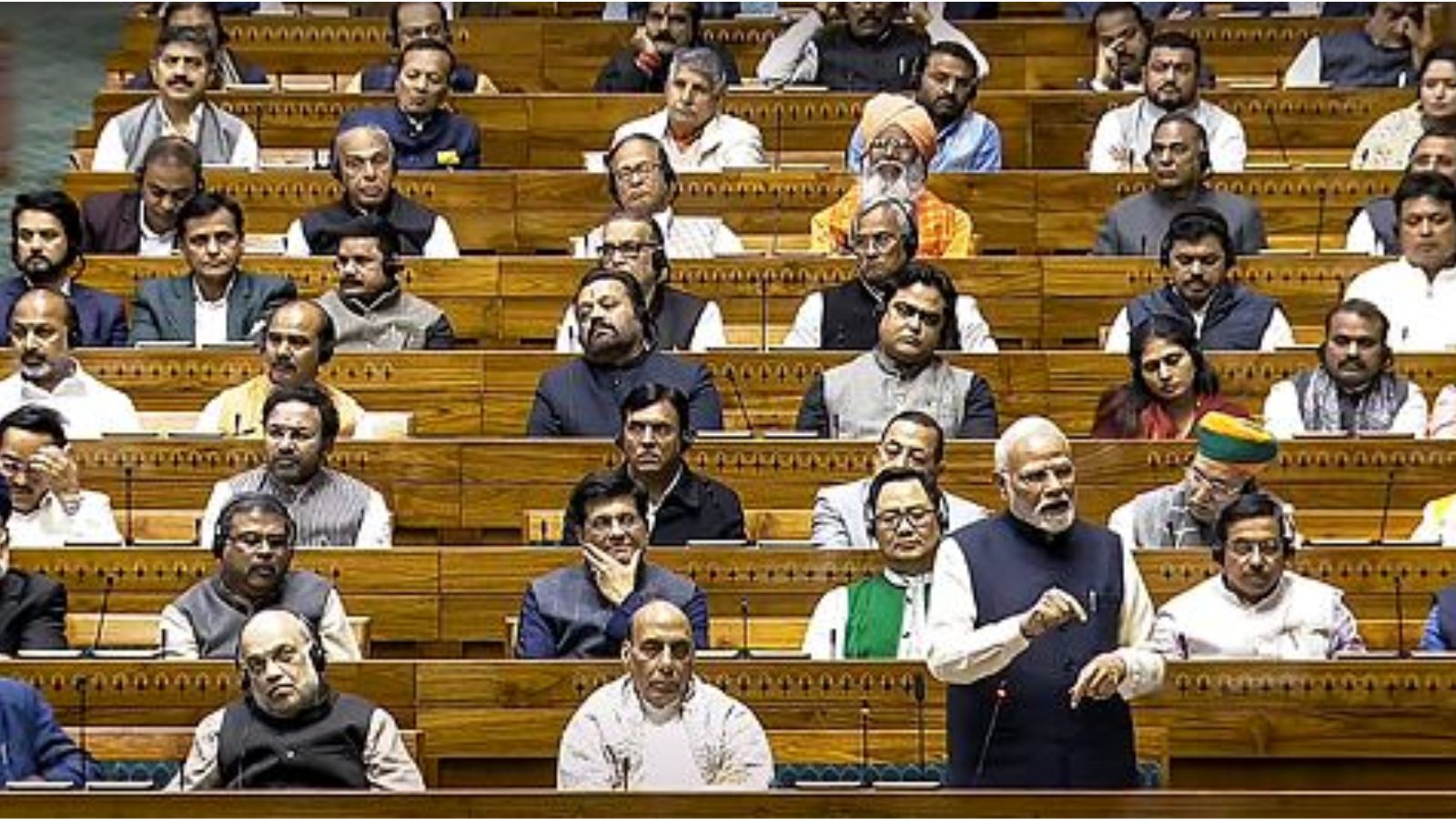
At 46 days and counting, the Eighth Session of the 18th Lok Sabha has acquired the distinction of witnessing the third-longest sine die adjournment in history, Parliament records show. While the two longest adjournments came during previous Congress governments, this is the longest that Parliament has been adjourned since the BJP-led NDA government first came to power in 2014.
The Monsoon Session of Parliament began on July 20 and was adjourned sine die on August 13. Unlike prorogation, which formally ends a session, an adjournment sine die ends the sitting without fixing a date for the House to meet again. The 2023 Monsoon Session was held from July 21 to August 21, with 21 sittings, and the House was prorogued the following day.
The prolonged adjournment comes after a session marked by repeated disruptions over several issues, including the NEET paper leak, alleged theft at the Ayodhya Ram temple and demands for Union Home Minister Amit Shah to respond to allegations concerning action against the youth and Gen Z protesters.
The intervening period also saw significant political developments, including defections involving AAP Rajya Sabha MPs and a split in the Trinamool Congress.
The continued non-prorogation of the House has also fuelled speculation about the possibility of a fresh sitting in October. Political debate has centred on the numbers required for a constitutional amendment linked to delimitation and women’s reservation. Claims about the government’s plans, however, are speculative rather than based on established parliamentary decisions.
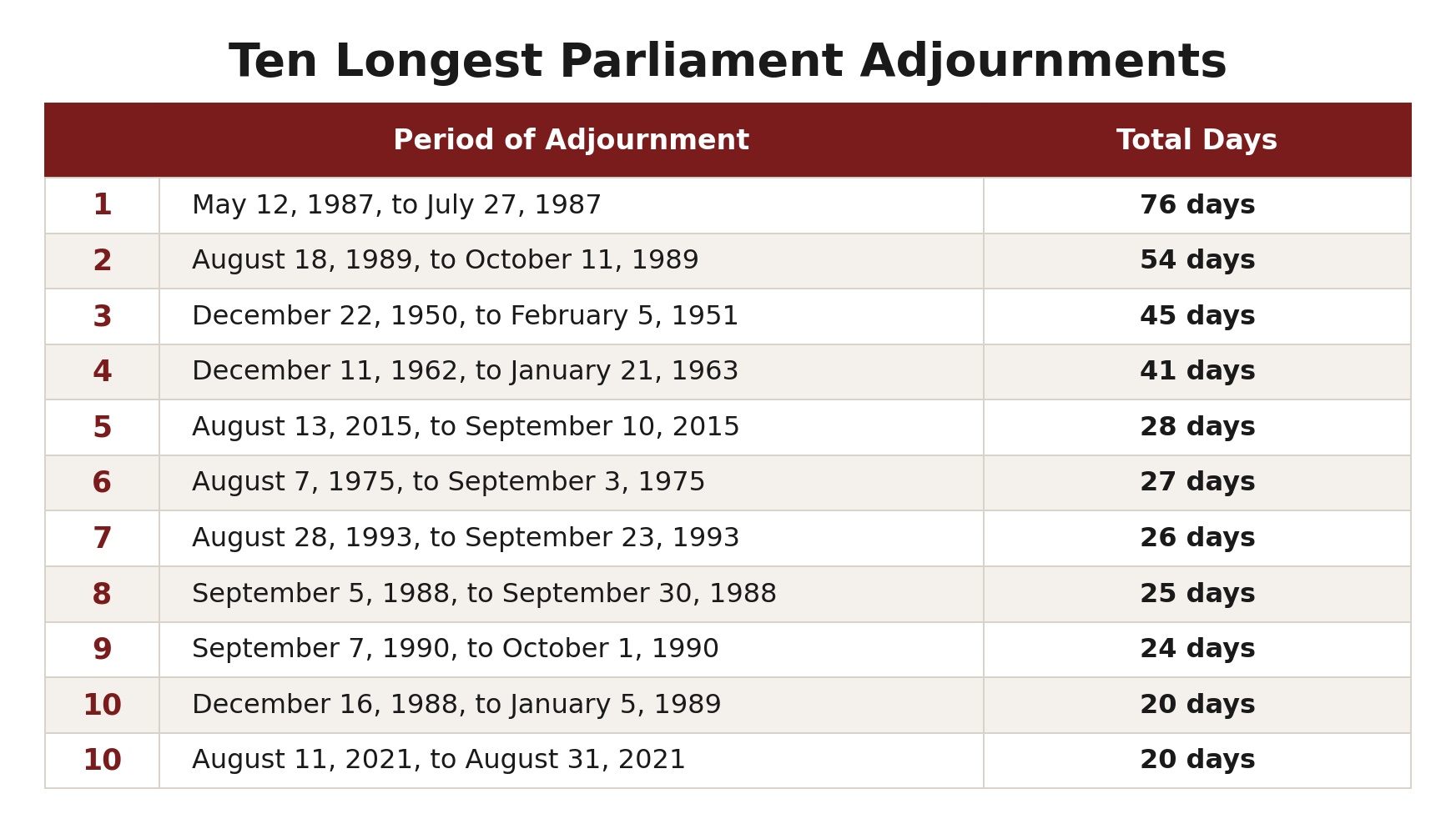
Under the NDA government, before this, the longest a session went without getting prorogued after being declared adjourned sine die is longer than the 28-day period between August 12, 2015 and September 10, 2015, and the 20-day period between August 11 and August 31, 2021.
Adjournment sine die is not prorogation
According to Practice and Procedure of Parliament by M N Kaul and S L Shakdher, a House may be adjourned from day to day, for more than a day, or sine die during a session.
An adjournment postpones the sitting of the House to another time. When a House is adjourned sine die, no date is fixed for its next sitting. The sitting has ended, but the session itself has not necessarily been terminated.
Prorogation is different. Under Article 85(2) of the Constitution, a session of Parliament is formally terminated by an order of the President. Ordinarily, prorogation follows an adjournment sine die, although the two are legally distinct.
The President exercises the power to prorogue Parliament on the advice of the Prime Minister. Prorogation may technically take place at any time, including while the House is sitting, though the usual sequence is for the House to be adjourned sine die before it is prorogued.
The Speaker can call a sitting of the Lok Sabha before the date to which it has been adjourned, or at any time after the House has been adjourned sine die. This means that an adjournment sine die does not, by itself, prevent the House from being reconvened.
When Parliament stayed adjourned
The two longest sine die adjournments in Lok Sabha history occurred during the Eighth Lok Sabha.
The longest, lasting 76 days, occurred in 1987 during the Eighth Session of the Eighth Lok Sabha, against the backdrop of the Bofors controversy. The second-longest, lasting 61 days, occurred in 1989 during the Fourteenth Session of the same Lok Sabha.
The 1987 episode began after allegations of kickbacks emerged in connection with India’s 1986 agreement with Swedish arms manufacturer Bofors AB for the supply of Howitzer guns.
The Eighth Session began on February 23, 1987, and was adjourned sine die on May 12 amid disruptions over Bofors. The Speaker subsequently exercised the power available under the proviso to Rule 15 to reconvene the House from July 27 to August 28.
The session therefore continued for several months despite the long gap between sittings. The Lok Sabha adopted a motion on August 6 to constitute a 30-member Joint Parliamentary Committee to inquire into the Bofors deal. The Rajya Sabha adopted a corresponding motion on August 12. The committee consisted of 20 Lok Sabha members and 10 Rajya Sabha members.
The Lok Sabha was finally prorogued on September 3, 1987, bringing the session to an end after the 76-day intervening adjournment.
The second-longest gap came two years later. The Fourteenth Session of the Eighth Lok Sabha began on July 18, 1989, and was adjourned sine die on August 18.
The period was marked by another major political confrontation involving Bofors. Around 100 Opposition MPs resigned en masse after a report of the Comptroller and Auditor General (CAG) on the deal was tabled in the House.
The Speaker again exercised the power under the proviso to Rule 15 and reconvened the House from October 11 to October 16. The House was subsequently adjourned sine die on October 13 and finally prorogued on October 20. The intervening period between sittings amounted to 61 days.
Within weeks, the Rajiv Gandhi government was voted out, paving the way for the V P Singh-led National Front government, which came to power with outside support from the BJP.
A practice dating to the 1920s
The procedures governing the summoning, prorogation and dissolution of the legislature have roots in changes introduced during the late 1920s.
Before 1929, orders of the Governor-General relating to the summoning, prorogation and dissolution of the Central Legislature were obtained and notified through the Legislative Department of the Government of India.
At a conference chaired by Governor-General Lord Irwin on June 17, 1929, attended by Legislative Assembly President Vithalbhai Patel, the Home Member and the Law Member, it was decided that orders concerning the Legislative Assembly would thereafter be obtained and notified by the Legislative Assembly Department.
That practice continued after Independence.
In 1955, the Minister of Parliamentary Affairs proposed that presidential orders relating to the summoning and prorogation of the Lok Sabha should be obtained and notified under the orders of that ministry. A similar proposal was made by the Home Minister in 1958. The Speaker did not accept either proposal.
The reasoning recorded in parliamentary records was that the President is both the Head of State and a constituent part of Parliament. The Speaker’s view was that matters relating to the summoning, prorogation and normal dissolution of the Lok Sabha were part of the broader parliamentary process and that the Speaker should fix dates in consultation with the government and communicate them to the President.
There was also a Constitutional concern: leaving such discretion entirely with the government could potentially affect the Opposition or minority groups. The argument was that the regulation of sittings, adjournments, reconvening after an adjournment sine die and fixing the commencement of sittings were interconnected functions, with the Speaker playing a central role.
KioskNews shows a cleaned-up reading view extracted from the publisher’s page — the original always lives on their site, not ours.