‘Easier to write fiction at the moment’: Journalist Tavleen Singh on her debut novel
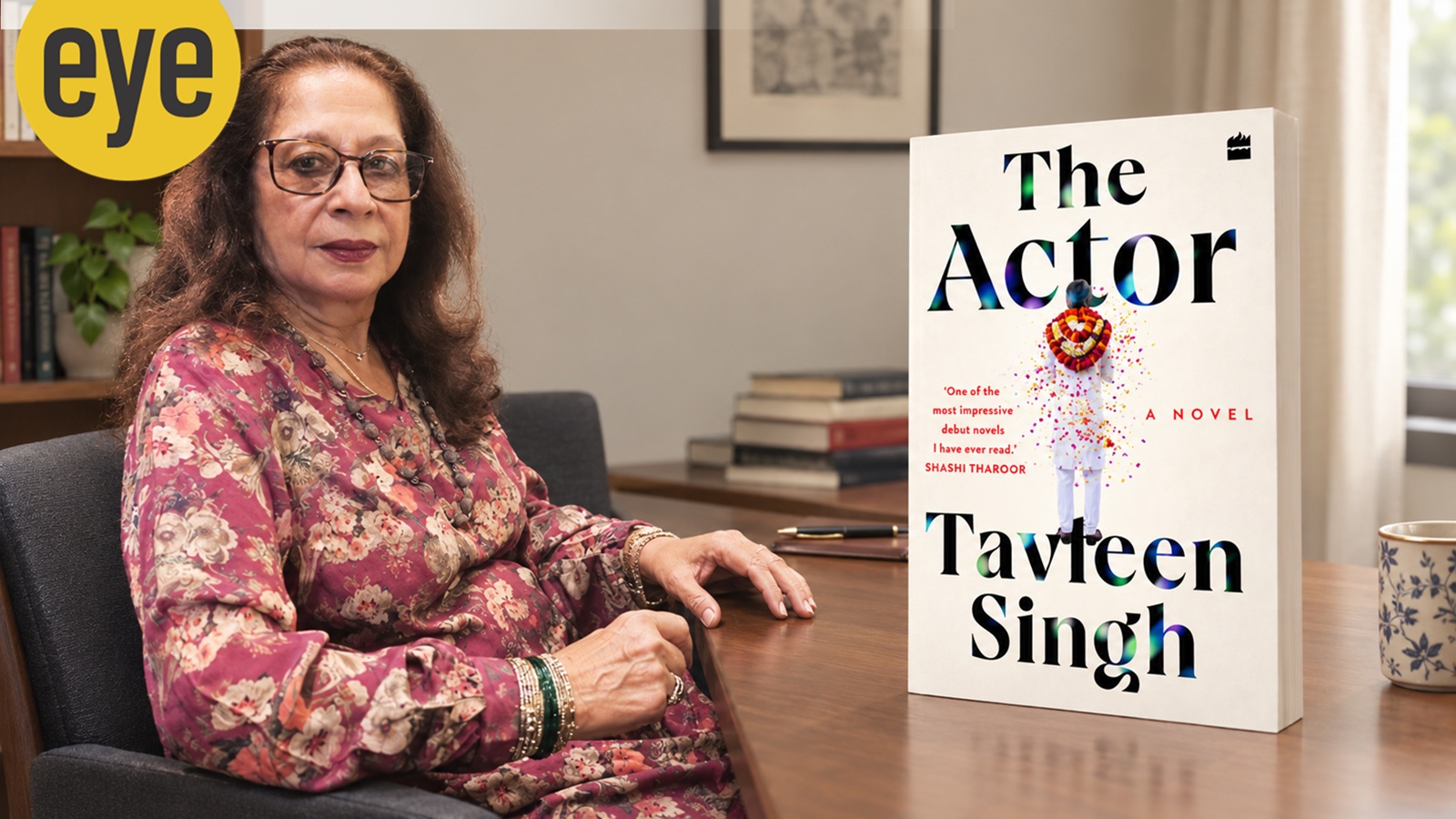
The Actor is columnist Tavleen Singh 's debut work of political fiction. (Express Photo, enhanced with AI)
Journalist and columnist Tavleen Singh has spent her career dealing in hard facts. Now, for the first time, she has turned to political fiction — drawing an imagined India of the future that feels unsettlingly prescient. “It might surprise you, or may not. It is easier to write political fiction at the moment than political non-fiction,” says Singh, whose other books include Messiah Modi, Durbar and Kashmir: A Tragedy of Errors.
The Actor imagines an India “veering towards extreme religiosity.” Its prime minister, Guruji, is an untouchable larger-than-life figure. A former yoga guru who used to live in a Himalayan cave and has been elected four times, he has no family or friends, and insists his only interest is serving the nation; never mind that his associates wear Cartier spectacles.
Into this world stumbles Bollywood superstar Amit Singh. Reeling from three consecutive box-office flops, he finds a chance to revive his dying stardom, when his childhood friend Naresh Khanna, a two-term MP trying to build an opposition party on a secular plank, invites him into politics.
Singh insists that Guruji is not a portrait of any living politician. “It really is a character I have invented because the book is set in the future, don’t forget,” she says.
The novel is an inventory of the fault lines that are pulling the country apart: bulldozer justice, caste violence and the machinery that protects it, the radicalisation on both sides of the Hindu-Muslim divide, the language of jihad and Hindutva, the reflexive charge of “elitism” and foreign sponsorship that populists wield against the opposition, and a political class that has curdled into family businesses.
Singh says, “A maximum of 10 years if we continue down this road” is what separates her fictional India from turning into a real one.
She believes that the country’s obsession with religious politics has come at a direct cost to its competitiveness. “I have seen the harm that has been done to India because while we were busy worrying about people eating beef and closing down butcher shops in Uttar Pradesh and rioting and making Muslims feel like second-class citizens, what was China doing? It was developing its AI capacities,” she says. “We have excellent software engineers; the wherewithal to do it ourselves but haven’t.”
Story continues below this ad
The India of the novel muzzles critics without ever declaring itself authoritarian through laws that allow journalists and student activists to be jailed for years without trial. In this fictional India, ordinary voters see what is happening, are dismayed by the fraying fabric of secular India but tolerate the crackdown because the same government hands out doles and freebies.
The book is titled The Actor, perhaps suggesting that actors and career politicians draw on a similar skill. Why make the protagonist an actor who serendipitously finds politics? Singh says she has always been fascinated by Bollywood stars turned politicians, from Dilip Kumar’s brief, aborted turn in politics, to the stints played by Amitabh Bachchan, Rajesh Khanna and Vinod Khanna, which is evidence, she says, that “politicians are performers,” and that a leader who cannot command a stage is at a real disadvantage.
Movie stars, Singh says, wield more power than most politicians. “Even the Ambanis,” she points out, “need stars at their events to draw a crowd. Don’t forget that America at the moment is being led by a reality TV star who keeps talking about how he is going to get someone out of central casting,” she says. “He goes for people’s looks and loyalty.”
Singh says she was startled by how closely her novel foreshadows reality. One finds real-world echoes of plot points that were written before they transpired, such as the birth of the Cockroach Janata Party, or the rise of the actor-turned-politician Vijay. Naresh’s rural tours through UP and Bihar, meanwhile, were consciously modelled on political strategist Prashant Kishor’s two years spent travelling the country to study its problems, Singh says.
Story continues below this ad
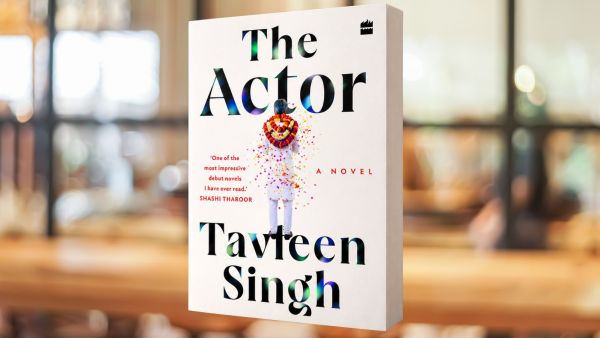 The Actor is columnist Tavleen Singh ‘s debut work of political fiction. (Haper Collins India , enhanced with AI)
One of her most compelling characters is the political reporter Maya, who becomes a mentor of sorts to Amit, a political ignoramus sheltered in the vacuous conversations of Bollywood. Eventually, she also becomes his love interest. Their affair is drawn more explicitly than the novel’s politics, as is a running subplot involving a promiscuous maharani-turned-politician, who flirts openly with Amit at a string of Delhi dinner parties. In one scene, he stumbles upon bundles of cash hidden behind a false ceiling in her private bathroom.
Asked whether Maya is Singh’s voice, the author says, “Not necessarily but, of course, she has some of my views.” The plucky journalist is assembled from scribes and socialites she has known over decades in Lutyens’ Delhi, the same world in which Amit and Naresh grew up.
On whether the state’s machinery would eventually catch up with a real-life reformer like Naresh, Singh is optimistic. “Voters have changed. They can see when they are being bribed for votes; they can see that nothing happens,” she says.
What would the fictional Guruji do if he read the book — ban it, ignore it, or invite her to tea and a selfie? “The reaction would not be a tax raid that’s coming your way but a bullet,” she says.
Story continues below this ad
Singh is intimately familiar with the consequences of displeasing the ruling dispensation. Her son, the writer Aatish Taseer, had his Overseas Citizen of India status revoked in 2019, after he wrote a Time magazine cover story critical of Prime Minister Narendra Modi. Taseer has since unsuccessfully applied for an ordinary visa to visit her and her ailing husband.
Singh has not thought about a sequel, she says but has left the door open. “Whether Naresh lives or dies, we don’t know,” she says. “He is in the hospital but he is still alive at the end of the book… I have seen India change because of religion being brought too much into politics. So I felt the need to write this.”
© The Indian Express Pvt Ltd

Aishwarya Khosla spearheads the digital strategy and execution for the Books & Literature and Puzzles & Games sections of The Indian Express. With over eight years of experience in journalism, Aishwarya specialises in literary criticism, cultural commentary, and long-form features, which explore the intersection of identity, politics, and social change. She was the recipient of the Nehru Fellowship in Politics and Elections, an intensive research fellowship in policy analysis and political communications, which informs her nuanced approach to cultural journalism, allowing her to provide readers with unique insights into how literature and media reflect broader political shifts. As a trusted voice for The Indian Express audience, she authors the popular newsletters, Meanwhile, Back Home and Books 'n' Bits, and hosts the podcast series, Casually Obsessed. Before her current role, Aishwarya spent several years at Hindustan Times, where she provided dedicated coverage of the Punjabi diaspora, theater, and national politics. Her career is defined by a commitment to intellectual rigor, making her a definitive authority on modern Indian culture and letters. Areas of Expertise Literary Criticism, Cultural Politics, Political Strategy, Long-form Investigative Features, and Newsletter Curation. Write to her You can reach her at aishwaryakhosla.ak@gmail.com or aishwarya.khosla@indianexpress.com. You can follow her on Instagram: @aishwarya.khosla, and X: @KhoslaAishwarya. Her stories can be read here. ... Read More
KioskNews shows a cleaned-up reading view extracted from the publisher’s page — the original always lives on their site, not ours.