How Tan Tock Seng Hospital is taking delirium care to the community
SINGAPORE – When the 95-year-old patient who has moderate dementia was discharged from hospital, she became increasingly confused and agitated.
Her daughters had initially thought the change in her behaviour was related to her dementia – that it had worsened.
“It was only during home monitoring by the Community Health Team that it was flagged that she had delirium due to a urinary tract infection (UTI). Before that, we had never heard of delirium. We just thought my mother’s dementia was getting worse,” said her daughter Wong, 68, who declined to give her full name.
Delirium, a state of sudden confusion and a severe change in mental function that reduces the ability to focus, sustain or shift attention, often gets missed and is frequently mistaken for normal ageing or a worsening of dementia.
“It is usually caused by underlying medical conditions, such as drugs, infections, electrolyte imbalances, constipation and UTI,” said geriatrician Lim Jun Pei from Tan Tock Seng Hospital (TTSH).
“It leads to adverse outcomes. Some of the patients would even describe it as a post-traumatic stress experience when they remember the episode they were going through. There was a loss of dignity, well-being, independence, and pain and suffering,” she added.
To lessen the burden and strengthen delirium care in the community, Lim and her team developed a new pathway within TTSH@Home, its alternative hospital service that delivers inpatient-level medical care directly to a patient’s home, enabling suitable patients to receive hospital-level care safely at home.
It is supported by specialist oversight and home-based clinical support from a team of nurses, who also provide caregiver education that includes different phrases to help caregivers remember information.
This pathway was implemented after the team visited the National Health Service of Greater Manchester in Britain, where they observed its community delirium programme demonstrating how suitable patients could be managed safely outside the hospital between February and March 2025.
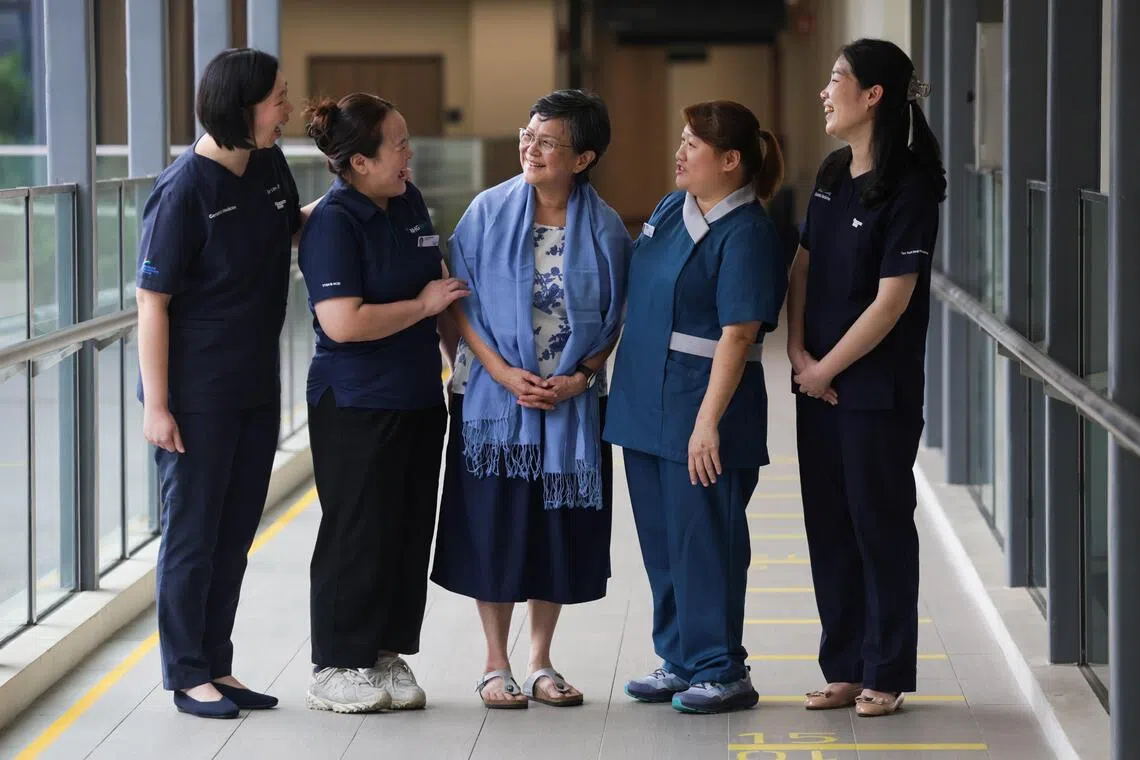
The team that helped Wong (centre) manage her elderly mother’s delirium: (from left) geriatrician Lim Jun Pei, senior staff nurse Annie Ling, senior nurse clinician Joey Yeo and geriatrician Bao Minfang.
ST PHOTO: GIN TAY
Lim said a study by the team at TTSH found that more than one in 10 (11 per cent) patients aged 65 and above experienced delirium while admitted to hospital for surgery, and this risk was three times higher in people with dementia.
A separate study in Britain found that about three in 10 patients (31 per cent) who experienced delirium developed dementia within five years of the onset of delirium.
Both studies, she said, demonstrated the need for timely intervention to address the underlying causes.
Lim also added that the early results of the new pathway to recognise and manage delirium early within TTSH@Home “have been encouraging”.
The data from June to December 2025 found that three in 10 (28.4 per cent) of elderly patients aged 85 and above cared for under the programme had a diagnosis of delirium.
Lim said that while they generally needed 1.25 more days of care on average, the rate of returning to hospital remained similarly low.
While there is no specific national figure for the total annual healthcare cost attributed only to delirium in Singapore, in the US, it is higher than the costs of many other conditions common in the elderly.
The estimated annual national healthcare cost burden of delirium in the US is US$152 billion (S$194 billion), second only to cardiovascular disease, at US$258 billion, and higher than that of diabetes, at US$92 billion.
Beyond supporting patients at home, TTSH has also trained more than 130 people across 23 community partner organisations, including nursing homes, in delirium and dementia awareness.
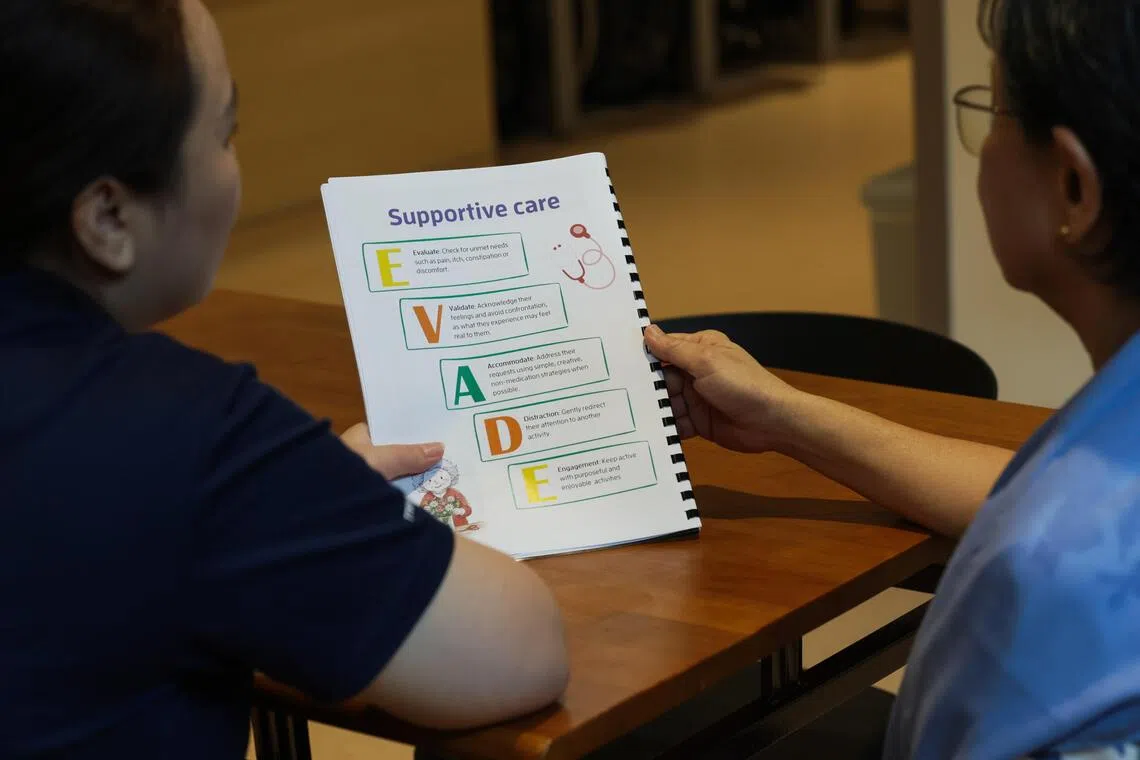
Senior staff nurse Annie Ling teaching Wong how to use the word “evade” as a mnemonic to recognise signs of delirium in her elderly mother.
ST PHOTO: GIN TAY
Lim said apart from medical factors, environmental factors can also contribute to delirium.
“For some patients, familiar home surroundings, supported by trained caregivers and structured clinical oversight, may help patients remain calmer and more engaged in recovery,” she said.
For Wong, the home-based care for her elderly mother “made a world of difference”.
The coaching from the TTSH@Home nurses taught Wong to distinguish between delirium and dementia, and she now has the confidence to work with her domestic helpers to care for her mother.
“Learning to recognise the signs gave me the confidence to support her recovery at home. The helper now takes the initiative to record her blood pressure, temperature and oxygen levels regularly,” she said, adding that she is glad her mother has almost returned to her normal activities such as playing games like Swat the Fly.
KioskNews shows a cleaned-up reading view extracted from the publisher’s page — the original always lives on their site, not ours.