BRICS Targets Self-Reliance Through Energy, Food, Rare Earths
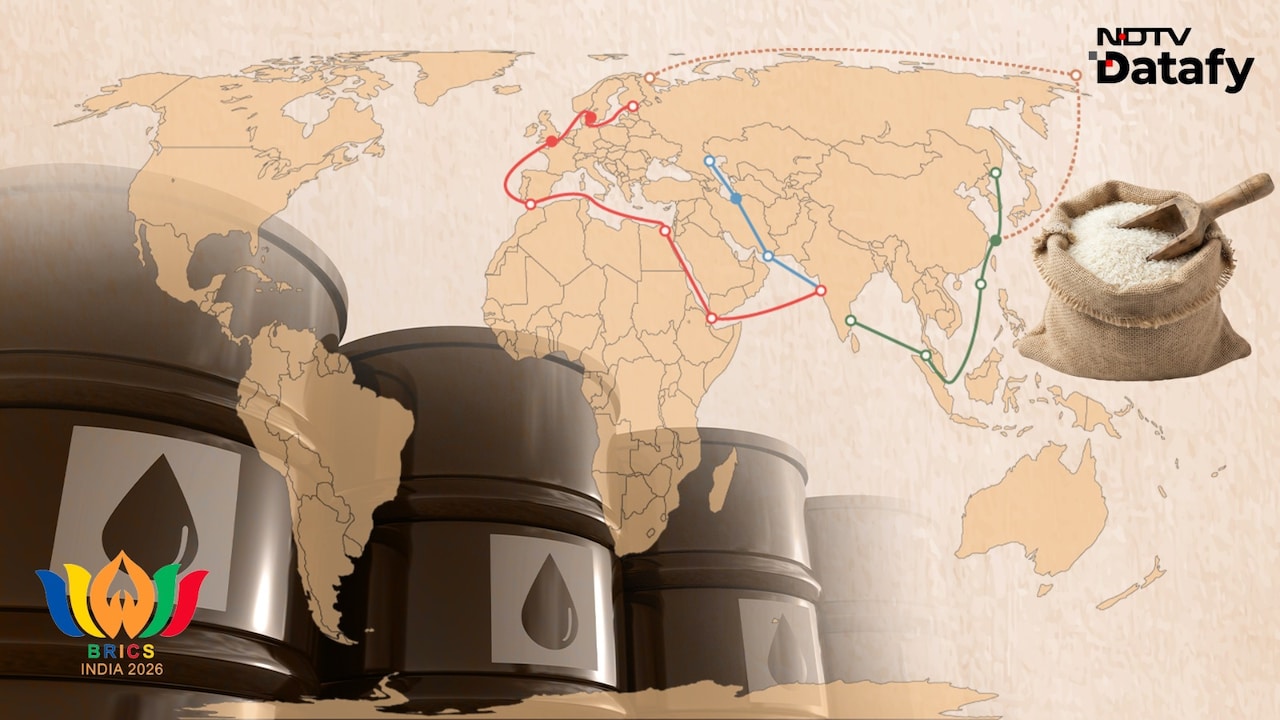
BRICS leaders, including Prime Minister Narendra Modi and Russian President Vladimir Putin, have called for deeper economic cooperation, stronger supply chains and alternative trade corridors that are less vulnerable to sanctions and geopolitical disruptions.
At a time when sanctions, tariffs and trade restrictions are reshaping global commerce, BRICS is seeking to leverage its growing self-reliance. From food and energy to rare earths and strategic maritime routes, the bloc commands a significant share of the world's critical resources, strengthening its ability to withstand external shocks and reduce dependence on traditional trade networks.
Abundant Rare Earth Reserves
As the world races towards clean energy and advanced manufacturing, rare earths have emerged as some of the most sought-after strategic resources. These minerals are the building blocks of modern technology, powering everything from electric vehicles and wind turbines to smartphones, semiconductors and defence systems.
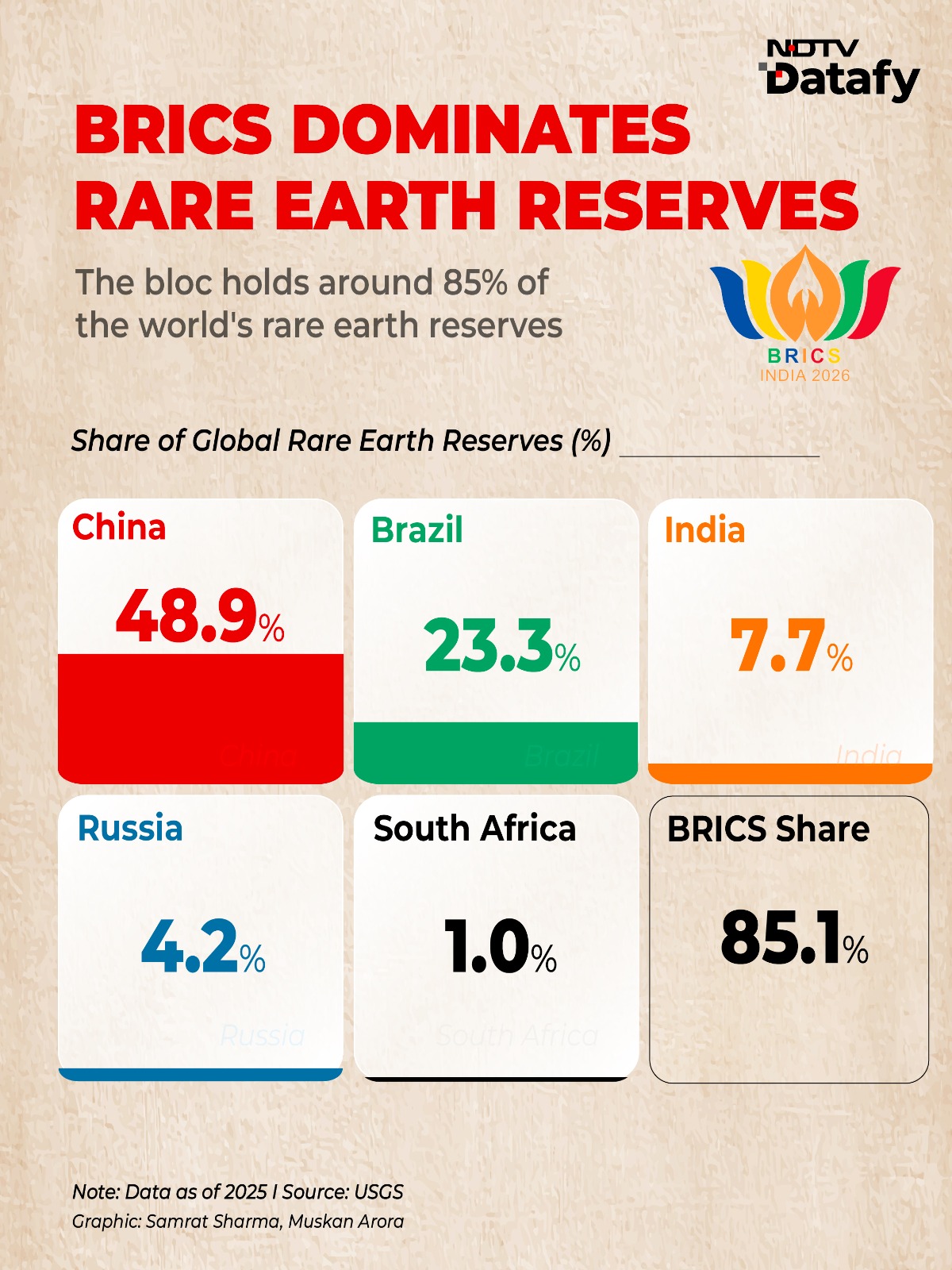
Collectively, BRICS countries account for about 85 per cent of the world's rare earth reserves, with China alone holding nearly half of the global total. According to 2025 data from the US Geological Survey, China accounts for 48.9 per cent of global rare earth reserves, followed by Brazil at 23.3 per cent. India holds 7.7 per cent, Russia 4.2 per cent and South Africa 1 per cent.
This concentration gives BRICS a significant advantage in the global race for the minerals that power clean energy, electronics, advanced manufacturing and defence technologies.
BRICS' Vast Oil Advantage
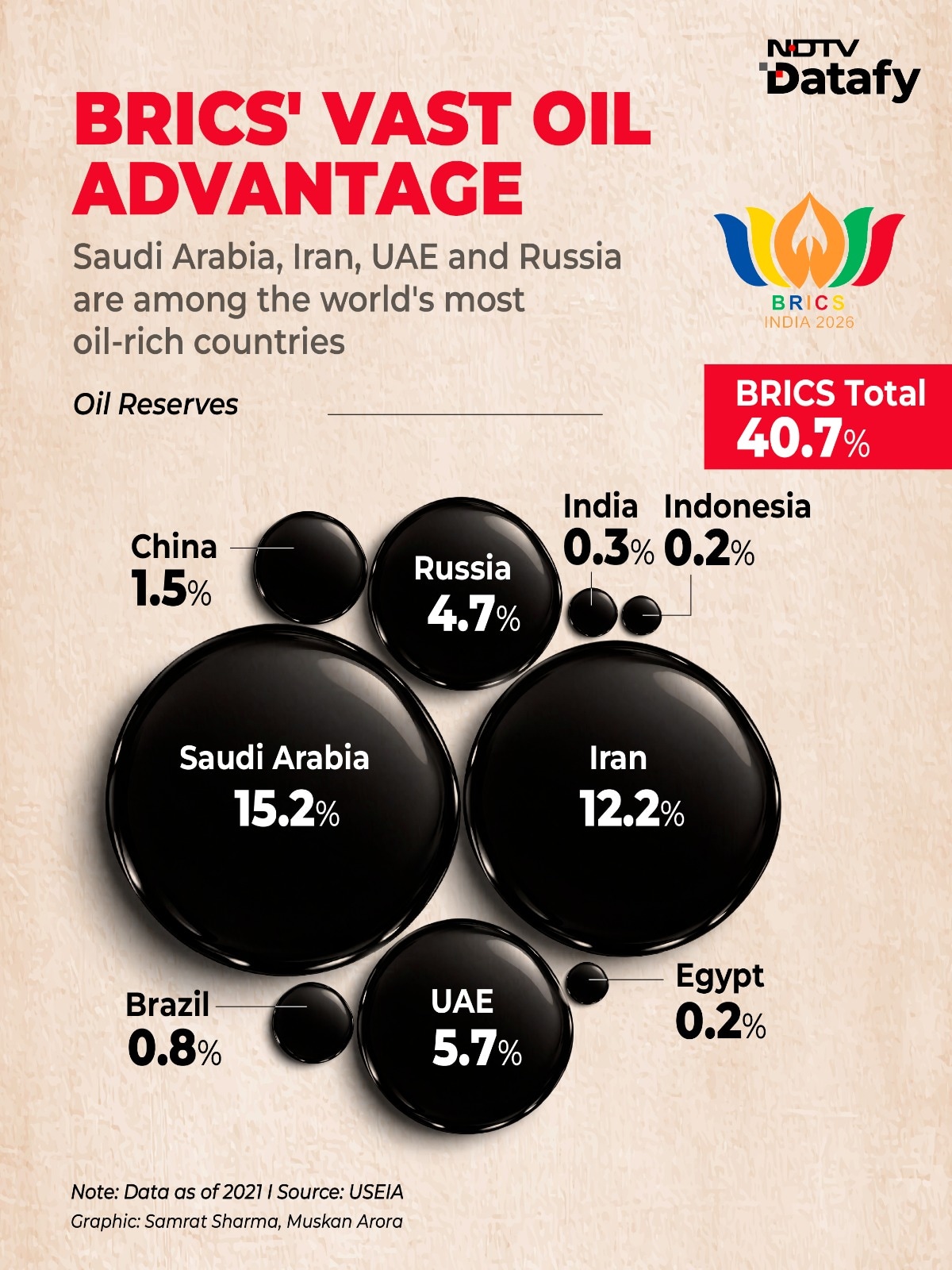
Oil remains one of the world's most strategically important resources, underpinning energy security, industrial activity and global trade. In fact, two countries that have faced significant US sanctions in recent decades, Iran and Venezuela, share one defining characteristic: vast oil reserves.
Saudi Arabia, Iran, the UAE and Russia alone account for 37.8 per cent of global oil reserves. Taken together, BRICS countries hold about 40.7 per cent of the world's proven oil reserves, giving the bloc considerable influence over global energy markets.
BRICS: The World's Food Factory
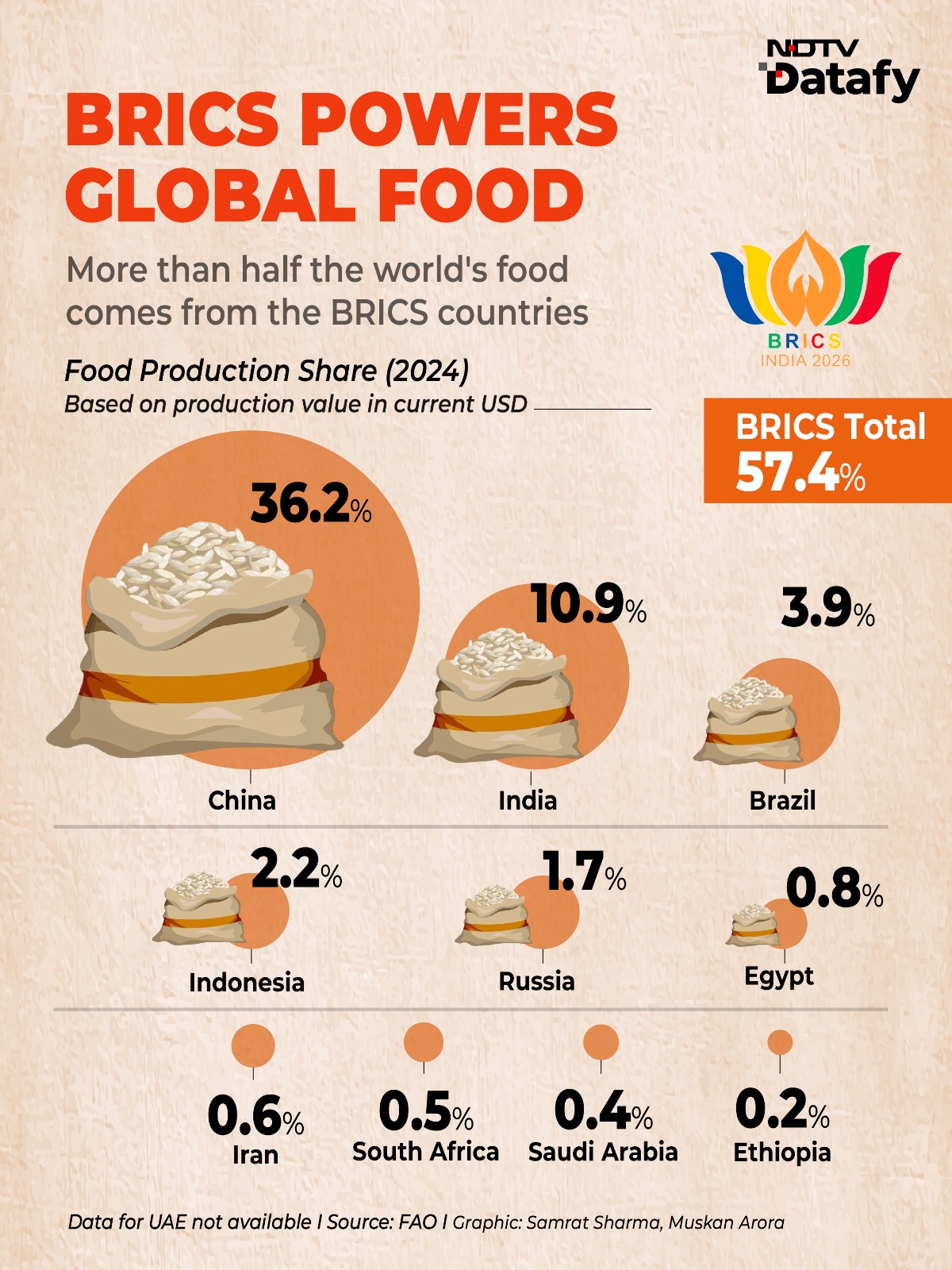
When wars disrupt trade and global shocks drive up prices, food self-sufficiency becomes a country's first line of defence. BRICS holds a strong advantage on this front, accounting for 57.4 per cent of global food production, with China and India together producing nearly half of the world's total food output.
The bloc's dominance in food production not only strengthens domestic food security but also provides a buffer against inflationary pressures and supply-chain disruptions.
Alternative Sea Routes
One of the biggest consequences of the Iran war has been its impact on countries far removed from the conflict, including India. Disruptions to shipping through the Strait of Hormuz, one of the world's most critical energy chokepoints, have pushed up oil, gas and freight costs, adding to inflationary pressures across the globe.
To reduce such vulnerabilities, BRICS countries are exploring alternative trade corridors and maritime routes that can keep commerce flowing during times of crisis. From the International North-South Transport Corridor (INSTC) to Russia's proposed eastern and Arctic shipping routes, these networks aim to shorten distances, bypass strategic chokepoints and lower transport costs while creating more resilient supply chains.
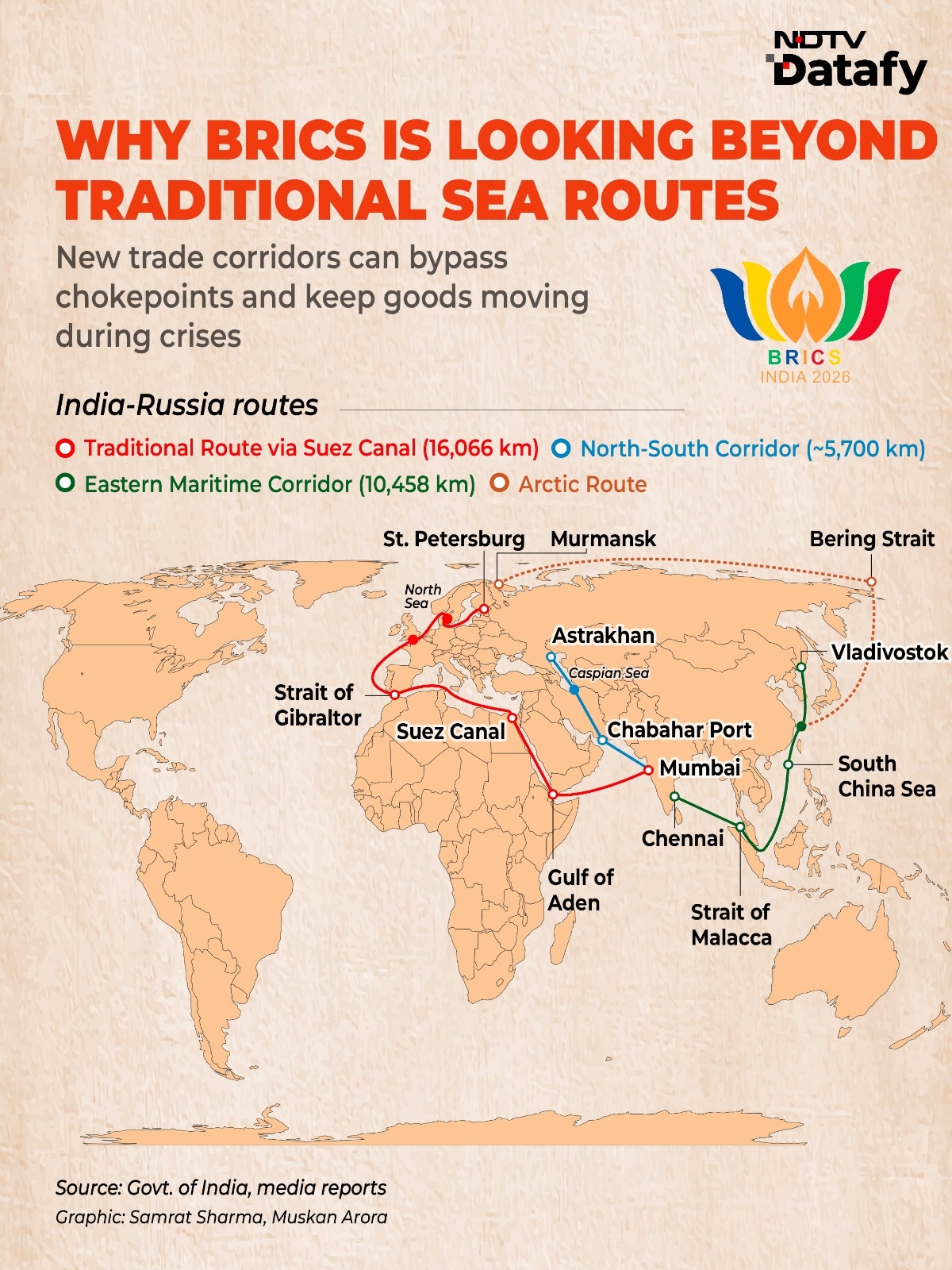
Together, these advantages give BRICS many of the ingredients needed for greater economic self-reliance: food, energy, critical minerals and alternative trade routes. While the bloc still depends on the West in areas such as advanced semiconductors and high-end technology, its growing control over strategic resources is steadily increasing its ability to withstand sanctions, supply disruptions and geopolitical shocks.
KioskNews shows a cleaned-up reading view extracted from the publisher’s page — the original always lives on their site, not ours.