Notre-Dame was restored in five years and under budget. But the Palace of Westminster? No chance | Simon Jenkins
What is the most reactionary public institution in Britain, the most outdated and immune to reform? It is the one that orders us to keep changing: parliament. It is also the most wildly extravagant. When the issue is hospitals, prisons and care homes, austerity is often the answer. When it comes to its own premises, only the best will do.
Big Ben has recently been restored at a cost of £80m and the entire Palace of Westminster has been reroofed for another £80m. Back in the 2000s, the basement was also reportedly much in need of repair. Its piping and wiring were so decayed they would fail within five to 10 years. Various committees debated and dithered, and eventually invited London’s most pukka consultants, Deloitte, to estimate what needed doing, which published its findings in 2014.
The building, it recommended, should become a construction site for between six and 32 years at a cost of between £3.5bn and £5.7bn. These estimates depended on how far and for how long the two Houses of Parliament were prepared to go elsewhere. Since then the wiring has miraculously survived and new estimates were published by a parliamentary commission. The job would now cost up to £40bn and take between 11 and a staggering 61 years.
I have seen the Westminster basement on two occasions and am neither an engineer nor a cost expert. Its maze of pipes and wires could certainly win it a Turner prize. There are fire risks and I am sure asbestos needs removing. But if the entire roof can be replaced for £80m, the figure of £40bn, or 500 times higher, is clearly absurd, a fantastical try-on. It would be like John Maynard Keynes aiding the economy by digging holes and filling them up. You could demolish parliament and rebuild its facsimile for less. It is also a racing certainty that £40bn would soar upwards, as happened with HS2.
Naive MPs simply treat these figures as sacred, secure in the assurance of open access to the Treasury. The NHS can eat its heart out. Meanwhile, the chair of the public accounts committee, Geoffrey Clifton-Brown, warns of a possible Notre Dame situation if parliament doesn’t act soon. He might also note that Notre Dame has been rebuilt for well under €1bn. Clifton-Brown is urging a vote on phase one to take place; but even if it does, a vote on phase two, the construction and delivery, won’t happen until 2030. In other words, it will be for another batch of politicians.
Parliament is becoming a national liability. Every government, including the present one, comes to office declaring its intention to reform the House of Lords. It never does. Hereditaries may have gone, but bishops remain and peerages are still on sale. Commons procedure, which used occasionally to be reformed, appears immutable. Bills still wait to trundle slowly through two houses. The handling of the assisted dying bill was a disgrace. This is not a legislature but an un-legislature.
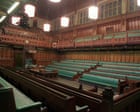
The Commons chamber is filled barely three days a week and is crowded only for prime minister’s questions. Successive party leaders have tried to end this theatrical staging, but back off because it fills the chamber.
after newsletter promotion
PMQs may have advanced the cause of Kemi Badenoch as Tory leader, but her need to exaggerate weekly differences between opposition and government cripples serious policy discussion. This staged confrontation and aversion to compromise is also built into the Commons layout. The Commons should go somewhere semi-circular, like most national assemblies.
Talk of MPs having to vacate Westminster may be alarming. But one consequence of removal should be pondered. If Andy Burnham is serious about promoting points north and creating a Downing Street in Manchester, he can consider moving parliament as well. Why not to Manchester’s magnificent town hall? Or to Liverpool or Birmingham?
Countries such as the US, Canada and Australia do not suffer for removing their parliaments from their biggest cities. Overcentralisation is widely accepted as the curse of the British state. It could do with a dose of provincialism. King Charles no longer lives in Buckingham Palace. Perhaps it is time for parliament to vacate Westminster. It would make a great museum.
KioskNews shows a cleaned-up reading view extracted from the publisher’s page — the original always lives on their site, not ours.