Can Canada, UK and Australia grasp chance offered by US-China rivalry?
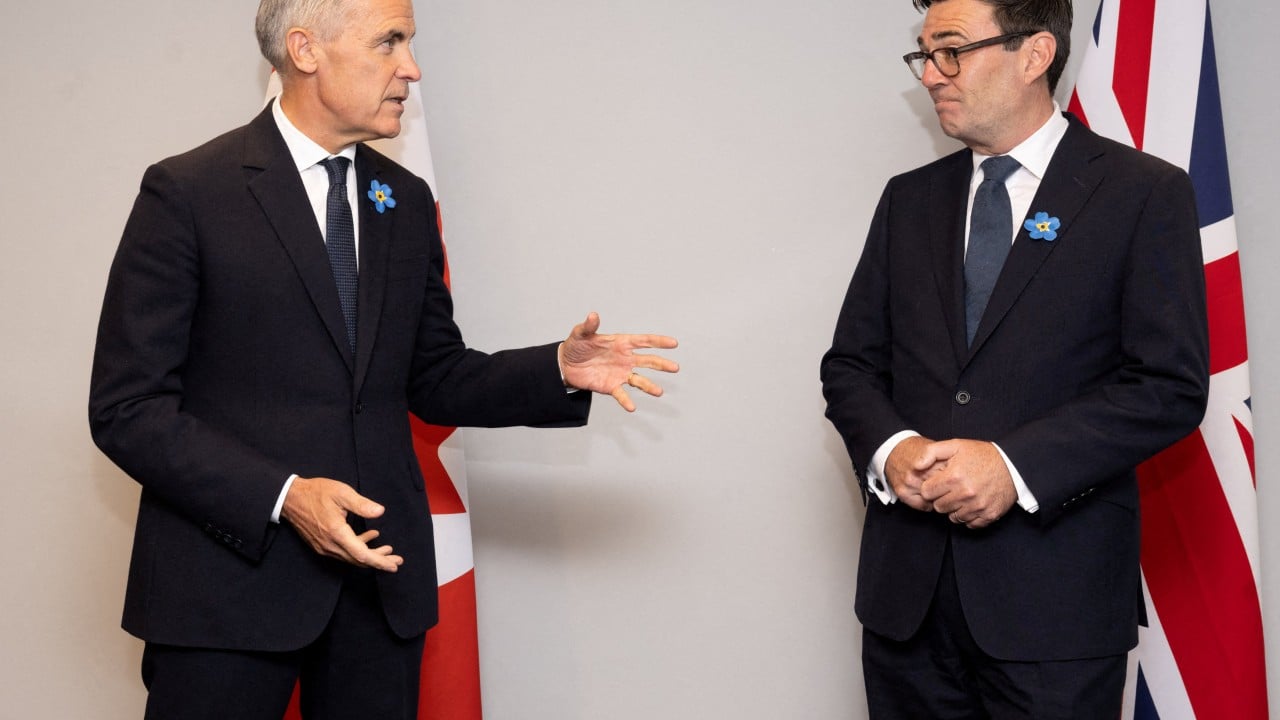
As middle powers, Australia, Britain and Canada can do more than most other nations to influence global peace in the face of a new great power rivalry between China and the United States. These three nations owe their citizens, and perhaps the wider world, an earnest effort to rise to the challenge of being peacemakers.
They have three attributes in common that give them unique potential to be a pivotal force. First is their own shared histories as members of the Anglosphere and therefore close allies of the US. Second is the recent US impetuousness and erratic behaviour towards the three of them, which demands greater independence and balance in their international relationships. Third is their shared middle power status, affording them enough diplomatic, military and trade significance to have great influence.
Today, though, Australia’s, Britain’s and Canada’s results as agents for global stability are mixed.
Canada is shaping up impressively as a new independent international force. Britain is struggling to gather itself as a unified and purposeful nation in the face of deep domestic challenges that it can’t seem to shake off. Australia’s troubled times seem to be just beginning with an increasingly out of touch political elite, a threat of economic decline and mounting political turmoil including extremism and political violence.
The global commentariat continues to frame the evolving international order as a dangerous rivalry between a rising China and an incumbent US. The “Thucydides Trap” is often cited as a warning that this situation could be leading humanity towards another war between great powers.
Xi cites Thucydides trap to Trump during summit
Kevin Rudd, president of the Asia Society and former Australian prime minister, has called the rivalry between China and the US a “full-blown strategic competition”, which encompasses “every dimension of national political power and influence”. In the context of this danger, Rudd has also emphasised the importance of middle powers in preserving global order.
However, let’s first scrutinise Rudd’s own backyard of Australia. While Canada boldly asserts greater independence from the US in trade and world affairs, Australia has done little to shake its image as a vassal state of the US.
As the ruling Labor Party deals with internal dissension over the Aukus nuclear submarine deal with the United States and Britain, Australia’s political leadership has held firm to these expensive commitments, which some critics argue are of little to no financial or strategic benefit to the nation. Criticism of the agreement has also come former prime ministers and testimony to a crowdfunded independent public inquiry into the deal.
Australia continues to spend international political capital on US-led groupings such as the Quadrilateral Security Dialogue and Five Eyes at the same time as community protests challenge the US presence at the Pine Gap military facility in the country’s Northern Territory.
As Australia’s political elite fails to follow Canada by rising to the international moment through acts of courageous independence, its population is beset by populism and acts of political violence. This has been further exacerbated by mounting inflation, high interest rates and an implosion in the local residential property market.
Australia is a nation that is currently divesting its capacity to be an influential middle power largely because of the intransigence of its political elite. Ironically, this is a complacency fed by decades of economic comfort underwritten by a booming commodities trade with China.
At the other end of the spectrum is Canada, which is showing how a middle power in the modern era can go about conducting itself. The actions and early achievements of the Canadian government led by Prime Minister Mark Carney speak for themselves.
For example, as Australia descends into turmoil and Britain strives to free itself from a period of extreme populism, Canadians in the province of Alberta made an emphatic statement by rejecting a referendum on independence by a wide margin. At the same time, while visibly unifying the nation, Carney has boldly redrawn the lines in developing a more assertive and independent relationship with the US through his diplomatic manoeuvring and trade stance.
Turning to Britain, we see a nation moving towards introspection following several years of patently self-destructive behaviour. Emblematic of this is a new sense of courage to reopen discussion on the exit from the European Union and a new hyperlocal policy direction from the government focused on everyday community pain points.
The latter is clearly designed to counter the populist rise of the far-right anti-immigration Reform UK party. Britain is also cautiously asserting more independence in its relationship with the US.
It is not unfair to expect more of Australia, Britain and Canada when it comes to the role they might play in the precarious age ahead of us. The Anglosphere is on a burning platform as the US visibly shifts away from its commitment to global primacy. Anglosphere nations that respond to this with courage and a desire to be independent global agents may not just remain middle powers but perhaps become global powers in their own right.
KioskNews shows a cleaned-up reading view extracted from the publisher’s page — the original always lives on their site, not ours.