Nissan reduces petrol car production as EV sales boom in China
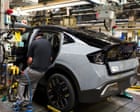
The Japanese carmaker Nissan has said it has been caught out by accelerating sales of electric and hybrid cars in China amid a brutal price war in the world’s biggest automotive market.
The manufacturer slashed its sales forecasts for China and said it would cut back on petrol car manufacturing while increasing production of battery electric vehicles and plug-in hybrids, which combine a smaller battery with a petrol engine.
Nissan said it expected to sell between 2.97m and 3m cars this year, down from a previous forecast of 3.15m, mainly because of struggles in China.
“China remains our biggest challenge,” said Ivan Espinosa, Nissan’s chief executive. “Demand is weaker, competition is intensifying, and the shift to new energy vehicles is happening faster than expected. The market is being very, very harsh.”
The company reported increased sales in its home market as well as in North America – regions in which the shift to electric cars has been much slower because of policy decisions, including Donald Trump’s tearing up of incentives for battery car makers.
That divergence between different parts of the world illustrates the challenge for global carmakers, many of whom are trying to continue selling their more profitable petrol and diesel cars for as long as possible while risking being left behind by newer Chinese rivals.
China’s government gave weighty subsidies to its electric car industry, spotting an opportunity to overtake other countries such as Germany, Japan and the US, which had dominated sales of internal combustion engine cars.
That led to a huge number of Chinese EV competitors, which are now chasing a shrinking market. Nissan said sales across China fell by 22% in the first half of the year. That pressure “intensified from July through October” and left the carmaker’s sales down 32% in the first nine months of the year, Nissan said.
Espinosa said Nissan’s product lineup in China, led by the Sylphy family of saloon cars, was too heavily associated with petrol engines, so the company was cutting local production, exporting some products, while trying to ramp up its N series of models, which are electric or plug-in hybrids.
Yet at the same time as pushing for increased electric car production in China, Nissan has been among the manufacturers slowing the shift to batteries in Europe. In the UK the carmaker has lobbied to weaken the zero-emission vehicle mandate, a target for increasing EV sales, and to continue to sell petrol cars after 2035.
after newsletter promotion
That lobbying came despite evidence of rising demand for electric cars in the UK, particularly since the Iran war pushed up petrol and diesel prices. Data this week showed that sales of used electric vehicles rose much faster than petrol cars.
Ian Plummer, the chief customer officer at the car sales website Autotrader, said: “The standout trend in the used car market is the rapid rise of retail sales of electric vehicles, up an eye-popping 56% year on year in October and now accounting for one in 10 retail sales on Autotrader.”
Nissan’s only European factory is in Sunderland in northern England. Espinosa said he was hopeful that the company’s products from Sunderland and Japan would be included in proposed “Made in Europe” rules from the EU. The rules as drafted would exclude all of Nissan’s cars from subsidies and other incentives within the EU, adding to pressure on the carmaker.
KioskNews shows a cleaned-up reading view extracted from the publisher’s page — the original always lives on their site, not ours.