Long before MLS, St. Louis ruled the U.S. Open Cup: Gateway to the West's latest club wants to add a chapter
Soccer in America is truly a sport where you stand on the shoulders of those who came before you, and few places know that like St. Louis, as St. Louis City SC prepare for the first Lamar Hunt U.S. Open Cup final in their history as they'll face the Columbus Crew on Wednesday (live on Paramount+ and CBS Sports Network, 8 p.m. ET).
But while many may have never expected a day that an MLS side would be in the Open Cup final from the area, the greater St. Louis area has a rich history in the competition, with the last team winning the competition being the Busch Seniors, who triumphed in 1988 after St. Louis' first final in 1920.
"As long as St. Louis did not have an MLS team, no," Jeff Robben said when asked if he ever saw a St. Louis team making the Open Cup final after his Busch Seniors, where he played goalkeeper. "Once the USL teams started competing, and then the MLS teams started competing for the Open Cup, how my Busch Seniors team accomplished what they did, that was just not gonna happen again. As a matter of fact, there was a team this year here in St. Louis that was competing in the Open Cup, and they had advanced and earned a home game and played, and I believe they played a team out of Omaha that was a USL team, and they lost seven or eight to nothing, so that goes to show you how vast the difference is."
It's been 38 years since the area has seen an Open Cup championship, and for most of that time, they didn't even have an MLS team, as St. Louis City SC wasn't founded until 2019, before beginning play in 2023 with the backing of local St. Louis businesses in Enterprise Holdings and World Wide Technology. But to understand where St. Louis is now, you have to roll the clock back to the Busch Seniors.
Finding Europe in Missouri
When speaking to people about soccer, I like to ask how they got into the sport, as most of the time it leads to an interesting story about how people found the game. But in St. Louis, it's the first time that I've asked multiple people that question and got the same answer. Teams band together in the Catholic parish and play soccer and baseball depending on the season.
"The history of St. Louis soccer goes way back," Joe Olwig, the then-head coach of the Busch Seniors, said. "The early days of US Open Cup champions go way back, and it really stems from just kids growing up, you know, their primary sport was soccer because it was inexpensive for parents; all you needed was a ball and some spikes and gym shorts back then, and you were able to go out and practice and play."
If anything, where St. Louis was back then is what American soccer would like to get back to these days, as more opportunities for young players are being created by the day.
Looking at the immigration history of Irish, Scottish, German, and Italian families into the area, it makes sense as to why soccer in St. Louis would have a more European flair than some of the other areas of the United States, but it's also something that helped lead to this early success. Even in their league play, players had to make the team and would regularly be recruited by stronger sides, helping spawn not only their Open Cup success but also sending players to the national team. When the United States went to the World Cup in 1950, St. Louis was well represented on that team before the St. Louis Stars came to be in the North American Soccer League, which was a precursor to Major League Soccer.
David versus Goliath
Those NASL years put St. Louis' Open Cup success on hold before the 80s got the city back to the summit of American soccer. St. Louis Kutis SC won the competition in 1986 before the Busch Seniors etched their own names in history two years later, defeating the San Francisco Greek Americans to win the Open Cup, but these were not both teams of semipros.
"These are guys that we were reading about in the papers and watching on TV, and all of a sudden we're playing against them. But, knowing the team that we had, knowing the talent that we had, the diversity of players on our team, we had a lot of confidence going in. We knew it was gonna be a battle, and we knew that nothing was going to be given to us," Tim Loughman, a defender on the Seniors, said.
While that's hardly the level of Auckland City facing Bayern Munich in the Club World Cup, despite the notoriety of the competition, what came next was that the Busch Seniors qualified for the Concacaf Champions Cup, where their first challenge was facing Chivas Guadalajara. St. Louis was actually able to defeat them in the home leg at World Wide Technology Soccer Park (formerly known as Anheuser-Busch Soccer Park, a soccer-specific complex where the team played) before heading to Mexico to play at Jalisco Stadium.
Some players weren't able to take time off work to head to Mexico for the return leg, and while it was a heavy defeat, it was a moment that showed where soccer could go for not only St. Louis but the United States as a whole.
"The atmosphere was incredible, and we ended up losing eight-nothing that game, the second leg, so we didn't go through. But the experience was incredible; the fact that we beat them in the first round shows what kind of special team we had," Loughman said. "But an incredible season all the way around, and it's a different dynamic today for the better, with the professional teams represented, and Joe and I take great pride, and so does our team, in being a part of that legacy, being able to bring that forward. And now our job is to support the St. Louis City team."
The job isn't finished
The importance of Anheuser-Busch and local companies has been critical for both the success of St. Louis soccer as well as U.S. Soccer, and without those early backers of the sport in the country, who knows if we'd be at a time when a 36-year-old coach in Yoann Damet would be able to engineer a 21-game unbeaten streak, the longest in MLS history, en route to this final.
Dave Lange, author of St. Louis Soccer: An Illustrated Timeline, has seen plenty of soccer in the area, and this current team has blown him away.
"The whole build-up, the passes, the finishing, I was just amazed; it was just the best brand of soccer I've seen in a long time in person in St. Louis, that's for sure," Lange said.
With not every MLS team taking part in the Open Cup, it has lost some luster in recent seasons, but it's still a critical part of U.S. Soccer, and next season will see all of the teams return to the competition. And it's also fitting that this is where St. Louis City SC could win their first trophy in club history, bringing everything full circle. While the '88 team may be happy to have won the Cup, they also want to see the day that they're not the last team from St. Louis to lift the historic trophy.
"The Cup for me is like part of history, you know, like the cup in every place in the world, everybody plays it. I played in the cup in France growing up. I think it's also an opportunity to bring together all the different levels of soccer in the country. That Cup in particular, for me, is unique; it's got a lot of history," Damet said. "But as every other cup, you know, like a cup is a trophy, it's another opportunity to compete to win something. So for me, as I said in January, I'm no different today, like it was always gonna be a competition that we were gonna care about and that we were gonna invest our energy and effort into. Right now, the history of the club is like nothing, so we need to keep striving to fill that trophy cabinet with something, and having that opportunity to be the first is an amazing opportunity that we've earned throughout our journey in that competition this year."
It's significant that so much of the preparation for this Cup final has involved that 1988 team, but as Lange states, this is part of the fabric of the city.
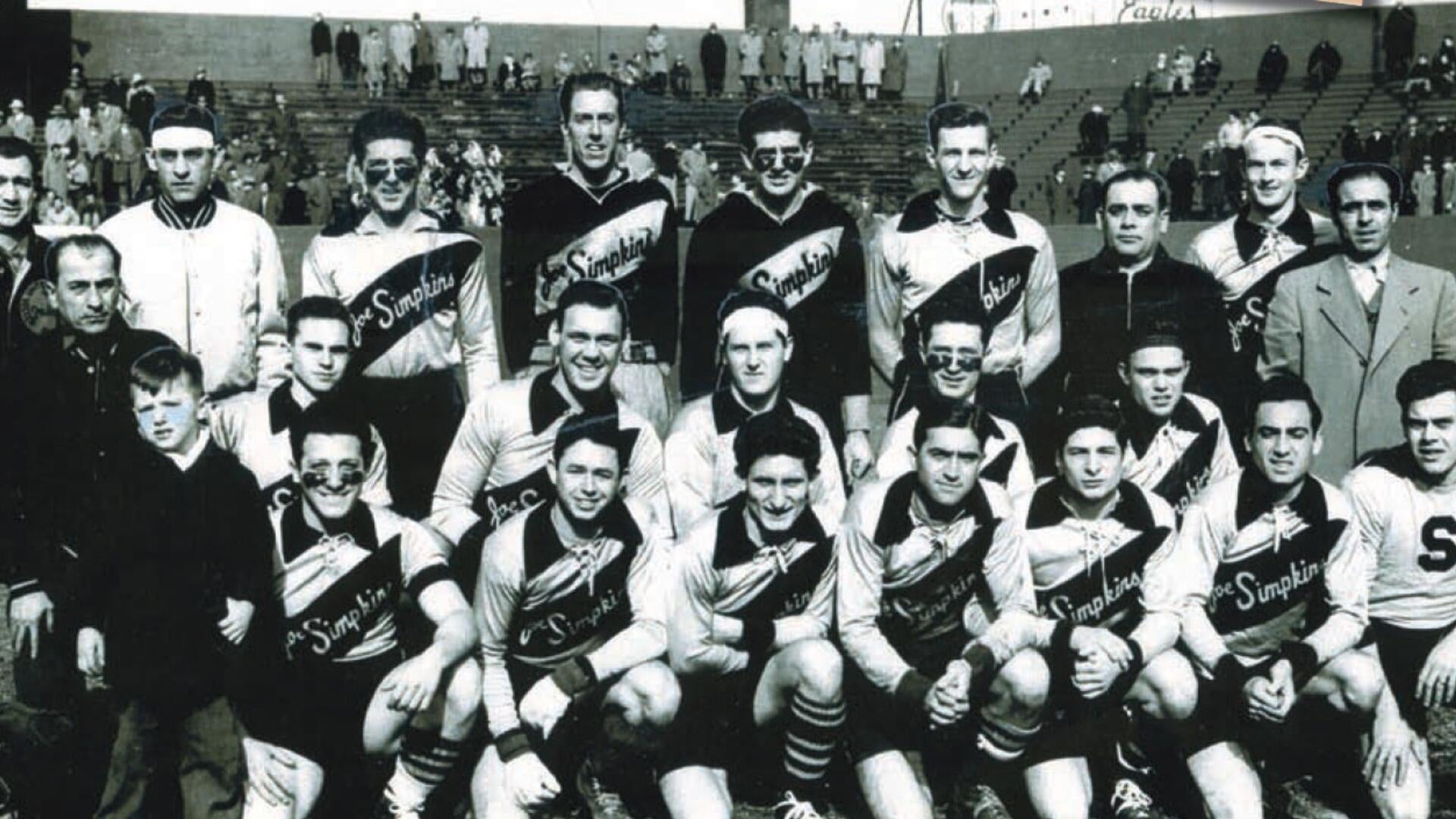
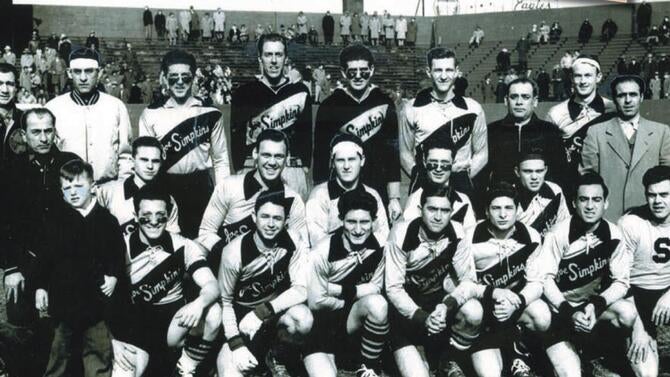
"There's always been a great awareness of that competition because it's part of that soccer fabric, and if you're from St. Louis, chances are you have some kind of connection with one of those teams," Lange said. "For example, my wife, whose grandparents came over from Sicily, her second cousin played on the 1950 Open Cup team, Simpkins-Ford, that won the Open Cup. So there are a lot of connections like that in St. Louis, somebody you know, somebody, or you're related to somebody who played at some high level of soccer."
Tim Ream's resurgence for the United States men's national team and Bosnia taking over the city during their World Cup stay have helped bring notoriety back to St. Louis as a soccer city, but their MLS team could take it to a new level, as even how they got to this point is impressive in itself, and they'll have to overcome star striker Rafael Navarro being unavailable for the final due to being cup-tied.
Marcel Hartel and Edward Lowen were loved players at the club, and their departures hit hard but the front office was able to ensure that Damet was backed by bringing in Navarro, Carlo Holse, and Alexandru Matan, and he has turned them into a serious force in MLS play.
"It was kind of a painful beginning because there was some emotional attachment to certain players who left, like Klauss. I think a lot of people were emotionally invested in him, and especially in Eduard Löwen, the midfielder, who had some personal issues with his wife passing away and him being so seriously ill the last couple of years, limiting his playing time," Lange said. "A lot of people had a lot of emotional investment in certain players who left, and it was hard to accept. I think everybody still misses those guys but they've seen that we're a much better team with what's happened in the last couple of months here with the players they brought in."
They've already accomplished so much by getting to this point, and it's not easy to get fans to connect with a team that has made so many changes, but that's where Damet and the front office are pushing the right buttons.
"I think the resurgence with this year's team in particular, being in the final, is a throwback to the early days of work ethic, blue-collar, team-oriented, with some additional talent that we picked up at the break here," Olwig said, explaining why the connection with this team has been so strong. "So, to me, it's refreshing to see the way the team's playing, because it reminds us, I think, Tim, you'd agree, of the old days of following St. Louis soccer."
A soccer team representing their area is critical to the game, and for St. Louis City SC, they're doing just that, so even if this final doesn't go their way, this isn't a team or a city who are going anywhere.
KioskNews shows a cleaned-up reading view extracted from the publisher’s page — the original always lives on their site, not ours.