Bill Gates says one type of AI worries him most for banks, hospitals and power grids
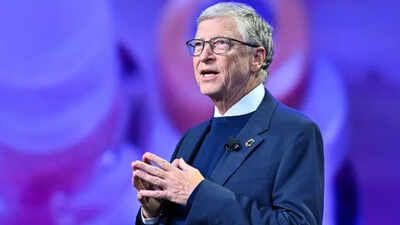
Bill Gates warns open-source AI can be used to attack banks, hospitals and power grids
Microsoft co-founder Bill Gates has warned that open-source AI models can be used to break the software that keeps hospitals, banks and power grids running, and that the world may not even notice until it is too late.
Speaking at the Financial Times' Future of AI summit, Gates said an attack team armed with the latest AI tools, especially open-weight models with their safeguards stripped out, would succeed against critical systems today. Fixing that software, he added, would take around five years even if everyone treated it as a top priority."Hospitals, the electric network, banks, they all depend on a very complex set of software," Gates told the FT's Madhumita Murgia.
AI models, he said, now have the offensive capability to find flaws in that software and "either shut down or scramble those digital systems."His biggest worry is open-weight AI, where a model's weights are released publicly and anyone can modify them. "The open weights models, you can take out all of the monitoring so you won't even see it coming," Gates said.
Gates say fixing vulnerable code will take years, even with AI
Gates said AI can eventually help rewrite the vulnerable code, but the job is massive.
"That's on the order of five years of work to do all those replacements, even if we are very diligent and make it a top priority," he said.The strain is already showing. Microsoft CEO Satya Nadella said at the New York Times DealBook Summit that AI is finding bugs so fast that a fix "needs to go instantly from being available to being patched in production because it's being exploited in the wild," which leaves little time for testing. He compared the moment to Y2K, but pointed out that "Y2K was one bug, and one day."
This month, the NSA's classified network was down for days after faulty patches for PHP flaws that researchers found using AI.
Officials have said there is no evidence that the recent outages, including Microsoft's own, were cyberattacks.Money makes it worse, Gates said. Since attackers can demand ransom in crypto, there is a clear business model, and he expects "a dramatic increase in cyber attacks in the next few years."He traced the turning point to late last year, when AI coding tools, starting with Anthropic's Claude Code, became better than any human programmer. That is great for writing software, Gates said, but "a bit dangerous" when it comes to finding security holes. AI is already writing a big chunk of that software, too. Nadella told Semafor last year that as much as a third of Microsoft's code is written by AI.
Gates called biological risks even scarier. He warned that AI could help create something "significantly worse than Covid," though unlike cyberattacks, there is no business model behind it.
Bill Gates wants governments, not AI companies, to set the rules
Gates dismissed self-regulation by AI companies, saying there are simply too many competitors. He wants governments to decide on open weights and to set benchmarks for the monitoring and safeguards inside every new model.The US, he pointed out, "doesn't even have mandatory review" of new models, and countries like China see little value in acting unless the US is on board. Gates did credit AI leaders for being open about the risks. He noted that the people closest to the technology are the ones asking for safety rules.He believes Washington will eventually come around. "The only question is how many bad events need to take place before they change their posture," Gates said.
KioskNews shows a cleaned-up reading view extracted from the publisher’s page — the original always lives on their site, not ours.