Russia gains an edge? How Musk's Starlink's is complicating Ukraine's drone war
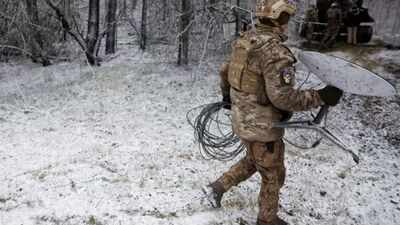
Starlink speed limits slow Ukraine's drone warfare, leave Kyiv struggling for alternatives (Reuters image)
Ukraine's military operations against Russian forces are facing fresh challenges after restrictions on SpaceX's Starshield satellite internet service reportedly limited the speed of Ukrainian drones to 100 miles per hour in Russian-occupied territories, making them more vulnerable to air defences and reducing their effectiveness on the battlefield, according to a report by The Wall Street Journal (WSJ).The restrictions have affected Ukraine's midrange drone operations, which rely heavily on Starshield, a military-grade version of Starlink provided by Elon Musk's SpaceX under US government contracts. Ukrainian forces use the satellite service to strike Russian military supply lines, disrupt logistics and intercept jet-powered drones targeting Ukrainian cities.The speed restrictions have made it difficult for Ukrainian drone operators to carry out certain missions, particularly intercepting faster Russian drones.
The limitations have also increased the number of drones required to strike individual targets, as slower aircraft become easier for Russian forces to intercept.According to the WSJ report, Ukrainian drone units experienced speed restrictions during two periods this autumn. The first came in October amid political tensions between US President Donald Trump and Ukrainian President Volodymyr Zelensky. Following protests, including from US lawmakers, Trump asked Musk to restore the satellite service.
However, Ukrainian drone operators said the restrictions returned on November 10, with terminals again facing a 100 mph speed cap over Russian-occupied Ukrainian territories. Despite renewed protests from Kyiv and its supporters, the restrictions remained in place, the report said.
How Starshield restrictions are affecting Ukraine's drone operations
Ukraine's military has increasingly relied on drones to disrupt Russian supply routes, target military infrastructure and counter aerial threats.
While short-range drones operating close to the front lines are largely controlled through radio signals or fibre-optic cables, Starshield has become an important component of the country's midrange drone operations.These drones are used to strike Russian forces' rear positions, logistics networks and supply lines. Their operations have played a major role in restricting Russia's territorial advances this year, according to the WSJ.The restrictions have now affected the ability of Ukrainian forces to carry out these missions at their previous operational speeds.The report cited Ukrainian officer Vladyslav Oliinyk, who said his drone team recently had to fly more slowly while attacking a Russian armoured vehicle and infantrymen in southeastern Ukraine to avoid losing its satellite connection.“Since they capped the speed, there are some missions we can’t do, including missile interceptions,” said Oliinyk, a senior lieutenant with the First Unmanned Systems Battalion of Ukraine’s First Separate Assault Regiment.He said slower drones could still target Russian armoured vehicles and supply trucks, but faced a greater risk of being intercepted before reaching their targets.“With lower speeds, our drones are easier to intercept,” Oliinyk said.A midrange drone pilot identified by his call sign Loza said the restrictions had reduced operational efficiency, forcing Ukrainian forces to deploy more drones to achieve the same results.“What you see is a gradual loss of efficiency. Fewer opportunities. More work for the same result,” he said.Drone operators also reported that the restrictions were inconsistent. While some terminals occasionally allowed speeds of up to 125 mph over Russian-occupied territories, connections sometimes failed even when drones were travelling at lower speeds.“We don’t really know what to expect,” Loza said. “Things seem fine, and then suddenly you’re dealing with connection problems.”A Ukrainian communications officer in the southern Zaporizhzhia region, identified by the call sign Shtanga, also expressed frustration over the military's dependence on technology controlled by a private company.“You can have good equipment, experienced people, everything ready to go, and still find yourself unable to do what you need to do,” he said.
Why Ukraine cannot easily replace Starlink
The restrictions have raised concerns in Kyiv about Ukraine's dependence on SpaceX's satellite network, particularly as the military struggles to find an alternative capable of supporting its large-scale drone operations.According to the WSJ, Ukrainian forces have been exploring other communication systems, including mesh networks, cellular connections and satellite services offered by Israeli provider HiSKY.However, each alternative has limitations.Cellular networks are available only in certain areas and are more vulnerable to Russian jamming. Mesh networks, which allow drones to relay radio signals to other drones, require expensive equipment and can produce delays in video transmission.European satellite providers, including Eutelsat's OneWeb, have smaller networks than Starlink and offer more expensive terminals.“At present, we do not have a fully viable alternative to replace Starlink,” said Dmytro Batekha, founder of Ukrainian military analysis group Oko Hora. “There are some European systems, but their deployment is on a very limited scale.”Another challenge is that many Ukrainian drones are already configured to operate using SpaceX's satellite services.
Switching to alternative communication systems often requires sending the drones back to manufacturers for reconfiguration.
Israeli satellite system offers an alternative, but with limitations
Some Ukrainian military operations have reportedly begun using HiSKY, an Israeli satellite communications provider, as an alternative to Starshield.According to people familiar with the matter cited by the WSJ, some Ukrainian munitions used in attacks on the bridge connecting occupied Crimea with Russia relied on the Israeli system.Unlike Starlink, HiSKY also operates inside Russian territory. Ukrainian drone teams have reportedly used it to track Russian ballistic missile launchers and conduct other high-value missions.However, the system requires greater technical expertise and the presence of specialists during operations, making it less suitable for the routine drone missions that Ukrainian forces need to conduct daily.HiSKY did not respond to requests for comment, the WSJ reported.
What SpaceX and Musk have said
Neither SpaceX nor the US government has acknowledged responsibility for the latest speed restrictions.Musk said last week that Starlink satellites, which support Ukraine's Starshield service, were not designed for drone strikes that kill people.Starlink's commercial service in Ukraine has also faced a much lower speed cap since early 2026, effectively restricting its military use to relatively static functions such as communications between troops.The commercial Starlink and military-grade Starshield services also do not operate over Russian territory, where Ukraine relies on other methods to guide drone strikes against arms factories, oil refineries and other targets.The restrictions have raised concerns that Ukraine's midrange drone campaign could gradually lose effectiveness, potentially allowing Russian forces to move troops, ammunition and other supplies more freely towards the front lines.
Military analysts cited by the WSJ warned that this could improve Moscow's ability to prepare and sustain offensives in the coming year.For Ukrainian forces, the immediate challenge remains finding a reliable alternative to a satellite network that has become central to their battlefield operations, while continuing to conduct drone missions under the existing restrictions.
KioskNews shows a cleaned-up reading view extracted from the publisher’s page — the original always lives on their site, not ours.