Brazilians head to polls in high-stakes, polarised election
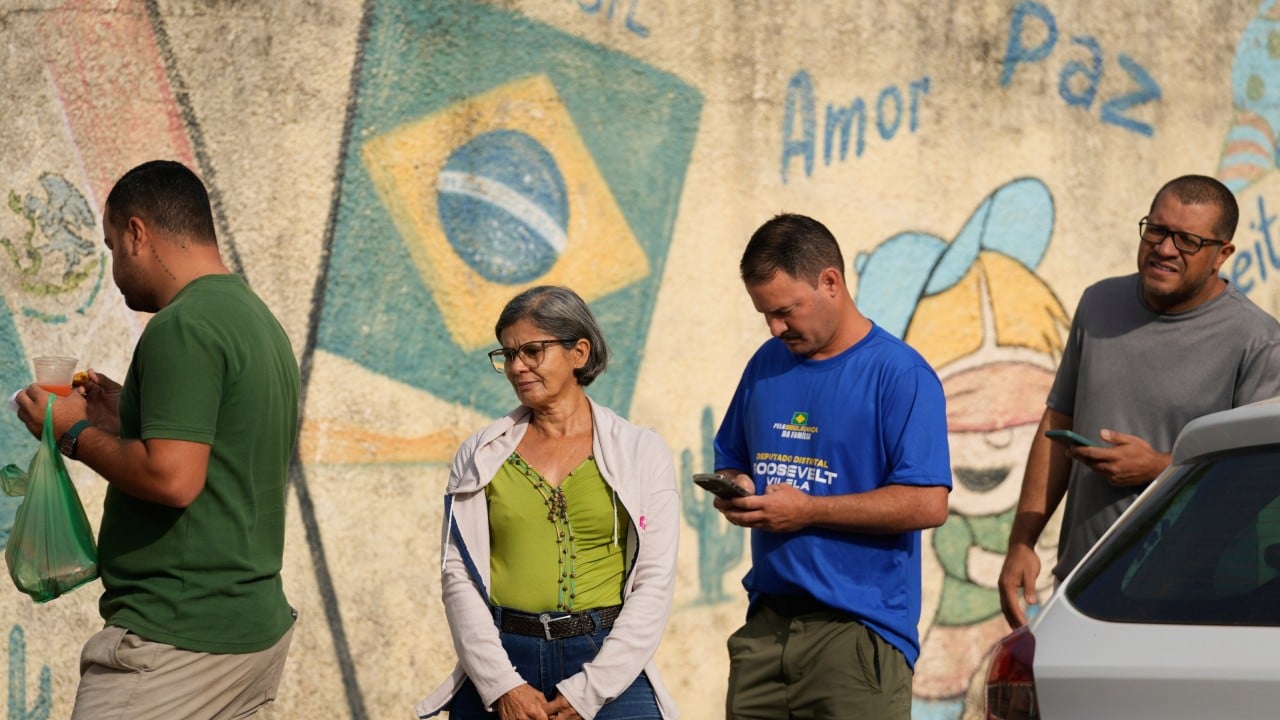
Brazilians queued to vote on Sunday in the first round of a tight election, following a campaign dominated by corruption scandals, economic anxiety and accusations of US meddling.
The field of 13 candidates has been led by two clear front runners – leftist President Luiz Inacio Lula da Silva, 80, who is seeking a fourth term, and Senator Flavio Bolsonaro, the 45-year-old son of former president Jair Bolsonaro, who hopes to return his father’s right-wing movement to power.
A victory for the senator would extend a wave of wins across Latin America by right-wing candidates aligned with US President Donald Trump, while Lula’s re-election could create a headache for Washington, which has clashed with his government over trade and security.
Despite growing worries over the public finances and sluggish economic growth of Brazil, the campaign has offered meagre policy debate, as both leading candidates skipped the major television debates.
If no candidate wins more than 50 per cent of valid votes, the top two will face off on October 25. Surveys show Lula and Flavio polling roughly even in a run-off, which looks likely.
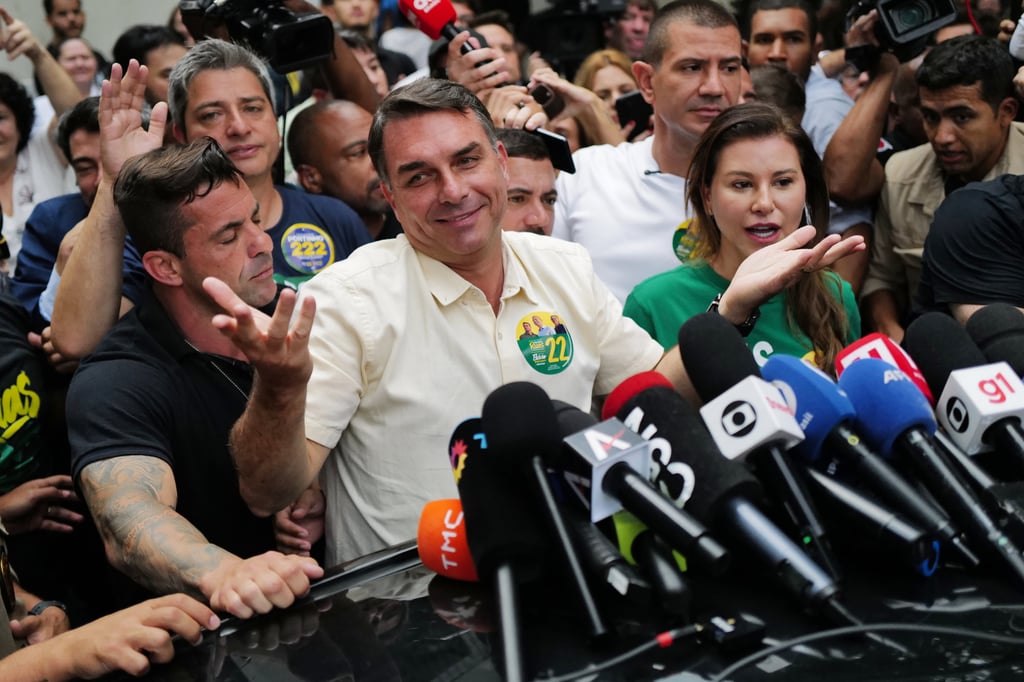
While polls right up until Saturday showed Lula would probably lead the first round but not avoid a run-off, Flavio Bolsonaro told journalists in Rio de Janeiro he was confident he could win the presidency in the first round, citing voters’ frustration with his chief opponent.
Flavio Bolsonaro was counting on “a protest vote from people who would otherwise vote for another candidate but are opposed to Lula”, he said. “I hope it’s enough to secure a victory in the first round.”
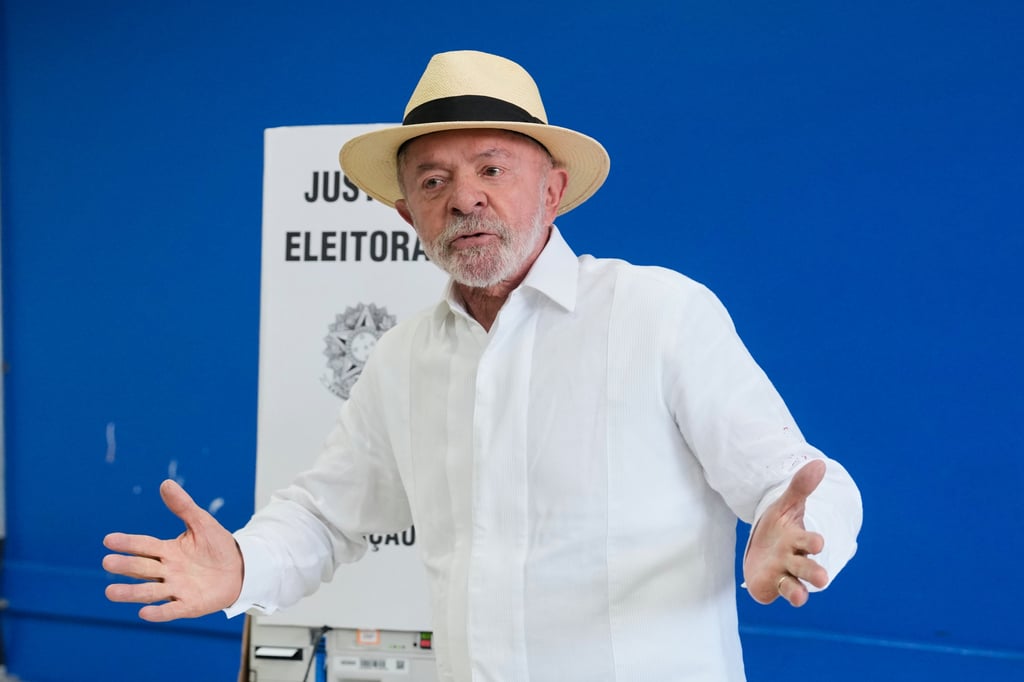
Some voters told Reuters their voting intentions supported Flavio Bolsonaro’s tactics.
“My main goal is to get the [Workers’ Party] out,” said Thaise Lima, a 41-year-old lawyer living in Sao Paulo, on her way to her polling station.
“I don’t think Flavio is the best candidate but I might decide to vote for him in the next few minutes,” she said, adding that she wished psychiatrist and author Augusto Cury were a more viable candidate.
Fernando Tempel, 49, a management consultant, said he was voting for Flavio Bolsonaro despite initially planning to vote for Romeu Zema, the former governor of Minas Gerais state.
“We need to remove Lula because he is destroying the country,” Tempel said.
On the other hand, Lula’s allies have warned that the Trump administration might refuse to recognise election results if he wins, pointing to an aborted effort to send US officials to Brazil.
“What is at stake is the future of Brazil,” Lula said after voting in Sao Bernardo do Campo, in Sao Paulo state.
Trump has not formally endorsed a candidate, though he hosted Flavio Bolsonaro at the White House and praised him publicly.
“Elections are never easy and you know that there is a very strong campaign of the far-right wanting to dominate everything, including with foreign influence, wanting to get in the way.
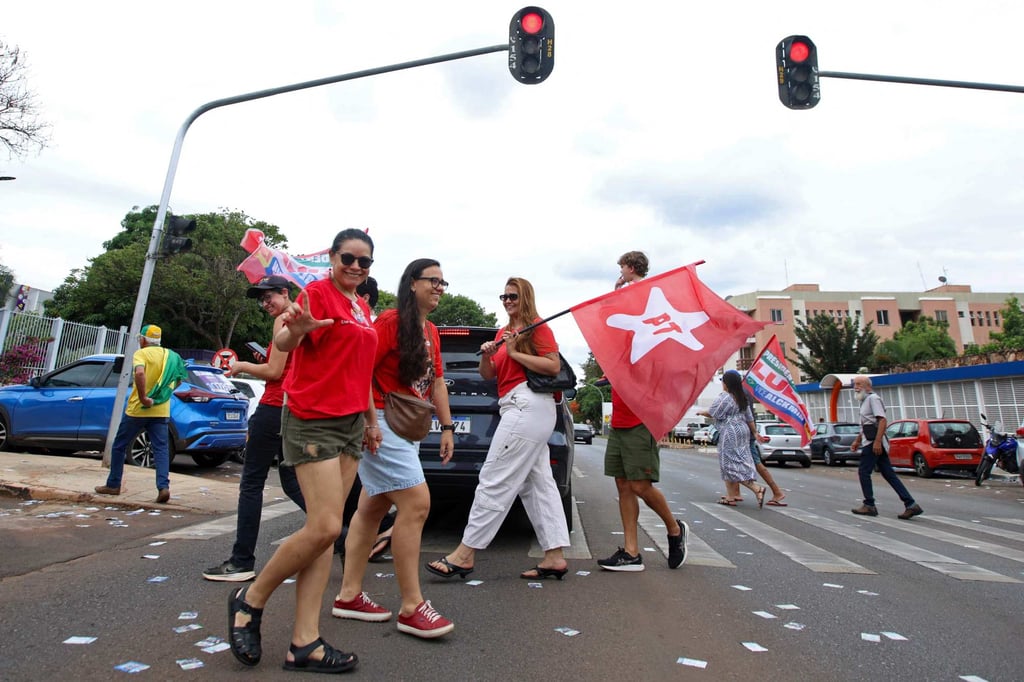
“We are confident in our President Lula, who will fight for national sovereignty,” said Pedro Palacio, 45, who was voting in the capital Brasilia alongside his wife, Andreia, and their two sons and two dogs, all of whom were decked out in outfits supporting Lula.
Federal police have opened an initial investigation into foreign interference after receiving a report from the Solicitor General’s Office, the federal police chief said in a press conference.
“It hasn’t become a formal inquiry yet; it is already an ongoing investigation but the official order establishing the police inquiry has not yet been issued,” said Andrei Rodrigues, head of the federal police.
Reuters reported on Wednesday that Brazilian intelligence officials briefed a French and German delegation on alleged US and Russian interference before the election. The US has rejected claims of interference in Brazil’s affairs.
Despite falling inequality and unemployment, Lula has struggled to win over voters grappling with high living costs, heavy household debt and the threat of street crime and more pervasive gang activity.
Flavio Bolsonaro has sought to capitalise on cost-of-living concerns, while Lula has moved to ban online gambling and, as the race tightened, expanded welfare and proposed fresh debt relief for families.
Rising spending and public debt above 82 per cent of gross domestic product (GDP) have stoked financial concerns that Brazil’s next president may need to address. The government lowered its economic growth forecasts for this year and next to just 2.0 per cent and 2.3 per cent respectively.
Overshadowing the policy debate, a scandal surrounding the now-defunct Banco Master has engulfed much of Brazil’s political class and renewed public anger over corruption.
Daniel Vorcaro, who ran the bank, was arrested earlier this year and accused of a multibillion-dollar fraud scheme. The investigation has looked into the banker’s ties to figures from Supreme Court Justice Alexandre de Moraes to Flavio Bolsonaro, who is being investigated for money laundering tied to the case by the federal police.
The senator has denied any wrongdoing, although he confirmed raising millions of dollars from Vorcaro to make a film about his father.
The banker’s connections to Moraes, widely perceived as a Lula ally, plunged the court into crisis a month before the vote, creating fresh problems for the president. Moraes has said the case against him is politically motivated for his role in the conviction of the elder Bolsonaro.
On Sunday, voters will also elect all 513 lower house members and two-thirds of the Senate, where some lawmakers have pushed to impeach Moraes.
Congress has gained greater influence in Brazilian politics since the impeachment of former president Dilma Rousseff, a Lula ally, in 2016, raising the stakes of those legislative races.
KioskNews shows a cleaned-up reading view extracted from the publisher’s page — the original always lives on their site, not ours.