China taps Pacific metals trove in first large-scale seabed ore mining trial
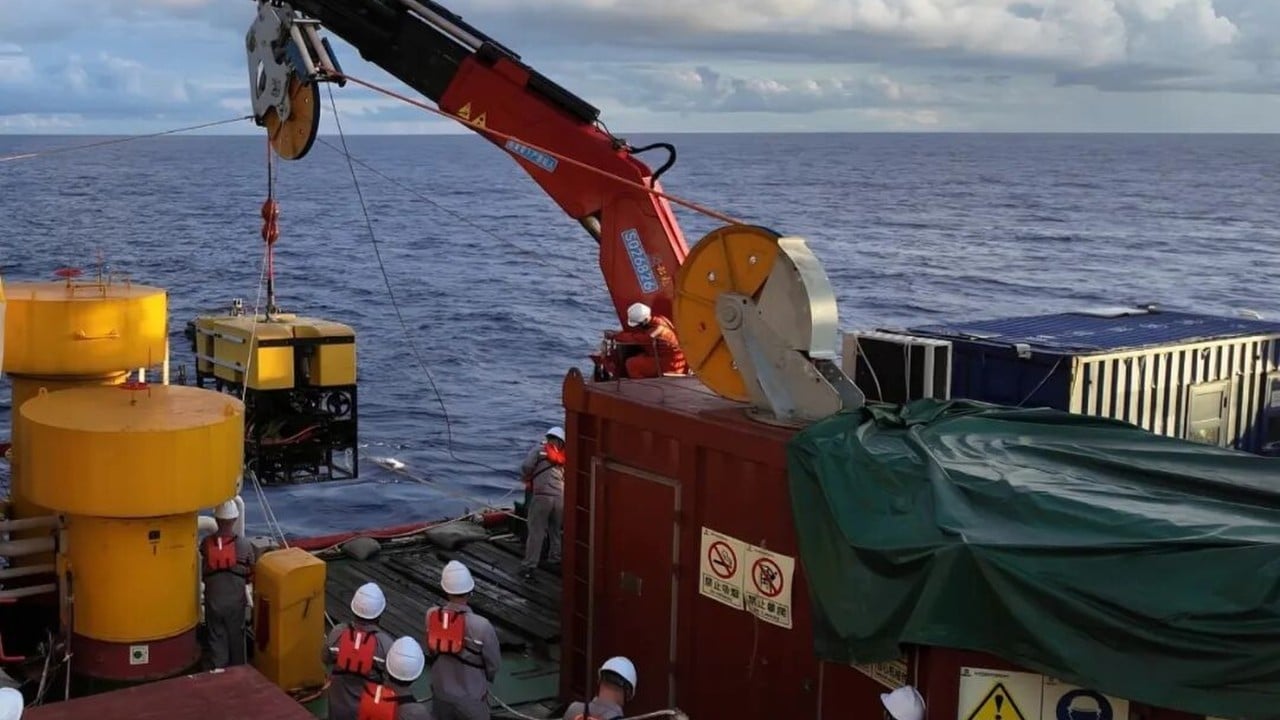
China has carried out its first large-scale trial of seabed ore mining in international waters, using a robotic vehicle to gather potato-sized, metal-rich rocks from the eastern Pacific between Hawaii and Mexico, according to state media.
The rocks collected during the trial – known as polymetallic nodules – contain nickel, cobalt, manganese and copper, which are key ingredients in the batteries used for electric cars and smartphones.
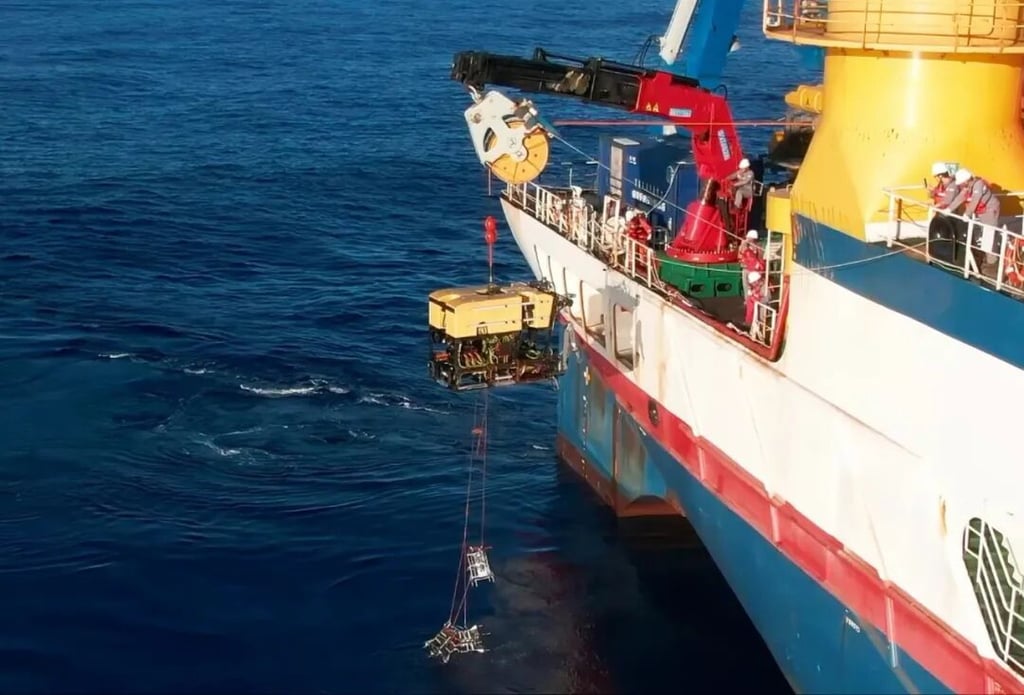
To support the survey work, China deployed a one-of-a-kind deep-sea winch, Science and Technology Daily reported on Monday.
The Haiwei GD11000 is the only winch in the world whose cable can reach the deepest point of the ocean. It lowered submersibles to 5,330 metres (17,500 feet) to survey the sea floor.
Li Wenhua, a professor at Dalian Maritime University and the project’s chief scientist, said the winch – until now used only for research – had never before supported mining.
“It further proves the system is stable and reliable,” he told the newspaper.
Washington is moving to license commercial mining in the same patch of the Pacific. A US decision on a permit sought by The Metals Company, a leading Canadian ocean-mining firm applying through its American subsidiary, is expected by mid-December, according to the company.
While China works in the zone under a contract from the United Nations-backed International Seabed Authority, the US is not a member and is relying on its own law – a step critics say undermines global rules.
China Minmetals has explored its 72,745 sq km (28,000 square mile) block there since 2017, under a 15-year deal with the authority. When it was signed, China became the first country to sponsor four such contracts.
No country has yet mined the deep sea on a commercial scale. Scientists warn such mining could do lasting harm to fragile ecosystems that are still barely understood.
Research ships usually tether their robots to cables that carry power and data, but these are wrapped in steel and become too heavy to go all the way down. Haiwei’s 13km (8-mile) line is armoured with fibre instead, according to a 2024 report in the Liaoning Daily.
On this voyage, the winch sent the submersibles down six times – once for 48 hours straight. In all, they spent nearly 200 hours underwater.
The mining vehicle – named Kunpeng after a giant fish that turns into a bird in Chinese legend – was built by state-owned China Minmetals. In a statement, the company said it worked for long stretches under crushing pressure in cold, salty water.
Its sound-based navigation system, developed by researchers at Harbin Engineering University, pinpointed the vehicle’s position to within a metre, according to the university’s website.
Next up, Haiwei will join routine survey voyages to support China’s push to tap undersea resources and become a “maritime power”, according to the Science and Technology Daily report.
KioskNews shows a cleaned-up reading view extracted from the publisher’s page — the original always lives on their site, not ours.