Japanese plan to bury carbon dioxide off Australia raises feasibility doubts
A Japanese-led plan to bury carbon dioxide (CO2) beneath the seabed off northern Australia is moving closer to reality even as questions have been raised about the project’s commercial viability and its eventual contribution towards Japan’s climate goals.
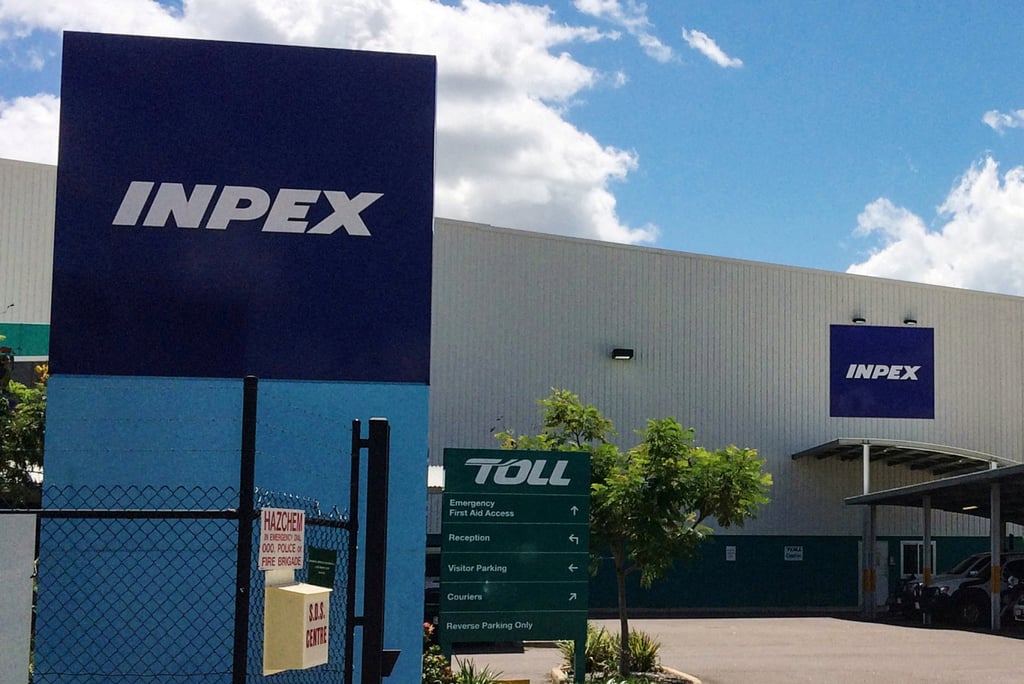
Inpex, the Japanese energy company leading the Bonaparte carbon capture and storage (CCS) project, announced in October that it had begun an initial engineering design, with the first CO2 injections targeted for the early 2030s, pending regulatory approvals and commercial agreements.
CCS involves trapping CO2 from power plants and industrial facilities before it enters the atmosphere and injecting it deep underground. It is seen as a way to reduce climate change by cutting emissions from industries that are difficult to decarbonise, although its costs and effectiveness have long been under scrutiny.
Inpex’s project is located in the Joseph Bonaparte Gulf, about 250km (155 miles) west of Darwin, a region that can potentially store up to 443 million tonnes of CO2 over its lifetime, according to the company. When operational, the Bonaparte facility could potentially cut up to 40 per cent of CO2 emissions from Inpex’s nearby liquefied natural gas operations, it added.
Llewellyn Hughes, director of the Australian National University’s Institute for Climate, Energy and Disaster Solutions, noted that Japan’s focus was on CO2 emissions produced in Australia for now.
However, capturing emissions from the Australian operation would not address the CO2 released from exported gas that Japan burns for its power, according to Hughes.
“Japan has to deal with that themselves, and that’s much, much bigger,” he said.
Potential regional storage
In a statement issued last month, Inpex’s Australia chairman Tetsu Murayama said the Bonaparte project “has the potential to be one of the world’s largest carbon storage developments” and underpin a “strategic regional low-carbon hub”.
That hub would leverage “Australia’s world-class offshore geological resources, existing energy infrastructure and proximity to major regional markets such as Japan and Singapore”, he said.
Hughes cautioned against viewing Inpex’s announcement as an indication that the project would take off.
“It’s not a commitment to invest, but they are beginning to spend some money on looking at the engineering and technical challenges and costs,” he said. “Until there’s a final investment decision, who knows what’s going to happen?”
The longer-term question is whether Japan can do the same for its industries, such as steel, chemicals and cement, according to Hughes.
“If you assume that all of that industry is going to stay in Japan, then you have to do something about the CO2 problem,” Hughes said. “And I think that CO2 exports may be some part of that, including to Australia.”
Disposing CO2 overseas
Grant Hauber, an energy finance adviser at the Institute for Energy Economics and Financial Analysis (IEEFA), said that for industrial businesses, CO2 disposal was an ongoing expense.
“A helpful way to look at CO2 disposal is to think about it like municipal solid waste,” he said.
Highlighting the logistical challenges of the Australian project for Japan, Hauber said if the disposal process were to involve Japanese industries sending over their CO2 eventually, specialised ships would have to be deployed between the two countries.
According to his estimates and industry analyses, a vessel designed to carry up to 57,000 tonnes of liquid CO2 would cost about US$150 million each. With each ship requiring fuel for propulsion, its emissions would have to be deducted from the overall climate benefit from CO2 disposal, Hauber said.
Moreover, the heavy use of capture equipment in Japan would lead to a significant reduction in available electricity while adding capital and operating costs, Hauber said.
On the other end, Australia would need terminals, storage tanks, pipelines and other facilities, he added.
“Geologic disposal facilities will need to be found, assessed, tested and monitored for the life of the storage site and for years beyond closure.”
To make the full chain commercially attractive, Hauber assessed this would require a sustainable price of US$160 to US$250 per tonne of Japanese CO2 for the whole CCS process.
“And who pays for that? There are only two possibilities: ratepayers (electricity customers) or taxpayers,” he said. “I am not sure they will be willing to do so.”
02:57
China trials underwater data centres to solve energy woes
Hauber cited research published last week by his colleague Andrew Reid, which identified similar funding challenges in Europe.
Reid’s analysis estimated the full cost of capturing, transporting and storing CO2 at €191 to €265 (US$210 to US$292) a tonne in Europe. By comparison, European Union carbon prices were trading around €90 a tonne in early November, according to a study by ABN-AMRO.
Japan might face the same problem as in Europe, Hauber said. “In my view, there is no cost proposition that makes overseas disposal of CO2 between Japan and Australia viable,” he added.
For Hughes, carbon capture should be directed towards emissions that are hardest to eliminate.
At the same time, Japan should accelerate wind deployment and other green technologies while offshoring some of its energy-intensive industrial processes even if this were to pose uncertainties for the future of its industries, Hughes said.
“Should Japan keep using lots of gas and coal at home and then send the CO2 overseas for sequestration? That shouldn’t be the first use of these projects,” he said.
He added that the scope for CCS in Australia should be compared with CO2 emissions in Japan.
Nine projects backed by Japan’s government – five domestic and four overseas – aim to store 20 million tonnes of CO2 annually by 2030, or 2 per cent of Japan’s net greenhouse gas emissions equivalent to 994 million tonnes of CO2 in the 2024 financial year.
“The size of the emissions compared to the CCS availability is completely different. There’s a very big gap there. So CCS is never going to be the main answer. No way,” Hughes said.
Hauber dismissed the idea of Japan relying on CCS to curb its carbon emissions and achieve its climate goals.
“I can see no case where overseas disposal is more cost-effective than reducing emissions at source,” he said.
KioskNews shows a cleaned-up reading view extracted from the publisher’s page — the original always lives on their site, not ours.