10 Must-Watch Miniseries Based on Books, Ranked

Jessica is a journalist, editor, TCA critic, and multimedia storyteller with a decade of experience covering pop culture, film, TV, women's sports, lifestyle, and more. She earned her degree in journalism from the University of North Carolina-Wilmington with a focus in creative writing before moving to N.Y.C. and getting her start at The Huffington Post. (She still misses those nap pods.) She's covered multiple film festivals, recapped some of your favorite series, worked too many red carpets to count, and even yapped on a podcast or two. When she’s not interviewing your favorite showrunner or ranking Ryan Gosling's best roles for places like UPROXX, Teen Vogue, Marie Claire, The Daily Beast, and Cosmopolitan, she’s busy being a full-time hype woman to her cat, Finn. You can find her on Bluesky and, sadly, Twitter.
Sign in to your Collider account
Book adaptations have a rough reputation, and they've kind of earned it. We've all sat through a beloved novel getting squished into a two-hour runtime or padded out into four seasons of pointless invented plot. Somewhere along the way, though, the miniseries figured out a middle ground.
With that formula, there’s enough room to tell the story, and, even more importantly, a concrete place to stop. The ten shows below all pulled off the tricky part, which is respecting the source material without turning into a boring photocopy of it. A few stick close to the page while others take big swings. What ties them together is that they use TV to do things their paper counterparts can't. We ranked them in terms of priority, but let’s be real, they’re all deserving of your free time.
10 'The Haunting of Hill House' (2018)
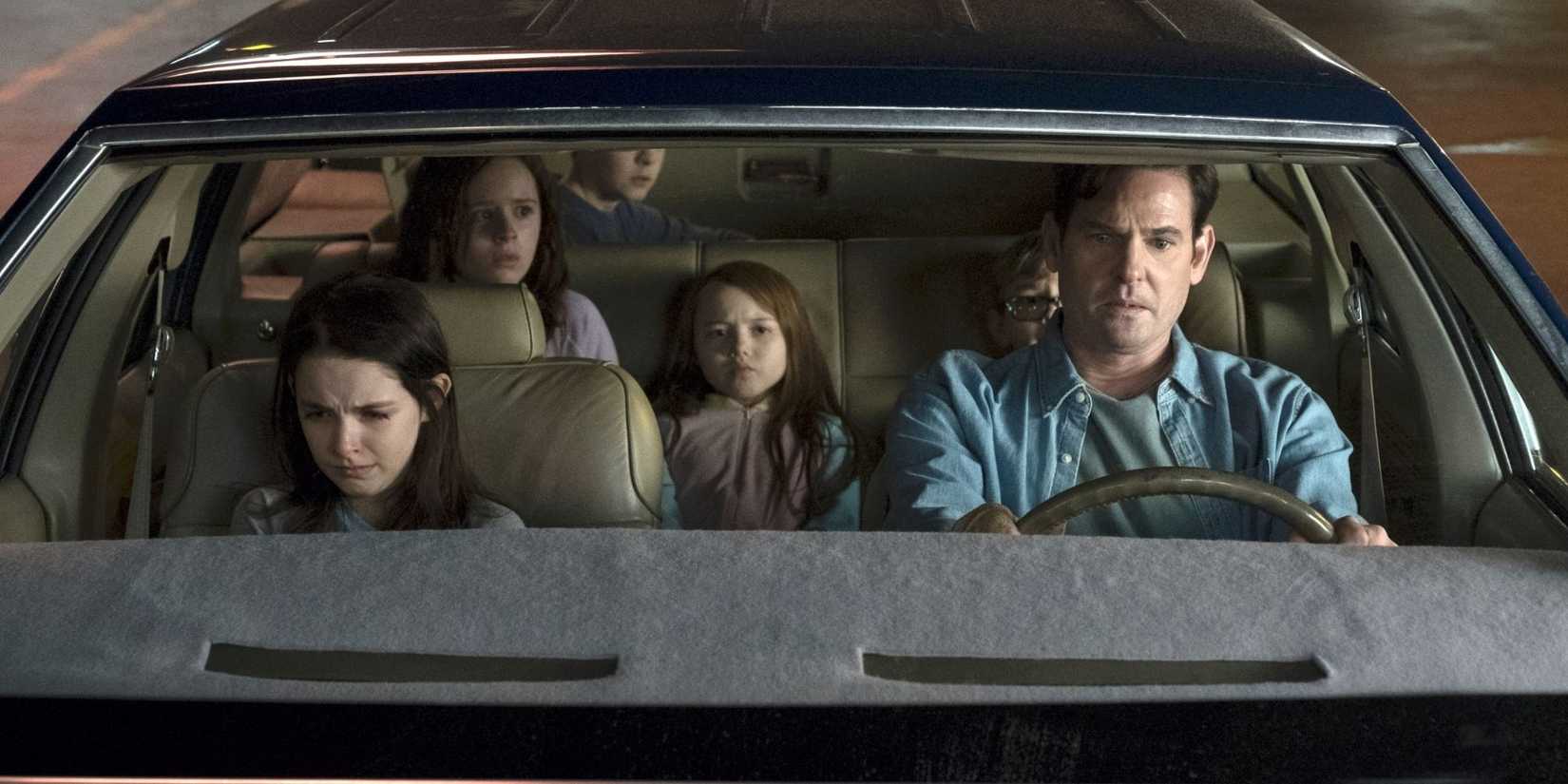
The Crain family has been avoiding one very bad summer at Hill House for twenty-six years by the time Mike Flanagan's 2018 Netflix show catches up with them. Flanagan took Shirley Jackson's 1959 novel and turned it into a family drama that happens to have ghosts in it. Five grown siblings, each of them messed up in a different way from that summer, keep getting pulled back to the house their dad drove them away from in the middle of the night. Episode six is the one everyone talks about. It's a technical showcase, but the reason it's so memorable is that you already care about the family by then.
Jackson diehards get grumpy about how far Flanagan strays from the book, which is really about one woman named Eleanor. What the show gets, though, is what Jackson was actually up to, which is using a haunted house to talk about a mind that can't be trusted. Carla Gugino and Timothy Hutton anchor the older cast, and Victoria Pedretti and Oliver Jackson-Cohen do the heaviest emotional lifting as the younger kids. The horror only works because Flanagan bothered to build the family stuff first.
9 'Maid' (2021)
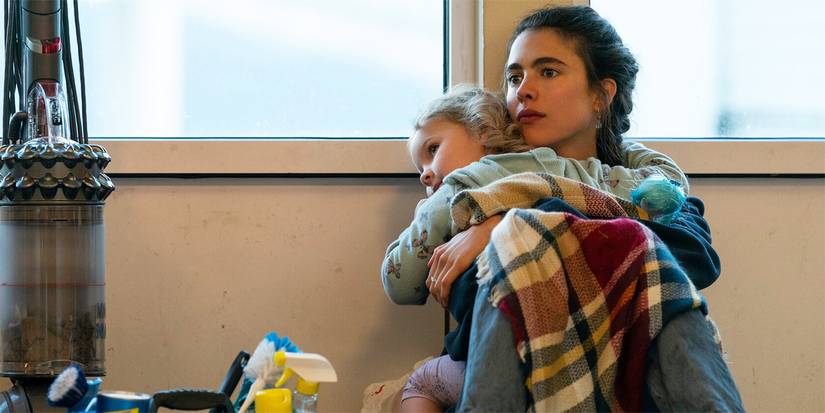
Margaret Qualley plays Alex, a young mom who leaves her emotionally abusive boyfriend with a toddler in the passenger seat and about nine dollars to her name. Molly Smith Metzler's 10-episode Netflix show, adapted from Stephanie Land's 2019 memoir, follows Alex as she tries to line up shelter housing and food assistance while chasing down some kind of custody arrangement, all while cleaning houses for cash. The bureaucracy stuff sounds like it would be boring on TV. It really isn't, mostly because Qualley plays exhausted like it's a full-time job.
The real reason to watch is Andie MacDowell as Paula, Alex's mother, who is also Qualley's actual mom in real life. Paula is the free-spirit type whose chaos was charming when Alex was little and a lot less charming now that Alex has a kid of her own. Nick Robinson is devastating as the ex, who isn't a movie villain and is scarier for it. The book is a memoir, so the show fills in and invents plenty, but it all feels true to the woman Land was writing about.
Collider Exclusive · 8 Questions · 2 Minutes Which Netflix Character Would Be Your Best Friend? Dustin · Emily · Wednesday · Gi-hun
Some friends drag you out of the house. Some sit with you on the worst night of your life. Netflix has written both, plus the one who tells you the truth you have been avoiding all week. Answer eight quick questions about how you actually do friendship, and find out which of them was always going to end up in your corner.
🧢Dustin(Stranger Things)
🗼Emily(Emily in Paris)
🕷️Wednesday(Wednesday)
🟢Gi-hun(Squid Game)
01
How do you usually end up making a new friend? The origin story says a lot about the friendship that follows it.
02
What is a perfect Saturday with your best friend? Friendship is mostly built out of very ordinary hours.
03
You call them at two in the morning. What happens? This is the real test of a friendship, and everybody knows it.
04
What do you want from them when you are clearly wrong? The best friendships are the ones that survive being corrected.
05
What do your friends actually value about you? The friend you attract says something about the friend you are.
06
You have a falling out. How does it go? How a friendship repairs itself matters more than how it breaks.
07
What do you actually need a best friend for? Everybody is missing something. The right friend fills that gap.
08
Ten years from now, what keeps the two of you close? Eight questions in, this is the one that decides who you get.
The Group Chat Has Spoken Your Best Friend Is…
Four Netflix characters, four completely different ways of showing up for somebody. This is the one who fits how you actually do friendship, and what having them in your life would be like.
Dustin Henderson
You do not do friendship at half volume, and neither does he. What you want is somebody who says yes to the plan before you have finished describing the plan.
- Dustin is the friend the entire show runs on: loyal past the point of sense, enthusiastic about everything, and incapable of leaving anybody behind.
- You have the same instinct. Your friendships are loud, specific and slightly ridiculous, and they last for decades because of it.
- He is also the one person who would take your strangest interest completely seriously, which is far rarer than it sounds.
- You would have a group chat. It would never once be quiet.
Emily Cooper
You are the friend who makes things happen, and so is she. Together you would be mildly exhausting to everyone around you and completely delighted with yourselves.
- Emily treats an ordinary Tuesday as something that could be turned into an occasion, which is either the best or the worst quality in a friend depending on your energy levels.
- You share her refusal to sit still. Neither of you has ever accepted a night in when something was happening somewhere else.
- She is far more loyal than people give her credit for. She defends her friends loudly, publicly, and occasionally before checking the facts.
- She would post the photo without asking. You would forgive her, because it is a very good photo.
Wednesday Addams
You have no patience for pleasant lies, and she has no ability to tell them. What looks like coldness from the outside is the most reliable friendship on this list.
- Wednesday never says a kind thing she does not mean, which makes the rare ones count for an enormous amount.
- You would rather be told the truth than be made comfortable. She is constitutionally incapable of offering you anything else.
- Underneath all of it she is ferociously protective. She simply refuses to make a performance out of caring.
- Do not expect a birthday message. Do expect her to ruin anyone who wrongs you.
Seong Gi-hun
You look after whoever is having the worst day. So does he. It is the least strategic way to move through the world and the best possible quality in a friend.
- Gi-hun is not the strongest player in Squid Game, or the cleverest. He is the one who keeps choosing to protect somebody else, over and over, at genuine cost to himself.
- You have the same instinct. You notice who is struggling and you stay with them, long after anybody would blame you for leaving.
- He is a flawed friend, and that is part of why it lands. He lets people down, then comes back and tries again, which is more than most manage.
- He would give you his last chance and never once mention that he had done it.
8 'Say Nothing' (2024)

FX and Hulu's 2024 adaptation of Patrick Radden Keefe's nonfiction chronicle of the Troubles has the toughest source material on this list, and it wisely does not try to soften anything. The story braids together the abduction of Belfast mother Jean McConville and the radicalization of Provisional IRA members Dolours and Marian Price. All of it eventually collides with the fallout from a Boston College oral history project that promised confidentiality it couldn't actually deliver. Lola Petticrew and Hazel Doupe play the young Price sisters, Anthony Boyle plays a young Brendan Hughes, and all three make you understand people whose choices are impossible to explain away.
Joshua Zetumer made the weird decision to cast entirely different actors for the older versions of every main character. It's the kind of choice that should feel gimmicky but somehow works given all the trauma these characters go through. The show doesn't offer catharsis or a clean villain, and it's right not to, because Keefe's book refused those exits too.
7 'Roots' (1977)

Roots was the television event of 1977, watched by an audience that would be impossible to gather today. But the numbers alone don’t explain why the show still matters. LeVar Burton's debut performance as Kunta Kinte, a young Mandinka man captured in West Africa and sold into slavery in colonial-era Virginia, is still his best. And one of the best we’ve seen on the small screen. The eight episodes come from Alex Haley's 1976 Pulitzer-winning book and follow Kunta and his descendants across generations.
The 2016 History Channel remake, with Malachi Kirby stepping into the Kunta role, is more careful with historical detail and gives real space to the African chapters that the original had to compress. Both are worth your time. The 1977 version set the standard for what a broadcast miniseries could pull off in terms of scope and how much it could ask of an audience, and the remake proves the material has more to give than nostalgia would suggest. Not many shows reshape the culture around them, and this one did it twice.
6 'Pride & Prejudice' (1995)
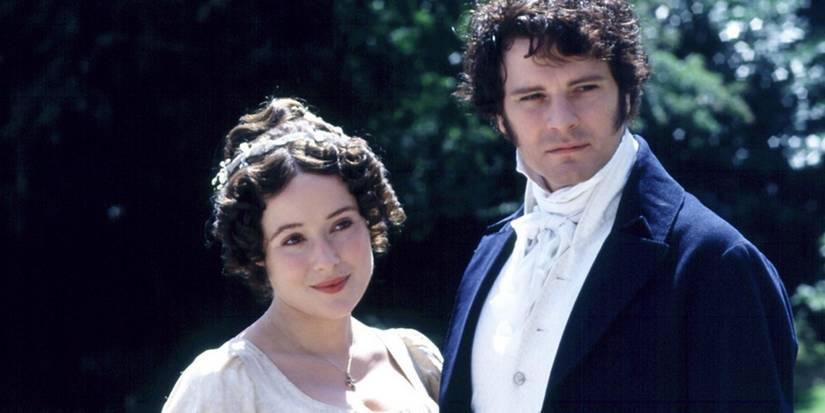
Every Jane Austen adaptation since 1995 has been trying and failing to get out from under the shadow of this BBC version. Andrew Davies wrote the screenplay and Simon Langton directed. The six-episode length gives Austen's 1813 novel the pace she actually wrote it in, which is a small miracle in an era of ninety-minute costume-drama films. Jennifer Ehle plays Elizabeth Bennet as someone who's almost too clever for her own good. Colin Firth plays Darcy going from insufferable to smitten without ever selling either end short. The pond scene isn't in the book. Davies invented it, and he uses his one liberty well.
Everything else, from the noisy chaos of family dinners through the slow thaw between Lizzy and Darcy, channels Austen’s voice. Susannah Harker's Jane, Alison Steadman's magnificently silly Mrs. Bennet, David Bamber's mortifying Mr. Collins, and Anna Chancellor's sneering Miss Bingley fill out a supporting cast that pretty much nobody's improved on since. If you've only seen the Keira Knightley movie, please, treat yourself.
5 'Band of Brothers' (2001)

Steven Spielberg and Tom Hanks adapted Stephen Ambrose's 1992 book into ten HBO episodes that premiered in 2001 and cost more than any other show at the time. Each episode picks a different member of Easy Company, 506th Parachute Infantry, 101st Airborne, and follows them from training in Georgia to the drop into France, through the Netherlands and the worst of the Ardennes winter, and eventually up to Hitler's Eagle's Nest.
Damian Lewis' Major Dick Winters is the closest thing to a lead, but what really gets you is how well you know the men around him by the end. Ron Livingston as Nixon, Donnie Wahlberg as Lipton, and on and on. The interviews with real Easy Company vets that open each episode make sure you never forget you're watching history, not myth. Ambrose built his book from those same interviews, and the show is smart enough to let the men speak for themselves.
4 'Sharp Objects' (2018)

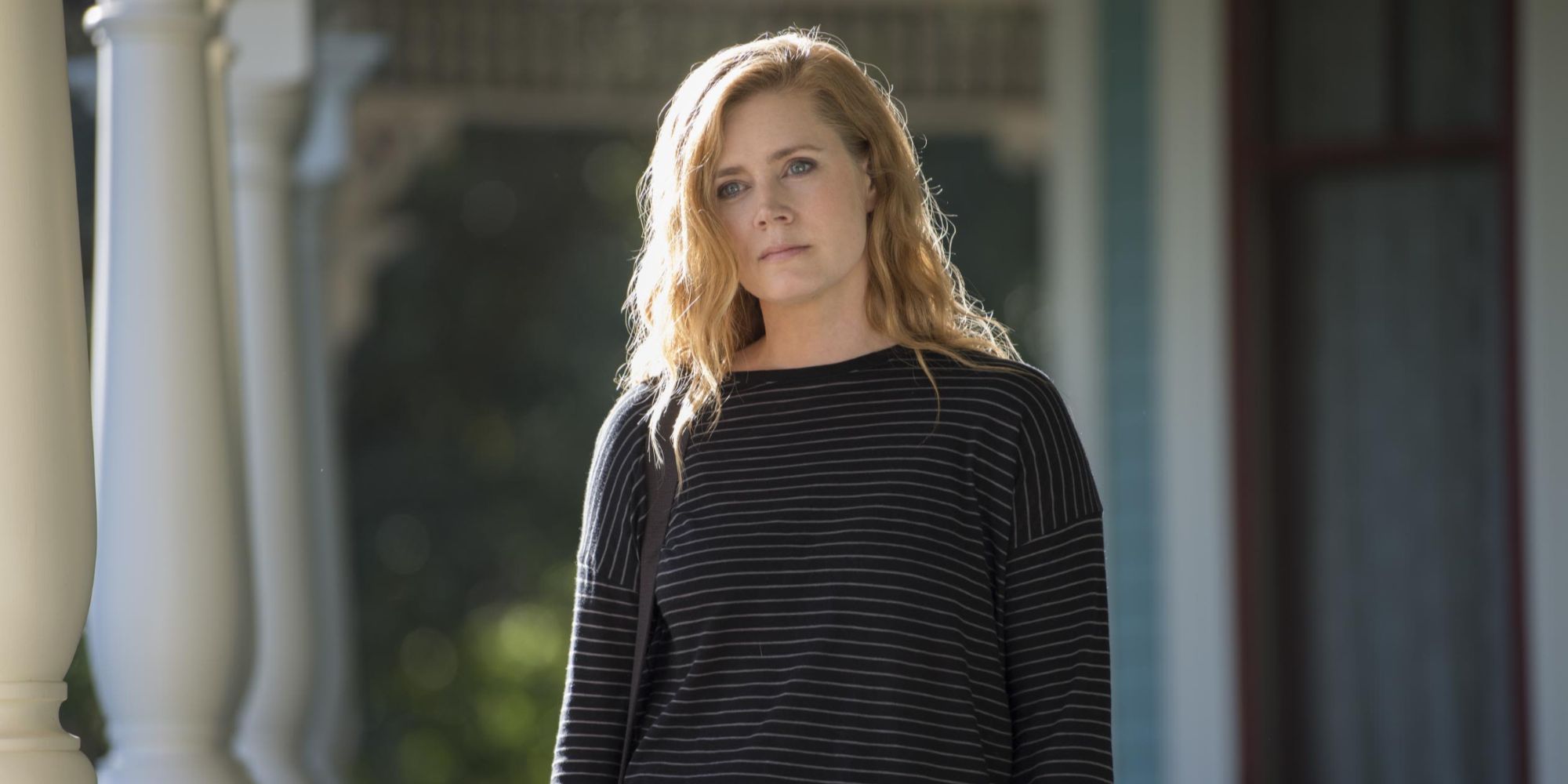
Jean-Marc Vallée directed all eight episodes of the 2018 HBO adaptation, and you can feel him in every frame. Amy Adams plays Camille Preaker, a St. Louis reporter sent back to her tiny Missouri hometown to cover the murders of two young girls, and the editing echoes her fractured, half-drunk headspace. Patricia Clarkson as Adora Crellin is one of the great monster-mother performances of the decade, and Eliza Scanlen as Amma is the unsettling other side of that same coin.
Gillian Flynn's debut novel is a nasty little book that some people couldn't finish. The show keeps that same energy while pulling off the harder job of translating first-person-inside-a-broken-brain prose into visual language that translates. We won’t spoil anything here, but please, stay through the credits of the finale.
3 'Normal People' (2020)

The twelve half-hour episodes of Hulu’s Normal People adaptation give Sally Rooney's 2018 novel exactly the pace it needs. Lenny Abrahamson directed the first half and Hettie Macdonald took the second, but you never feel the handoff happen. Daisy Edgar-Jones and Paul Mescal were nobodies before the show aired, and they turn in performances as Marianne and Connell so alive that Rooney's tight interior prose feels alive on-screen.
Rooney co-wrote a bunch of the episodes, which is why the show feels less like a translation and more like a continuation of the book by other means. The way the story handles sex and intimacy is grown-up in a way that made the rest of TV take notice. Go look at how many shows started crediting intimacy coordinators for the first time after Normal People aired. That’s reason enough to rank it high on this list.
2 'Station Eleven' (2021)
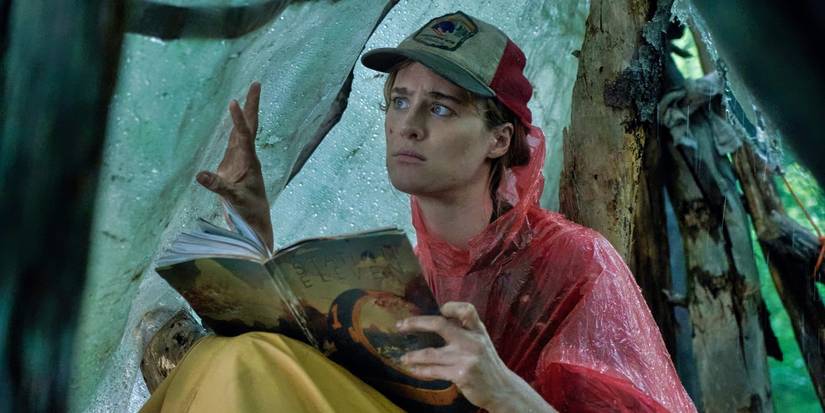
Patrick Somerville's 2021 HBO Max adaptation of Emily St. John Mandel's novel about a global flu pandemic and its aftermath had the misfortune, (and the strange fortune), of arriving in the middle of a global pandemic. It was among the finest shows of its year and got half the audience it deserved. The story bounces between the collapse in Chicago, seen through the eyes of a girl named Kirsten and a guy named Jeevan who ends up her accidental guardian, and a Traveling Symphony that tours the Great Lakes region twenty years later.
Mackenzie Davis, Himesh Patel, Matilda Lawler, and Lori Petty are all doing career-best work, and Danielle Deadwyler as Miranda carries the flashback episodes. Somerville rearranges Mandel's novel pretty significantly. He softens some of the bleakness and reorders the timelines, moves she reportedly loved. What survives, and actually grows in the translation, is the book's argument that art is what humans make to remember each other by.
1 'The Queen's Gambit' (2020)
.jpg?q=49&fit=crop&w=825&dpr=2)
Beth Harmon learns chess in the basement of a Kentucky orphanage from a janitor named Mr. Shaibel who teaches her the game on a board propped on a crate. By the last of the seven episodes, she's playing the reigning Soviet grandmaster in Moscow. Scott Frank and Allan Scott spent decades trying to get Walter Tevis' 1983 novel adapted, and the Netflix series they finally landed in 2020 makes the case for waiting. Anya Taylor-Joy plays Beth as a young woman whose gift for chess grows right alongside a drug habit she picked up as a kid on orphanage-issued tranquilizers.
The production design and editing work in service of a character study instead of trying to replace one. Marielle Heller, Harry Melling, Thomas Brodie-Sangster, and Bill Camp round out a supporting cast that hands Beth a rotating set of surrogate parents and rivals who eventually break through her high wall. Tevis's novel had spent decades as a cult favorite of chess players and literary weirdos. Once the show hit, chess sets sold out worldwide. The adaptation trusted that Tevis had already done the hard work, then it added its own layer on top of that.
KioskNews shows a cleaned-up reading view extracted from the publisher’s page — the original always lives on their site, not ours.