More Nobel winners, less innovation? Chinese study reveals cost of top-tier awards
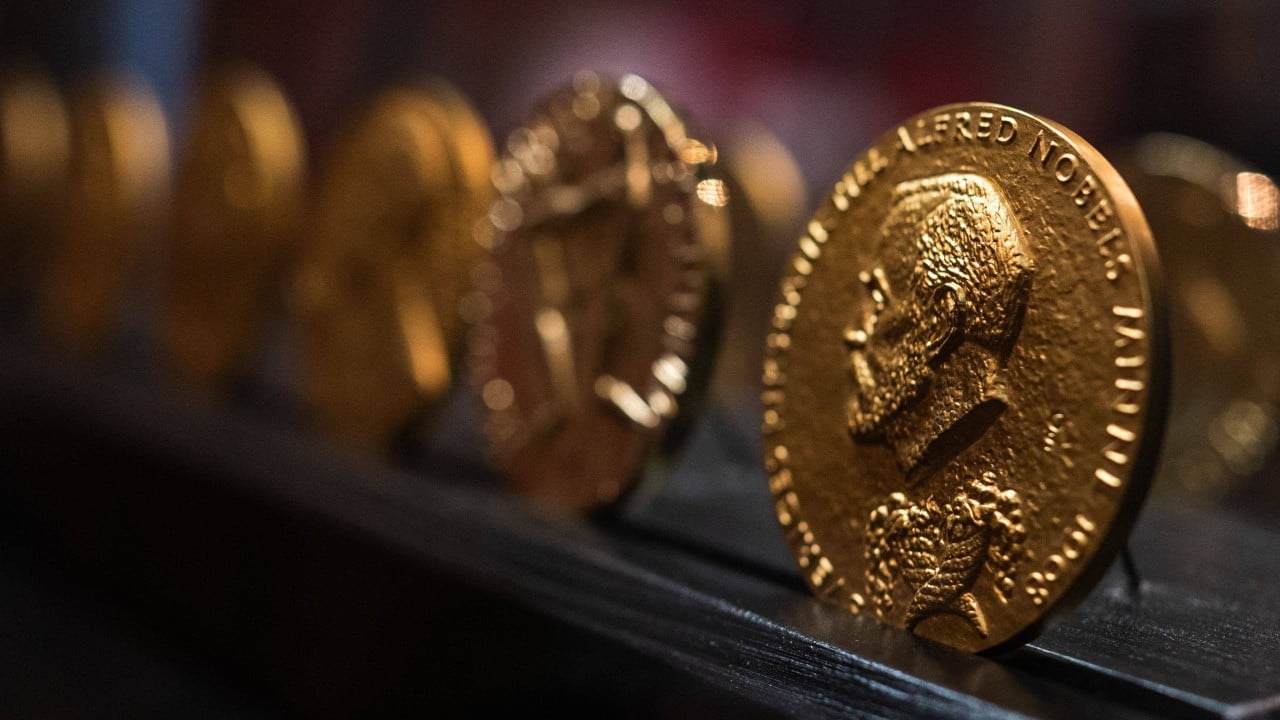
Science prizes usually put the spotlight on winners, celebrating their discoveries but paying little attention to the researchers left out.
A study by scientists at the Chinese Academy of Sciences (CAS) has found that prominent innovation awards may discourage colleagues from pursuing unconventional research – with the most prestigious prizes having the strongest negative effect.
The findings raise questions about the wider consequences of scientific honours, including the Nobel Prize, as China’s rapidly growing research output has yet to bring a comparable number of laureates. Meanwhile, some countries falling behind in the tech race, such as Japan and Britain, keep winning.
“People usually talk about the ‘halo’ of winning an award, but this paper looks at the ‘shadow’ it casts on colleagues,” said a Beijing-based professor who studies scientific collaboration networks and spoke on condition of anonymity.
Published online in Nankai Business Review on November 2, the study found that the share of researchers’ patents classified as unconventional innovations fell by an estimated 3.1 per cent after a colleague won a prestigious award.
Researcher Yu Jiang and his team, from the CAS Institutes of Science and Development and the University of Chinese Academy of Sciences, analysed patent records for 54,670 researchers at 1,562 Chinese listed companies between 2008 and 2023.
They used the China Patent Award to examine “outlier innovation” – inventions using technological combinations that differ substantially from a company’s established research directions.
The researchers compared changes before and after a colleague won an award with those among employees at companies without winners, using a statistical method known as difference-in-differences.
They identified three possible mechanisms: narrowing searches for unfamiliar knowledge, increasing reliance on established technologies and weakening research collaboration networks.
“Prestigious award-winning achievements can easily become ‘authoritative models’ within organisations,” Yu and his team wrote.
Can Hong Kong become a new centre for frontier medicine?
Such models can encourage researchers to follow recognised approaches rather than experiment with uncertain alternatives, while expectations that resources will favour winners may discourage rival projects.
The estimated negative effect was strongest for top-tier awards and was more pronounced in digital economy industries, larger companies and cities with higher administrative status.
Researchers who had collaborated with a winner in the previous three years were also more strongly affected.
The decline was especially apparent in higher-quality outlier innovation, which the authors assessed by distinguishing invention patents from utility-model patents.
“This finding does not negate the incentive value of the honours system itself,” Yu and his team wrote, acknowledging that awards could have different effects on winners and their colleagues.
Although the Chinese study did not examine Nobel laureates, its findings raise questions about whether the world’s most prestigious science awards could have similar effects on researchers who miss out.
Nobel winners gain international recognition, professional prestige and opportunities for collaboration, potentially attracting more research funding and attention to their scientific fields.
Asked whether such effects might also occur in the international scientific community, the Beijing-based professor said: “I am not sure, but I suspect this phenomenon may be widespread.”
“Because the total amount of resources is limited, if some people receive more, others inevitably receive less,” the professor added.
Beyond their potential impact on non-winners, Nobel prizes have also faced long-standing questions about how fairly they recognise scientific achievements.

The Nobel system limits each award to three recipients, even as modern scientific breakthroughs increasingly depend on large international teams. Its selection process has also faced scrutiny over transparency, with nomination and evaluation records kept confidential for 50 years.
Moreover, all recipients of the 2026 Nobel prizes for physics, chemistry and physiology or medicine were men, highlighting the continuing gender imbalance in science’s most prestigious awards.
Questions about scientific recognition have become particularly relevant to China, whose rapidly expanding research capabilities have yet to translate into a comparable number of Nobel laureates.
China now produces more than three times as much chemistry research output as the United States in the Nature Index, according to a report published by Nature in May, with the CAS leading the field among research institutions.
Yet Tu Youyou, who received the 2015 Nobel for physiology or medicine for her work on the antimalarial drug artemisinin, remains the only China-based recipient of a Nobel Prize in the natural sciences.
A correspondence article published in Nature last November argued that China needed to encourage more high-risk scientific exploration to narrow its Nobel gap, despite rising research investment and scientific output.
However, the disparity does not necessarily suggest bias in the Nobel selection process, as the prizes recognise individual discoveries rather than national research performance, often decades after the original work.
This year’s Nobel Prize for chemistry, for example, went to France’s Henri B. Kagan and Japan’s Kenso Soai for discoveries in asymmetric organic synthesis dating back decades.
The Chinese study also has limitations. It examined innovation through patent records and collaboration patterns rather than directly measuring researchers’ psychological responses, leaving it open whether similar effects occur in basic scientific research.
Concerns about the concentration of scientific recognition and resources are not limited to international awards.
A commentary published in Nature in August warned that China’s prestigious talent programmes, while helping to drive the country’s research expansion, had also widened the divide between leading academics and younger scientists competing for limited resources.
KioskNews shows a cleaned-up reading view extracted from the publisher’s page — the original always lives on their site, not ours.