[Editorial] Coupang’s lobbying tactics are finally drawing global scrutiny
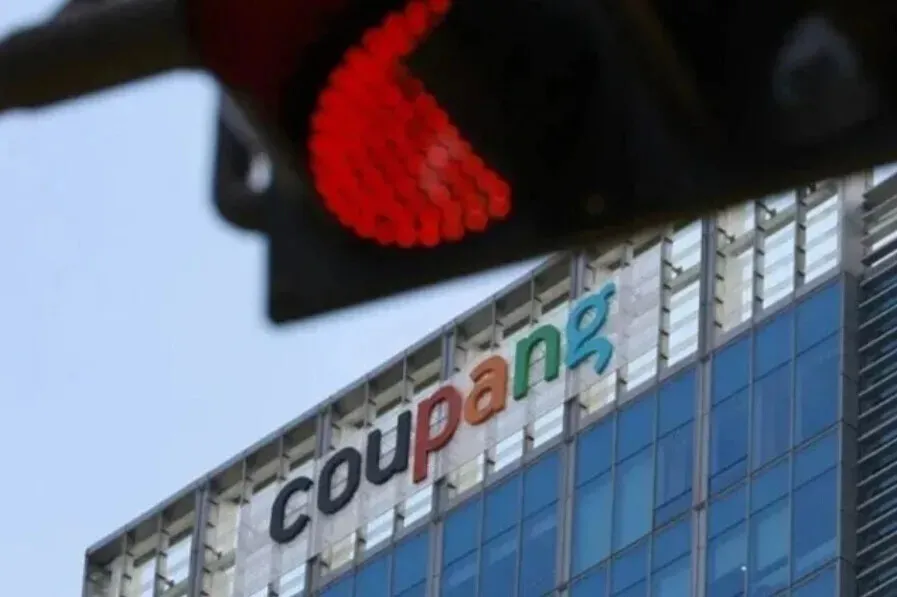
Coupang’s headquarters in Seoul. (Jung Yong-il/Hankyoreh)
A major consumer rights advocacy group in the US has weighed in on an ongoing dispute between Seoul and Washington over Korea’s handling of a massive data leak at e-commerce firm Coupang.
In a memo last week, Public Citizen argued that the US-based online retailer Coupang has been aggressively lobbying the Trump administration and Congress in an attempt to circumvent the Korean government’s legitimate attempts to enforce regulations and the law. The advocacy group’s opinion is the exact opposite of the stance adopted by major figures in the Trump administration, who are pressuring Seoul to call off what they describe as an “unfair” attack on the company.
The fact that such critical voices are emerging inside the US is all the more reason for the Korean government to hold the line on the appropriate measures it has taken against Coupang.
Public Citizen, an American non-profit founded by consumer advocate Ralph Nader in 1971, published a report titled “Coupang Corporation’s Inappropriate Pressure Campaign to Weaponize US Trade Policy Against South Korea’s Digital Regulation” on Thursday.
The non-profit described Coupang as a company that is incorporated in the US and listed on the New York Stock Exchange, but one that primarily serves the Korean market, with over 90% of its net revenues coming from Korea.
It highlighted how Coupang “enlisted all available avenues to lobby” US lawmakers and the Trump administration after facing regulatory scrutiny by Korean agencies following a disastrous data breach in 2025 and revelations of unethical labor practices.
According to the report, Coupang spent US$2.27 million on lobbying in the US, employing 32 lobbyists. With a 56% revolving door rate, most of the lobbyists were former Trump officials or campaign associates.
Utilizing such figures, Coupang engaged in various forms of lobbying, including donating US$1 million to Trump’s inaugural committee. Since the beginning of 2026, Coupang has significantly increased its lobbying budget.
Coupang reported US$3.62 million in lobbying expenses from January to September, more than double the amount it used during the same period in 2025 (US$1.69 million).
The report concluded that Coupang’s lobbying appears “to have paid off,” given that more than 50 members of Congress signed a letter advocating Coupang’s cause in April, and that the House Judiciary Committee released a report in July claiming that Korea took discriminatory regulatory actions against Coupang.
Even Vice President JD Vance cautioned Korea against pursuing penalties and regulations on US-based firms like Coupang. Officials in the Trump administration are continuing to issue warnings to Korea, arguing that as the Coupang debacle remains unresolved, US-Korea relations will risk entering even rockier territory.
Public Citizen’s report went on to refute, point-by-point, the argument that the Korean government’s actions discriminate against US-based companies. The non-profit stressed how the recent Coupang data breach was “the largest in South Korean history,” affecting almost “37 million user accounts out of a population of ~50 million people.”
It also stressed that Korea has worked to modernize its digital sector regulations over the last decade, and that independent regulators, such as the Personal Information Protection Commission and the Korean Fair Trade Commission, provided Coupang with ample opportunity to present evidence and defend itself.
The non-profit concluded that the actions taken by the Korean government do not “solely target Coupang and do not demonstrate any discriminatory intent on the part of the Korean authorities against US companies.”
As Public Citizen’s report demonstrates, the Coupang case ultimately boils down to whether the Korean government can enforce its laws without being intimidated by the aggressive lobbying of a multinational corporation.
If Korea abandons its principles and backs down, it will become increasingly difficult to enforce the law rigorously against multinational companies with powerful lobbying operations. While remaining mindful of the sensitivities surrounding Korea-US relations, Seoul must make one thing clear to Coupang: there are limits to what it can do.
KioskNews shows a cleaned-up reading view extracted from the publisher’s page — the original always lives on their site, not ours.