The big test facing the Middle East’s emerging security autonomy
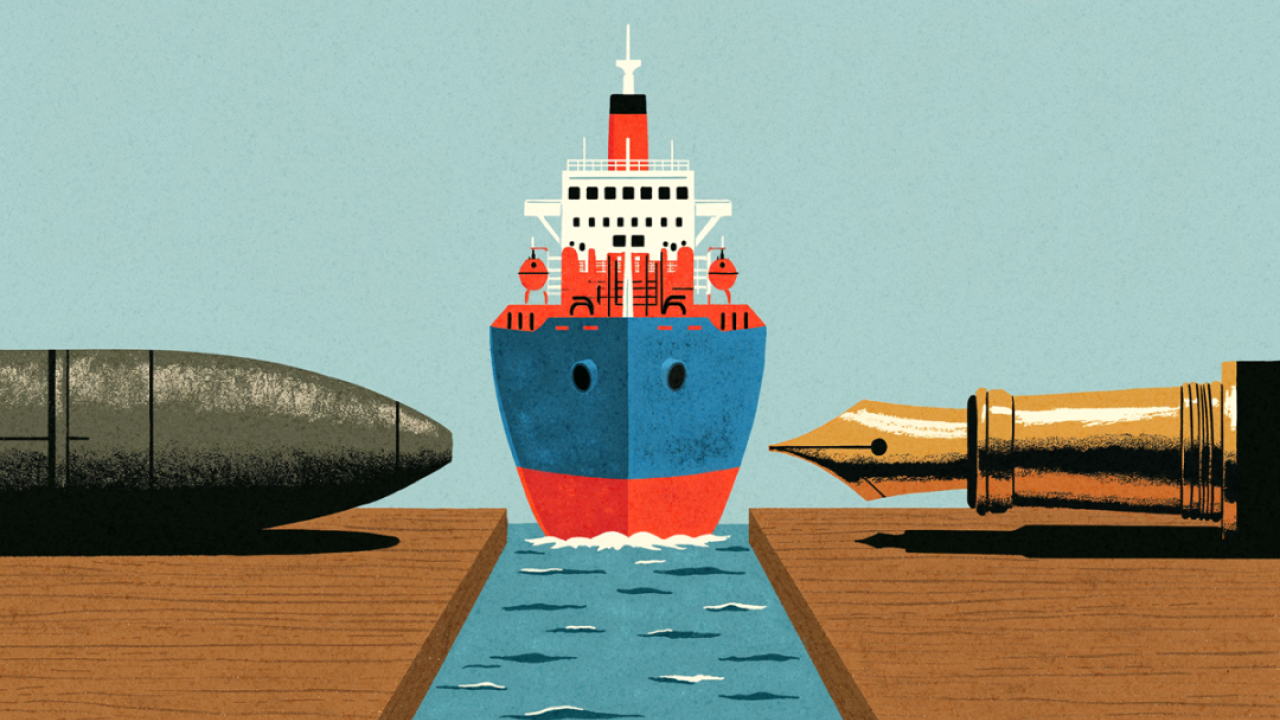
Gulf governments are building collective defences while exploring security arrangements with the very country many of those defences are designed to deter.
On November 5, Turkey’s parliament approved a mutual defence pact with Saudi Arabia and Pakistan. Five days later, the Gulf Cooperation Council (GCC) agreed to establish a military command in Kuwait. In between, Iran’s foreign minister contacted 12 regional counterparts, calling for security arrangements without outside powers.
These are competing responses to the same insecurity. Regional governments are gaining ways to organise protection and diplomacy, yet disagree over whether Iran belongs inside the system they are building. The challenge is to reconcile military commitments with political accommodation.
In July, I described three overlapping paths to a post-war order: US-led security partnerships, China-supported reconciliation and a regional-autonomy track involving Saudi Arabia, Egypt, Turkey and Pakistan. The third track has now become more prominent. It is acquiring institutions, drawing in additional countries and negotiating its relationship with the other two.
The “Mecca Joint Defence Agreement”, signed in August, commits Saudi Arabia, Turkey and Pakistan to regard an attack on one as an attack on all. Turkey’s parliamentary approval advances ratification, although troop deployments and joint operations require further decisions. The GCC’s Kuwait command decision adds to its long-standing military coordination. Neither yet proves governments will delegate meaningful operational authority.
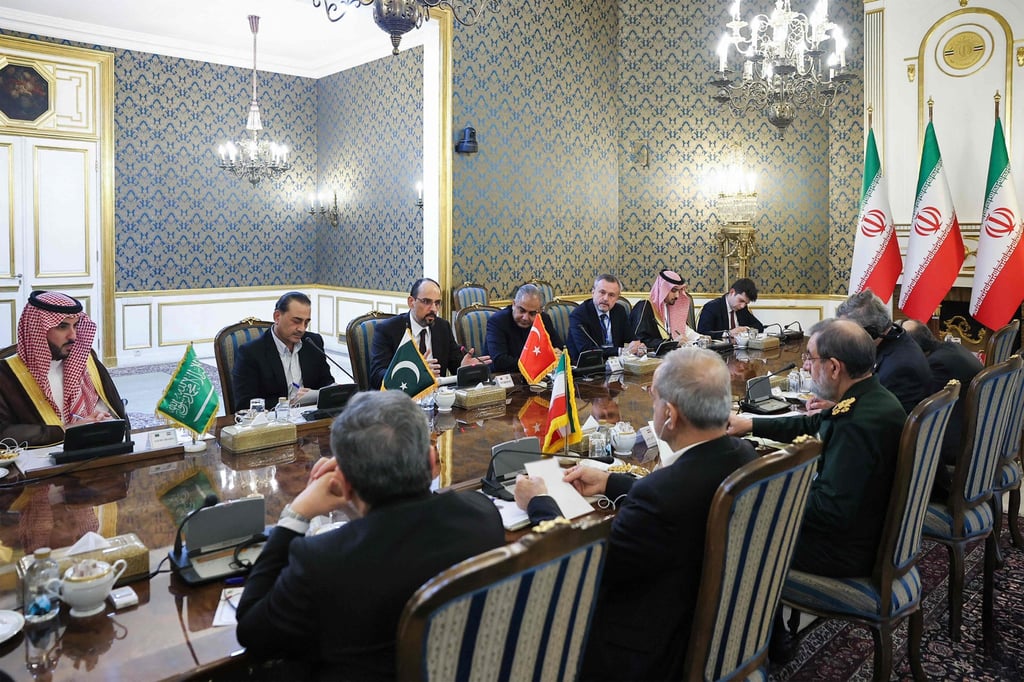
Meanwhile, regional diplomacy is growing. Last month, senior officials from the three Mecca pact signatories visited Tehran to discuss de-escalation. Earlier, foreign ministers from Turkey, Saudi Arabia, Egypt and Pakistan met their counterparts from Germany, France, Italy and Britain to discuss regional security. Last week, Saudi Arabia and Qatar also held a consultation with the four European countries.
Oman offers a different model. In a speech last month, Foreign Minister Badr Albusaidi proposed reviving a dialogue between the six-member GCC, Iran and Iraq with a non-aggression pact as the goal.
The expanded network shows why autonomy cannot be measured by distance from foreign powers. Saudi Arabia participates in the GCC command structure and the Mecca pact while retaining American security links and opening talks with Tehran. Pakistan brings its own channels to Iran and Washington; Turkey brings Nato membership and European diplomacy.
The real test is whether governments use those connections to coordinate negotiating positions, mobilise resources or establish rules others will observe.
The United States remains integral. Gulf states still depend heavily on American military capabilities, and the war with Iran has underscored both their value and the risks of hosting US forces. The G7 statement on November 11 supported US mine-clearing and civilian-vessel escorts through the Strait of Hormuz while recognising a separate French-British defensive initiative.
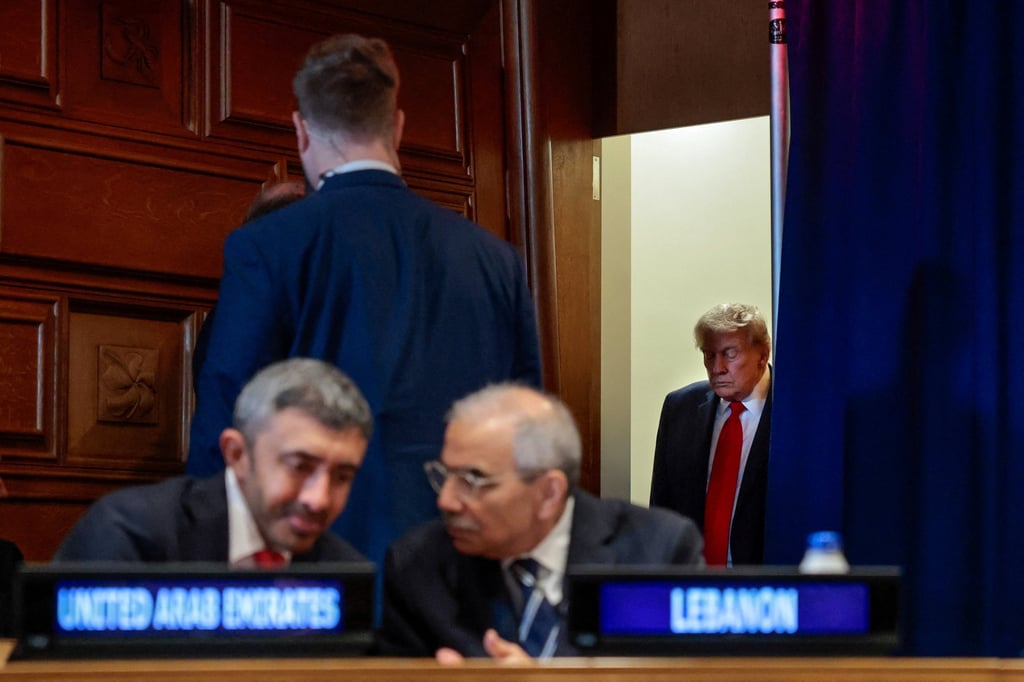
European involvement therefore expands regional options without necessarily weakening the American security framework. On November 12, US President Donald Trump said Washington did not need an Iran deal, days after meeting Qatar’s prime minister to discuss diplomacy. Such reversals encourage Gulf capitals to keep alternative channels open.
China has a different contribution. The 2023 Saudi-Iranian agreement it brokered preserved a channel across a major regional divide. In March, China and Pakistan jointly proposed steps for ending hostilities, protecting civilian infrastructure and reopening the Strait of Hormuz.
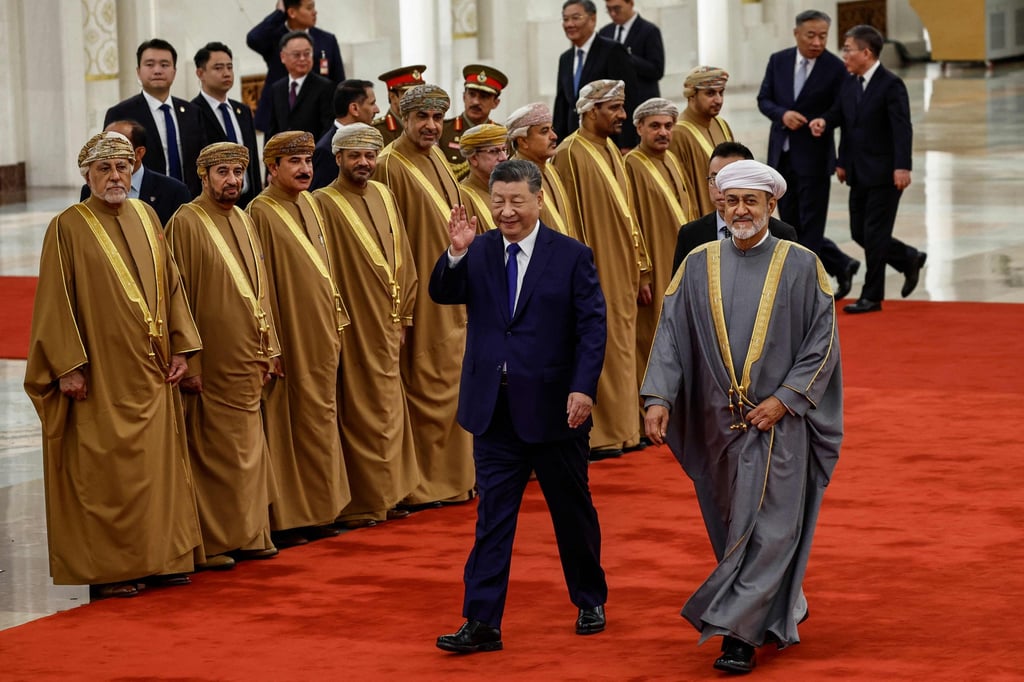
In September, Xi called for a regionally shaped security framework, underpinned by development. On November 2, Foreign Minister Wang Yi separately met Saudi and Iranian security officials in Beijing while Oman’s sultan visited President Xi Jinping. China subsequently sent an envoy to Iran and Oman, supporting discussion of a new regional security architecture.
The significance of these contacts lies in the convergence between China’s reconciliation diplomacy and initiatives originating within the region. The China-Oman joint statement couples support for diplomacy and safe navigation with trade, investment and development cooperation. Beijing can encourage dialogue and supply economic incentives, although it cannot replace American military guarantees or settle regional rivalries on its own.
Iran exposes the limits of regional autonomy. Tehran calls for an architecture free of interference, while Gulf countries fear its missiles, drones and armed partners. Its foreign minister’s outreach to 12 counterparts shows diplomatic interest; reported Iranian attacks on navigation facilities on an Omani island and on Kuwait and Bahrain underline the distrust that persists. An arrangement labelled regional can still intensify the region’s security dilemma.
The Strait of Hormuz provides the clearest practical test. Oman and Iran have discussed a temporary shipping corridor, mine clearance and traffic management. On November 11, Iranian parliament speaker Mohammad Bagher Ghalibaf said the two coastal states should determine navigation rules.
Oman has publicly stressed applicable international law; the G7 opposes tolls and unlawful restrictions. China, too, needs dependable passage for energy and trade. Agreement on navigation procedures, monitoring and dispute resolution would reveal whether the three tracks can produce usable common rules.
This disagreement reaches beyond the Gulf. A coastal-state arrangement that restricts lawful transit would face resistance from Asian energy importers and Western navies alike. A settlement dictated by outside powers would also struggle to gain the confidence of Iran and its neighbours.
A workable compromise would respect coastal-state rights and internationally recognised navigation freedoms, specify transparent shipping and mine-clearance procedures, and establish ways to investigate breaches. Even limited technical cooperation could build confidence for broader security talks.
Regional autonomy will be measured by such outcomes. Governments may deepen joint defence, invite Chinese diplomatic support and continue relying on Western military assets. The question is whether they can turn these overlapping relationships into arrangements that restrain force, protect commerce and include rivals.
The Middle East has more regional initiatives than before. Countries’ ability to govern shared risks will decide whether greater agency brings greater security.
KioskNews shows a cleaned-up reading view extracted from the publisher’s page — the original always lives on their site, not ours.