Delhi Metro Restrictions Highest Since 2017 Amid Rising Protests, Data Shows
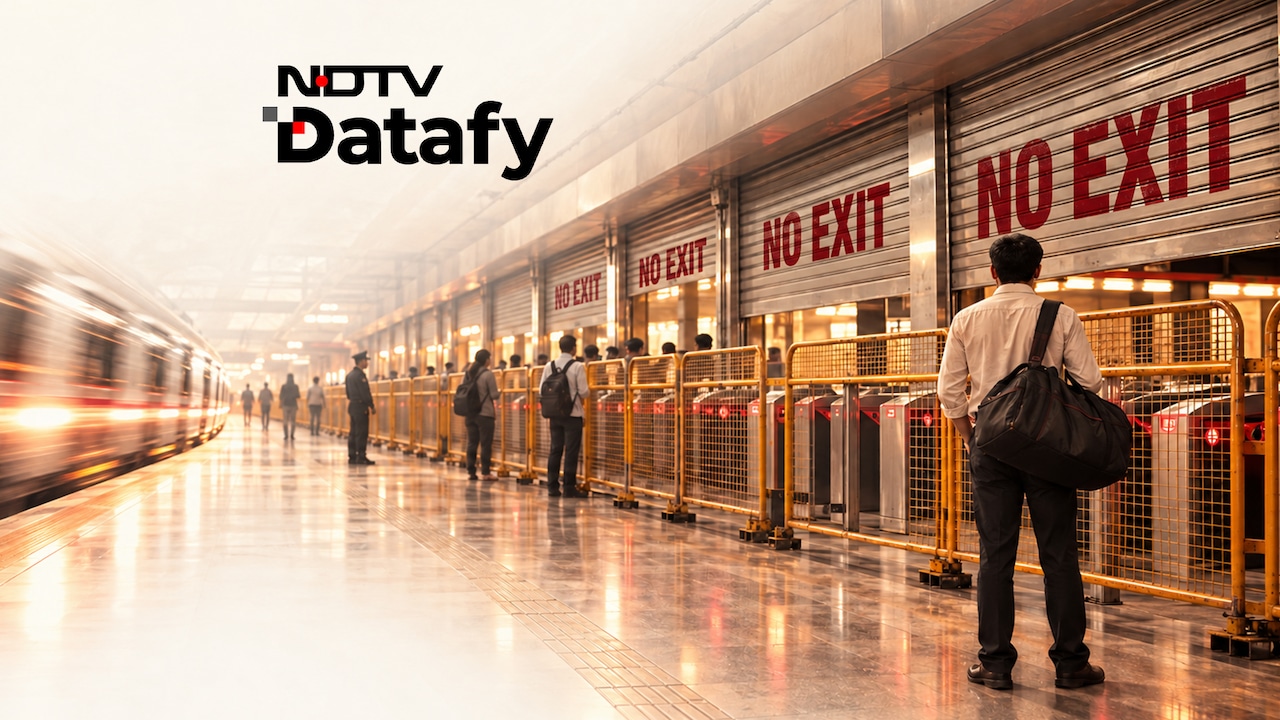
Delhi Metro access restrictions have reached their highest level in a decade, with security-related curbs imposed 100 times across stations in 2026, according to an analysis of DMRC public advisories.
The count includes full station closures, partial closures and entry or exit restrictions announced for security reasons. Stations restricted on multiple days are counted each time they appeared in advisories, while Covid-related restrictions imposed between April and October 2020 have been excluded from the analysis.
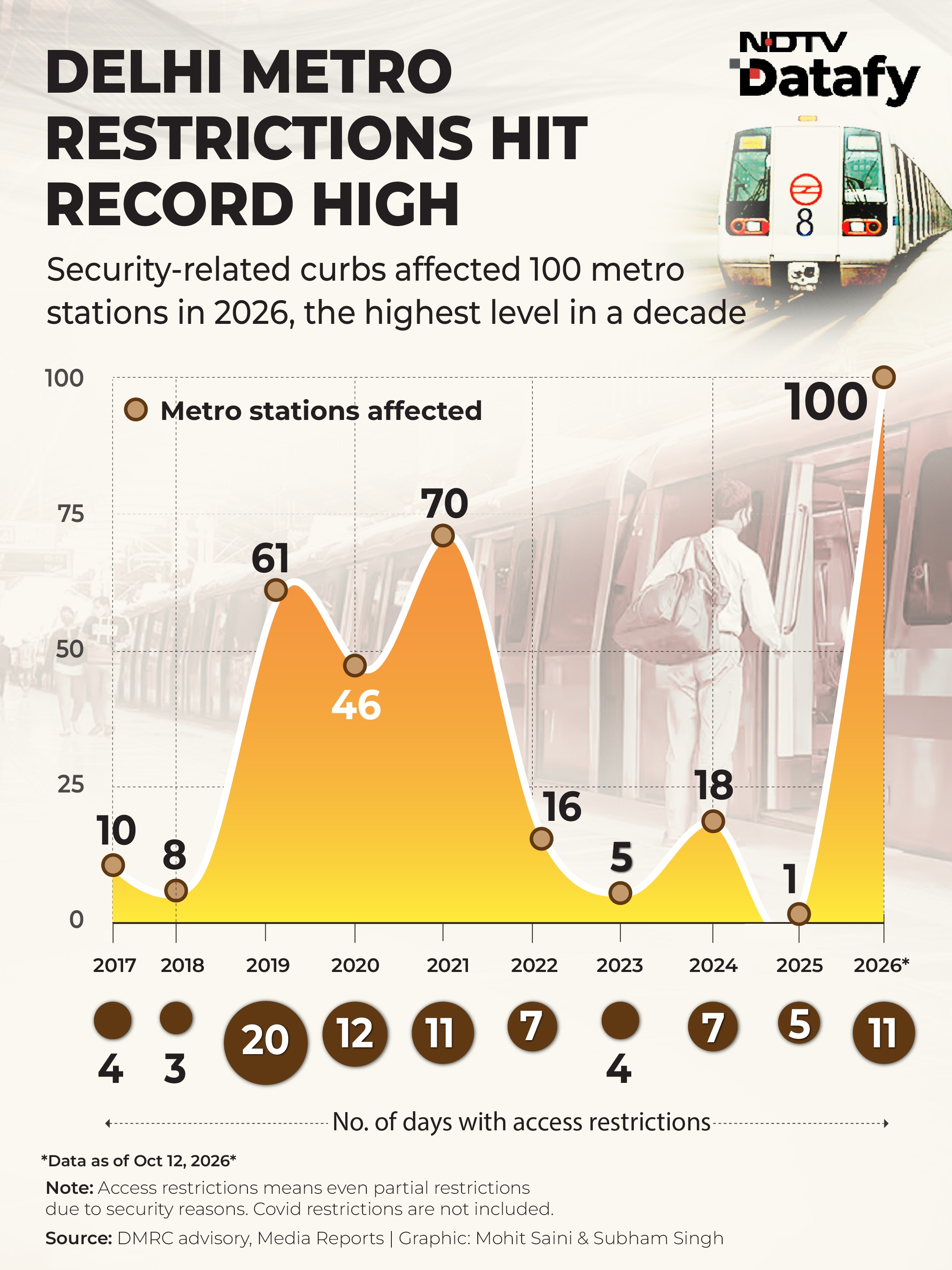
Data analysed by NDTV shows that 2026 has already surpassed all previous years since 2017. The count of restrictions stands at 100 so far, well above the previous high of 70 recorded in 2021.
More Stations, Not More Days
The rise was not driven by a higher number of restriction days. Restrictions were announced on 11 days in 2026, the same number as in 2021 and fewer than the 20 days recorded in 2019. Yet the number of restriction instances was significantly higher this year.
This suggests that security measures were imposed across a wider set of stations whenever restrictions were announced.
The trend was most visible during the October 10 protest-related restrictions, one of the biggest such exercises in recent years, when the entry and exit to 45 stations were partially restricted in a day.
Central Delhi Stations Most Frequently Affected
A look at station-wise data shows restrictions were concentrated around the capital's administrative core. Central Secretariat recorded 37 restriction instances between 2017 and 2026, the highest among all stations and accounting for 8.5 per cent of all restrictions during the period.
Udyog Bhawan(23), Patel Chowk(22), Lok Kalyan Marg(19) and Rajiv Chowk(18) also feature prominently in the top 10 list.
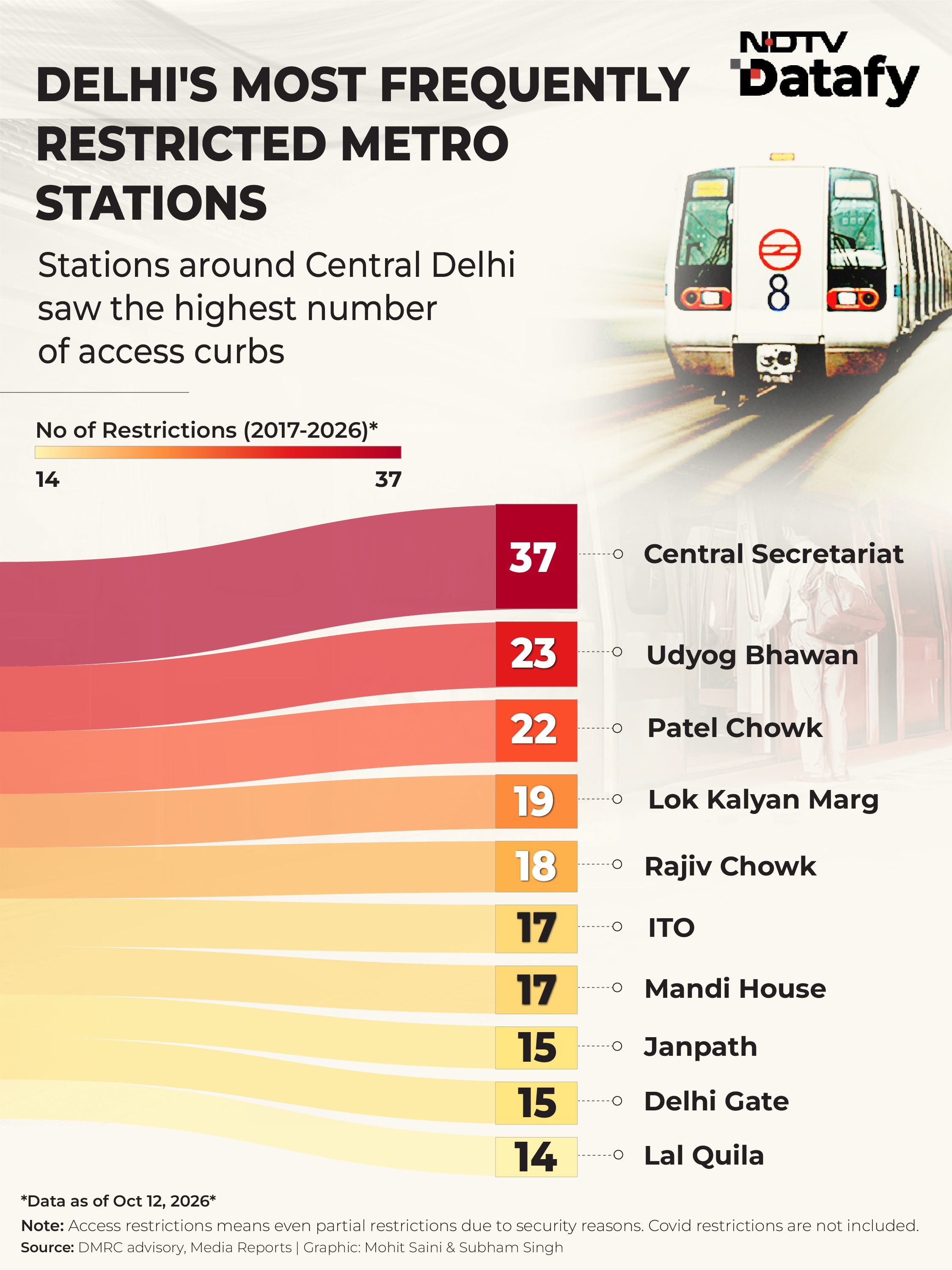
Most of these stations are located near the Parliament, Central Vista, government offices, diplomatic areas or major protest venues, locations that often witness heightened security arrangements.
October 10 Highlights Metro's Security Role
The latest spike comes against the backdrop of the October 10 protests in Delhi.
In an affidavit submitted before the Supreme Court on October 14, the Delhi Metro Rail Corporation (DMRC) said entry and exit restrictions were imposed at 45 of its 303 stations on October 14. The agency added that train services continued as scheduled, with all 4,157 planned trips operated and no reduction in services. More than 85 per cent of stations remained fully operational, according to the affidavit.
However, ridership fell sharply. DMRC told the court that around 32 lakh passengers used the network that day, compared with roughly 58 lakhs on a normal second Saturday, attributing the decline to commuters avoiding travel amid the protest situation.
With 100 restriction instances already recorded in 2026, the year stands out as the most restriction-heavy year for Delhi Metro access in the past decade.
KioskNews shows a cleaned-up reading view extracted from the publisher’s page — the original always lives on their site, not ours.