Purported WhatsApp correspondence of Netanyahu’s key aide Jonatan Urich leaks online

Purported WhatsApp correspondence of Prime Minister Benjamin Netanyahu’s senior adviser Jonatan Urich appeared online last week after the senior aide reportedly used AI to build a media-tracking tool, posted the code online, and caused a security breach.
Leaker screenshots showed purported messages that Urich exchanged with several journalists and political strategists. It is forbidden under Israel’s Privacy Protection Law to publish the contents of correspondence obtained through criminal means.
Responding to the alleged leak, Urich said he will sue anyone who leaks or shares private conversations from his phone, threatening media organizations that publish the purported messages.
0:00 / 0:00
Promoted: Identity/Crisis, Oct 7

Haaretz, which said it verified the leak, reported that it contained some sensitive information, including an email address and password that served Netanyahu’s Likud party.
No security body is investigating the leak, because Urich is technically employed by the Likud party, rather than by the government, the newspaper said.
Get The Times of Israel's Daily Edition by email and never miss our top stories
By signing up, you agree to the terms
Haaretz reported last month that Urich had used Anthropic’s Claude engine to create a tool that would scan some 50 news sources every 90 seconds and generate summaries of statements about Netanyahu, his wife Sara, and the Likud.
The outlet said at the time that after it approached Urich for comment, public access to his GitHub account was restricted and a security breach included in the software was removed.
Days later, the Calcalist newspaper reported that Urich, a key suspect in the so-called Qatargate affair, had linked his WhatsApp account to a UAE-based third-party service, Ultramsg.
The service’s terms and conditions reportedly gave the Gulf state broad access to his WhatsApp messages, in accordance with Emirati law.
Yashar party chief Gadi Eisenkot, a former IDF chief who is the lead candidate to unseat Netanyahu in the October 27 election, quipped on X that Urich’s security failure suggests Netanyahu could not be trusted to keep Hamas from seizing supplies that enter Gaza.
“If Netanyahu can’t protect the phone of the person who is closest to him (who also worked with Qatar during wartime), how will he protect the entry of free fuel from Israel to Hamas?” Eisenkot wrote on X.
It was a paraphrase of Netanyahu’s own quip days ahead of the March 2019 election — “If he can’t protect his phone, how will he protect the country?” — about his lead challenger at the time, Benny Gantz, whose phone was reportedly hacked by Iranian intelligence.
“Are we doing it right?” Eisenkot asked Netanyahu on X.

Later Sunday, Urich threatened to sue anyone leaking or sharing his private messages.
“Whoever hacked [my] WhatsApp and published private conversations while adding to and altering the exchanges will pay the full price,” Urich said in a statement posted to his X account and attributed to his lawyers.
“The same will apply to anyone who publishes, distributes or shares the messages. Anyone who does so is committing a criminal offense and will face a personal lawsuit,” the statement said.
On Channel 12, chief political correspondent and analyst Amit Segal defended his own chats with Urich that were leaked Sunday, in which the two appeared very friendly.
“I am going to give self-incriminating testimony: He is by no means the only one,” Segal said, referring to his conversations with various political actors. “The matter is very simple. I know it sounds strange but I’ll let you in on a terrible secret: Journalists do not receive information because of their pretty eyes, certainly not me.”
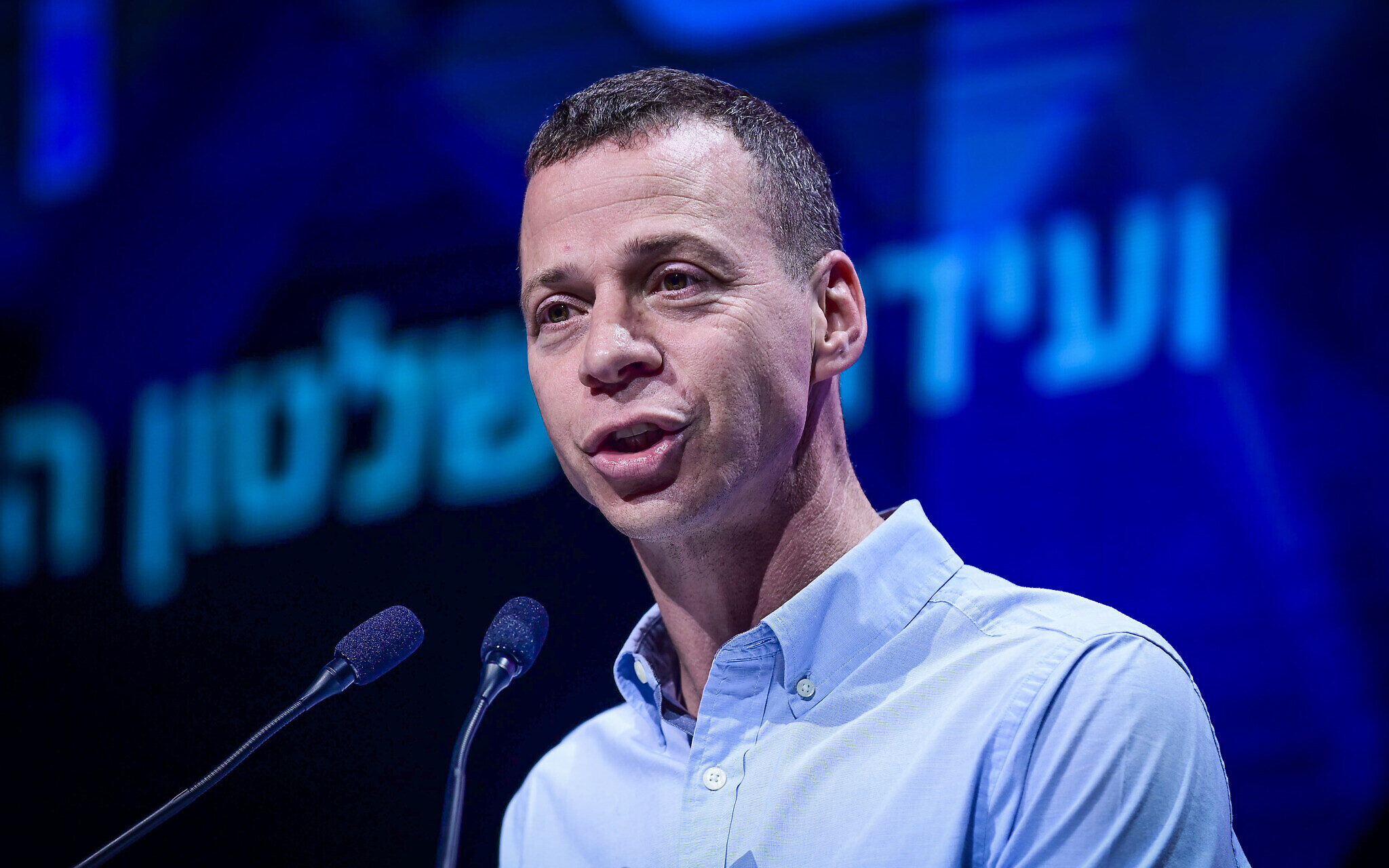
“They get information as part of a very delicate tango between the journalist and the subject of their coverage… This can include exchanges of information as well as exchanges of opinions,” Segal said.
He added: “Many people I’ve covered over the years gave me drafts of speeches, saying, ‘This will be our campaign, what are your thoughts?’”
Asked if a line was not crossed, he said: “No. And I think hacking into someone’s phone and laying bare their life is a terrible thing, a criminal thing. If my phone were hacked and my correspondence published, I would go after everyone who did it.”
Urich, 37, has worked for Netanyahu for over a decade and is one of three current or former aides to the premier who are accused of having served as lobbyists for the Hamas-backing Gulf state while working at the Prime Minister’s Office.
Urich is also accused of leaking curated stolen intelligence to the German tabloid Bild in September 2024 — after Hamas murdered six hostages in captivity — in a bid to counter public anger over Netanyahu’s failure to reach a hostage deal.
Help us report truthfully on social media

As a multimedia journalist, my job is to take the quality, fact-based journalism produced by The Times of Israel newsroom and make it accessible across every platform — from Instagram posts to podcasts to short-form videos.
This is how many, especially young people, consume news these days. But misinformation is rampant on social media. Our team at ToI produces accurate, responsible short-form reporting on Israel and the Jewish world.
If you believe in the importance of factual social media journalism, please consider joining our reader support group, The Times of Israel Community. Your financial support is essential to sustain responsible multimedia reporting.
— Gabriella Jacobs, multimedia journalist
Support our work Support our work Already a member? Sign in to stop seeing this
KioskNews shows a cleaned-up reading view extracted from the publisher’s page — the original always lives on their site, not ours.