Kuwait, Lebanon, Syria leading options for Abraham Accords expansion, CSA report assesses

The Council for a Secure America (CSA) has ranked Kuwait as the Middle Eastern country most likely to join the Abraham Accords, followed by Lebanon and Syria, as changing political and security conditions reshape prospects for normalization with Israel.
For more stories from The Media Line go to themedialine.org
CSA released its “Abraham Accords Expansion Opportunities: Middle East Analysis” report on October 8, assessing nine Muslim-majority countries without formal diplomatic relations with Israel: Kuwait, Lebanon, Syria, Saudi Arabia, Oman, Qatar, Iraq, Yemen, and Iran.
More than 80% of Israelis surveyed by CSA in June 2026 support the Abraham Accords, which established relations between Israel and the United Arab Emirates, Bahrain, Morocco, and Sudan in 2020.
CSA Executive Director Jennifer Sutton said recent events have “reinforced the need for America's continued engagement in the region.”
The rankings were based on expert analysis, primary and secondary sources, and CSA polling. Researchers examined domestic political power, government structures, public opinion, statements by political leaders, relations with Israel and the United States, regional alliances, economic and energy interests, and ongoing conflicts. CSA said the rankings measure both governments’ willingness and political ability to normalize relations and could change as regional conditions evolve.
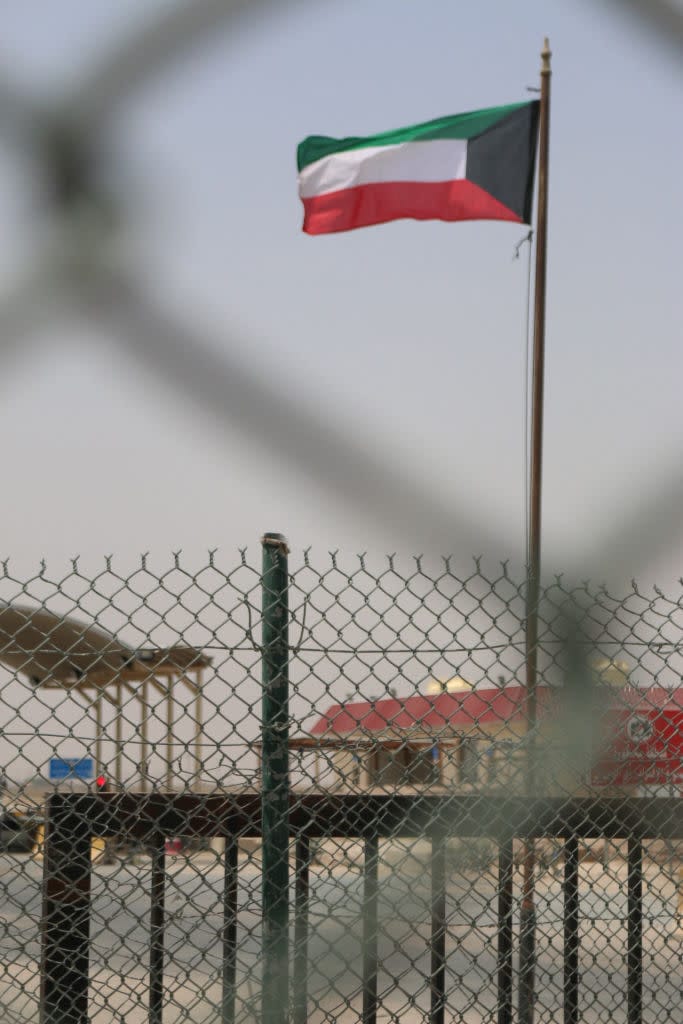
Kuwait thought to be closest to normalization with Israel, CSA survey shows
Kuwait ranked first despite its longstanding opposition to normalization and laws barring trade with Israel. CSA pointed to
Mishal Al-Ahmad Al-Jaber Al-Sabah’s growing authority since suspending parliament in May 2024, closer ties with the UAE, and strong security ties with Washington. Kuwait also came under Iranian attack during the 2026 Iran War. Israel’s ambassador to the UAE, Yossi Shelley, said in September that Kuwait could join the accords within six months.
Lebanon placed second following significant diplomatic activity with Israel. The countries signed a US-brokered “Trilateral Framework” in June under which Lebanon recognized Israeli sovereignty for the first time, followed by additional talks. CSA polling found 41% of Lebanese believed peace with Israel was likely, although only 32% supported normalization. Hezbollah’s continued presence and failure to fully disarm remain major obstacles.
Syria ranked third after talks with Israel accelerated following the fall of the Assad regime. President Ahmed al-Sharaa said in September that the countries had “almost reached agreements on 90%” of their outstanding issues, with a security agreement potentially preceding peace negotiations. CSA found 54% of Syrians believed peace was likely, 53% supported a security arrangement and 46% supported normalization. The dispute over the Golan Heights remains a key obstacle.
Saudi Arabia, previously seen as a leading candidate for normalization, has moved further away since October 7, 2023, and the 2026 Iran War. Crown Prince Mohammed bin Salman said in November 2025 that he was prepared to work toward joining the accords, but CSA said the Iran war and concerns over Israel’s regional alliances have made Riyadh increasingly wary.
Oman has also become less likely to normalize despite a history of contacts with Israel. Sultan Qaboos bin Said hosted several Israeli leaders, but under Sultan Haitham bin Tariq, Oman has repeatedly rejected normalization and strengthened its role as a mediator with Iran and other regional actors.
Full normalization with Qatar dependent on peace agreement with Palestinians
Qatar maintains working contacts with Israel and serves as a mediator between Israel and Hamas, but says full diplomatic relations depend on an Israeli-Palestinian peace agreement. CSA said Doha’s ties with Iran and support for the Muslim Brotherhood make accession to the accords unlikely in the near term.
Iraq remains an unlikely candidate because of Iranian influence and a 2022 law criminalizing normalization with Israel. CSA singled out Iraqi Kurdistan as an exception, citing its longstanding contacts with Israel and greater public openness toward diplomatic relations.
Yemen’s continuing civil war makes normalization highly unlikely. The Iran-backed Houthis are actively hostile to Israel, while other Yemeni factions have previously expressed openness to relations. CSA said a future postwar government could reconsider the issue, but little movement is possible while the country remains divided.
Iran ranked last. Relations with Israel ended after the 1979 Islamic Revolution, and decades of hostility have developed into direct warfare. CSA concluded that normalization is not possible under Iran’s current regime.
KioskNews shows a cleaned-up reading view extracted from the publisher’s page — the original always lives on their site, not ours.