Trump’s high-level welcome for Xi puts personal diplomacy in focus, analysts say
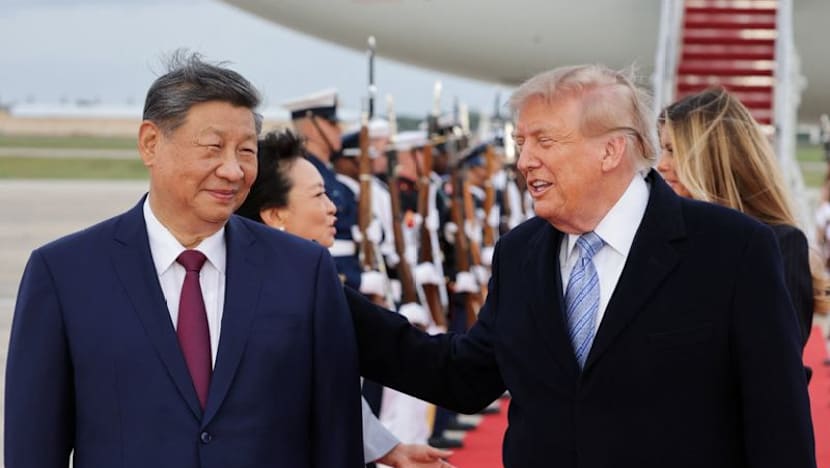
US President Donald Trump’s rare personal airport welcome for Chinese President Xi Jinping gives Xi valuable political optics, while the leaders’ reciprocal visits signal efforts to keep US-China ties stable, experts tell CNA.
New: You can now listen to articles.

This audio is generated by an AI tool.

24 Sep 2026 04:44PM (Updated: 24 Sep 2026 04:49PM)
The diplomacy began before Chinese President Xi Jinping reached the White House.
United States President Donald Trump was waiting at Joint Base Andrews, a US military airfield outside Washington, when Xi's plane touched down on Wednesday (Sep 23), personally greeting the Chinese leader and his wife Peng Liyuan alongside First Lady Melania Trump.
Such airport greetings by US presidents are rare, with visiting leaders typically received at the White House, where Trump and Xi are set to meet on Thursday.
Analysts say the reception underscores the value both leaders place on personal engagement and displays of respect, ahead of discussions on a range of issues.
“POLITICAL CURRENCY”
Drew Thompson, a senior fellow at the S Rajaratnam School of International Studies at Nanyang Technological University, described the overt display of respect as a form of “political currency” that was relatively easy and low-cost for Trump, but carried political value for Xi.
“He knows that Xi Jinping wants this kind of treatment, that it's important to him politically,” Thompson told CNA's Asia Now.
Xi has important political meetings ahead, Thompson noted. The Communist Party's fifth plenum will be held from Oct 26 to 29, while its 21st Party Congress is expected in 2027.
Xi can return to Beijing and show that he was treated as an equal by Washington, Thompson said.
Both leaders want “mutual validation and respectful treatment of one another” as well as positive optics from the visit, he added.
But Thompson cautioned against reading too much into the ceremony before seeing what the talks produce.
“We'll see if any of this translates into tangible concessions by either side to achieve some more concrete outcomes,” he said.
WHEN PROTOCOL MATTERS
The last time a US president welcomed a world leader at Joint Base Andrews, apart from the Pope, was in 1962, when John F Kennedy greeted then British Prime Minister Harold Macmillan.
Trump has, however, made a similar gesture elsewhere. Last year, he personally greeted Russian President Vladimir Putin on the tarmac at Joint Base Elmendorf-Richardson in Anchorage, Alaska.
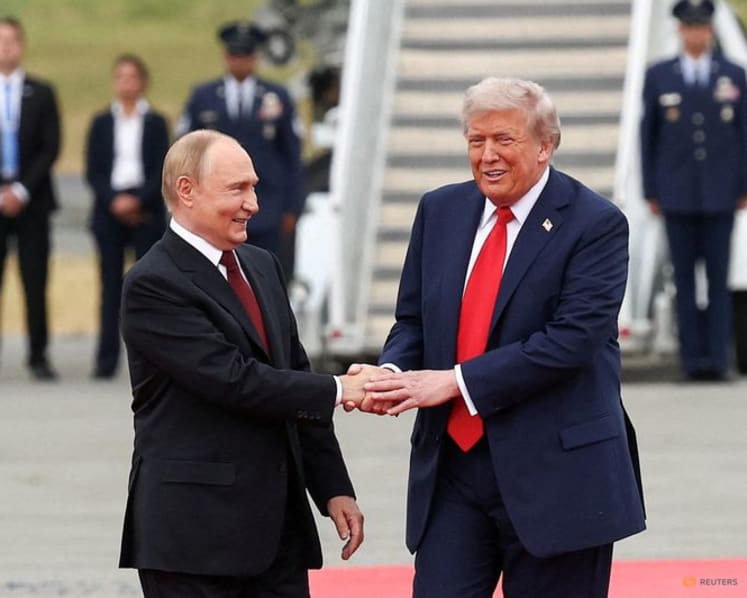
Protocol has also drawn attention during past US-China visits.
When Xi arrived in the US for a previous state visit in 2015, then Vice President Joe Biden met him at the airport.
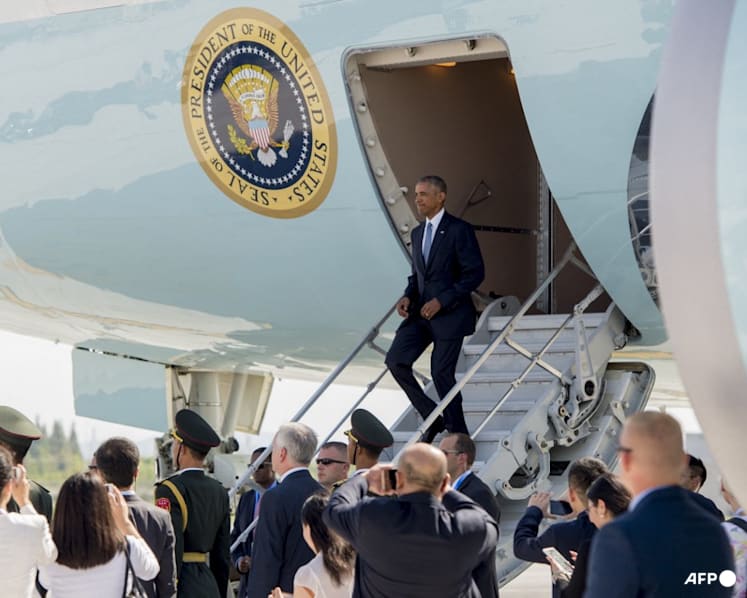
A year later, then US President Barack Obama's arrival in Hangzhou for the Group of 20 (G20) summit became a talking point when there were no stairs waiting at the door of Air Force One.
Obama instead had to disembark through a little-used door in the belly of the aircraft, a stark contrast to Xi's reception in Washington on Wednesday.
AN UNPRECEDENTED YEAR OF VISITS
Yun Sun, senior fellow and director of the China Program at the Stimson Center, pointed to another feature of this year's diplomacy: Trump and Xi have each made a standalone visit to the other's capital within the space of four months.
During Trump's state visit to Beijing in May, Xi received him with a formal welcome ceremony at the Great Hall of the People.
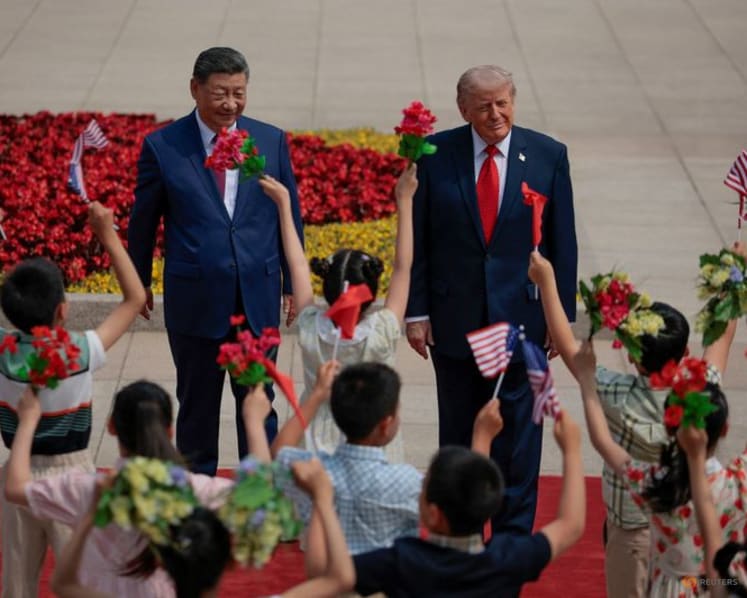
Sun described the exchange of visits as unprecedented.
“For them to meet twice within the year and both at standalone visits to each other's capital, that has never happened in the history of their bilateral relations,” she told CNA’s Asia First.
Sun said the visits demonstrated efforts to stabilise ties, adding that both leaders appeared to want to use the opportunity to build on their personal relationship.
Their engagement may not end in Washington.
Trump and Xi could meet again at the Asia-Pacific Economic Cooperation (APEC) summit in Shenzhen in November and at the G20 summit in Miami in December.
Despite the warm gestures, major differences between the two countries remain.
Thompson said trade and national security issues remain unresolved, along with disagreements involving Taiwan and Iran.
“The optics are positive, but the underlying distrust of the two countries for one another, the underlying elements of competition and the lack of real overlapping mutual interests are going to be big barriers that need to be overcome by, I think, more than just protocol treatment,” he said.
Much of the substantive work would have been done before the leaders entered the room, Thompson added, pointing to talks between officials from both sides ahead of Xi's arrival.
“Xi Jinping is not a negotiator. He's a closer,” Thompson said.
“He's there at the end to receive the final outcome, not there to negotiate directly with President Trump.”
KioskNews shows a cleaned-up reading view extracted from the publisher’s page — the original always lives on their site, not ours.