NASA’s next flying lab readies for takeoff after new paint job
Breakthroughs, discoveries, and DIY tips sent six days a week.
By signing up, you confirm you are 16+, will receive newsletters and promotional content and agree to our Terms of Use and acknowledge the data practices in our Privacy Policy. You may unsubscribe at any time.
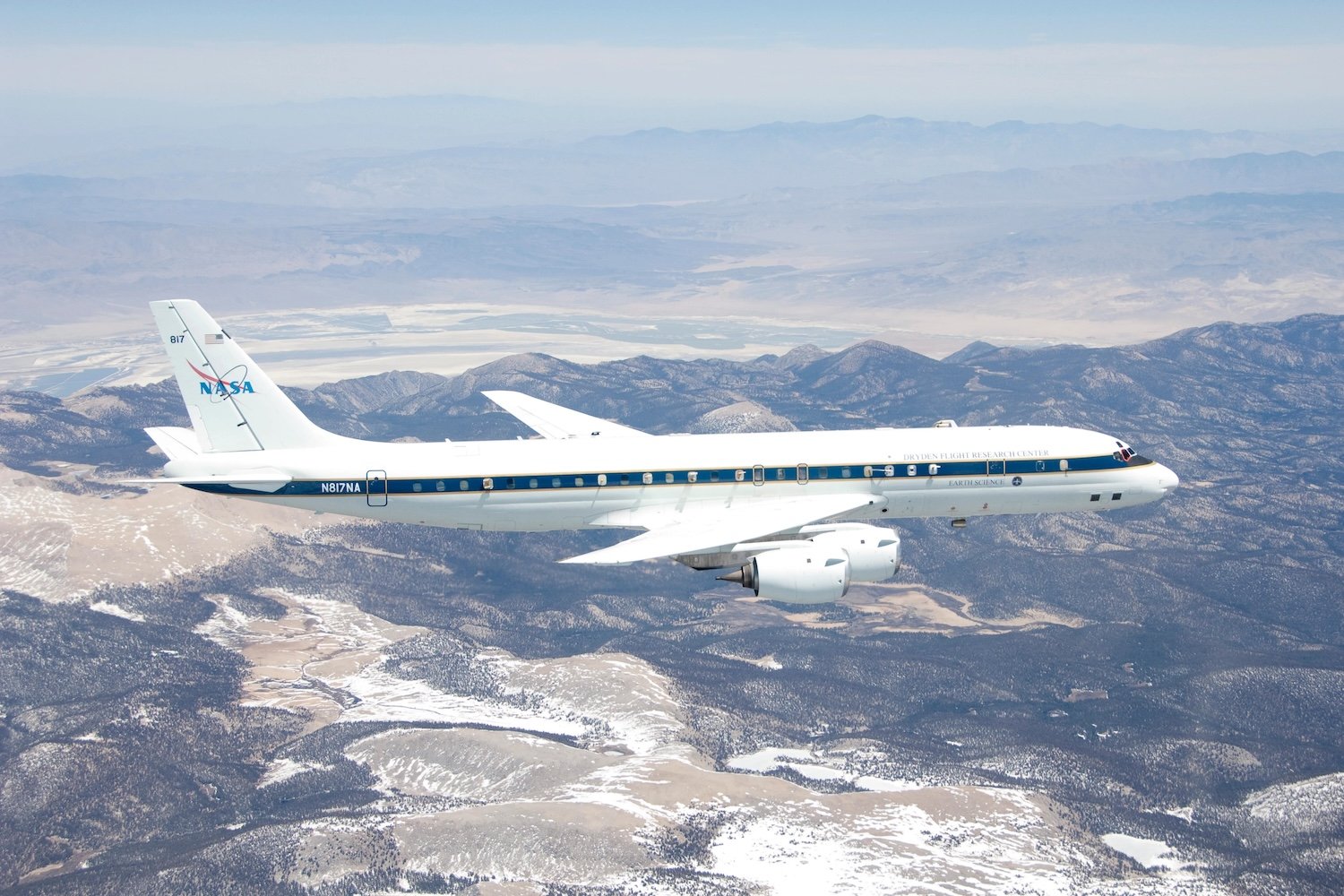
For over 35 years, NASA’s 157-foot-long Douglas DC-8 jetliner and its extensive onboard scientific laboratory contributed to numerous research breakthroughs before retiring in 2024—including some of the first comprehensive studies of Earth as a singular environmental system. But high-altitude scientific investigations are not ending just yet. That same year, the agency acquired a Boeing B777-200ER to not only replace the DC-8, but widen the scope of its experimental capabilities. Engineers have since spent months updating the plane’s communications and data arrays, operator facilities, power sources, and many other aspects to make it suitable for decades of additional research projects.
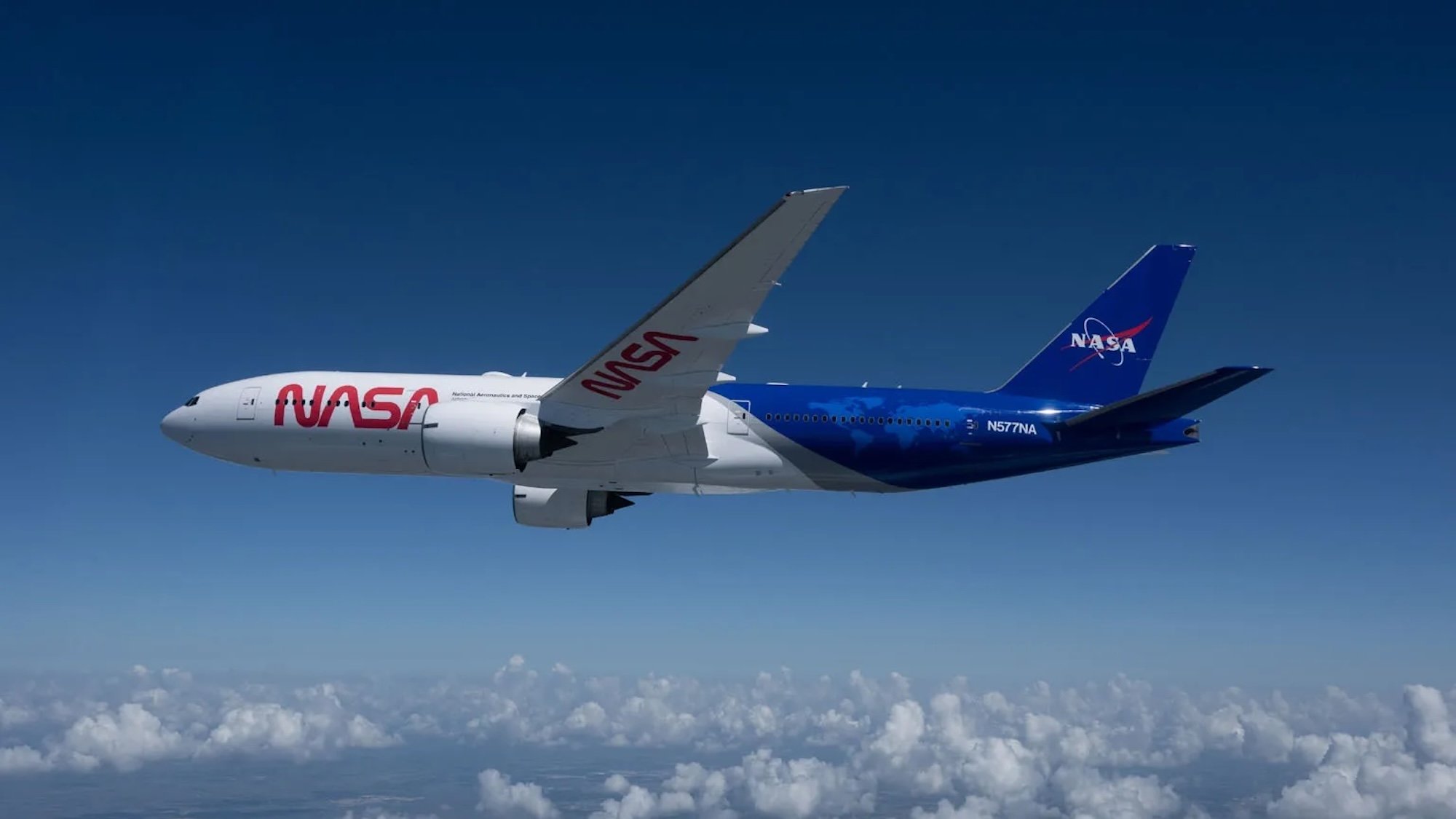
Some of these retrofits are less high-tech than others. As NASA recently highlighted, the B777-200ER has received a new paint job to match its upcoming duties. In photos taken after traveling from a maintenance facility in Texas to Virginia’s Langley Research Center, the plane and its nearly 200-foot-wide wingspan can be seen sporting the iconic NASA logo on its fuselage, wings, and tailfin, along with a map of the world emblazoned near the jetliner’s rear.

Once it enters service in 2027, the B777 can house 50 to100 onboard operators for up to 18 hours of continuous flight at a maximum altitude of 43,000 feet. While flying, researchers will have access to a payload of 75,000 pounds of scientific equipment dedicated to a wide spectrum of earth sciences.
“This unique flying laboratory will have truly global reach enabling data collection for NASA projects to include sensor development, satellite sensor calibration, data product validation, and field studies,” NASA explained on its aircraft page.
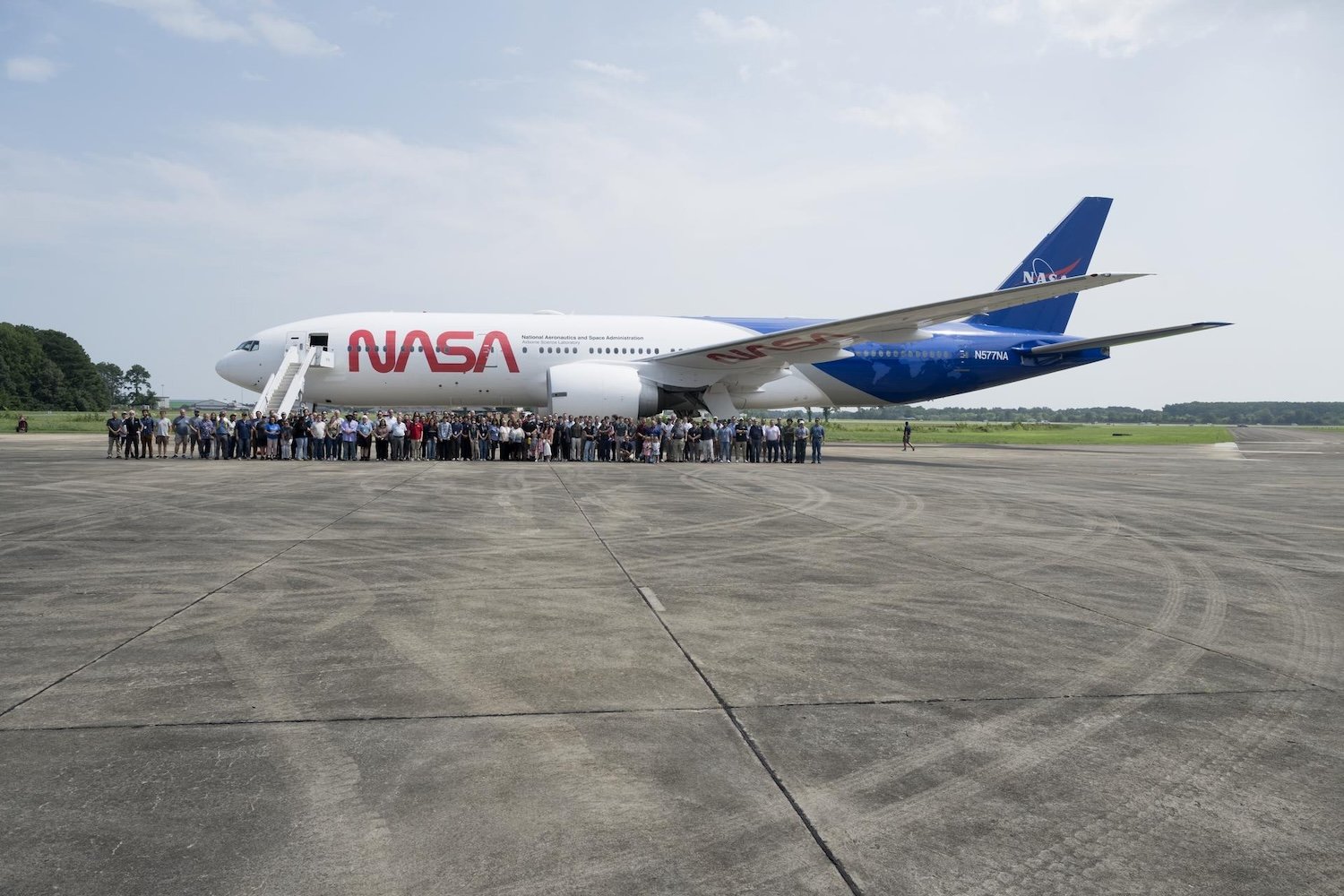
The data amassed during the numerous upcoming projects will be invaluable across the fields of archaeology, atmospheric chemistry, cryospheric science, biology, ecology, geography, hydrology, meteorology, oceanography, soil science, volcanology, and much more. With the newly painted B77 now nearing the end of its upgrade services, NASA’s research plane is scheduled to begin operations from the Langley Research Center sometime next year.
KioskNews shows a cleaned-up reading view extracted from the publisher’s page — the original always lives on their site, not ours.