Naga Fireballs: Thailand’s unexplained lights draw crowds to the Mekong
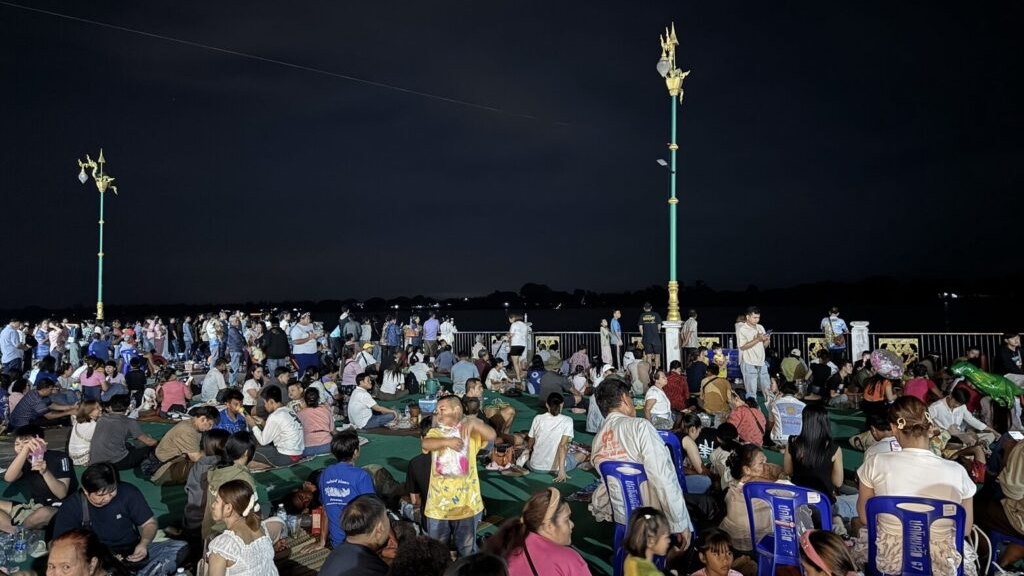
NONG KHAI – Under the scorching afternoon sun, visitors spread mats, unfolded chairs and opened umbrellas along the Mekong River in northeastern Thailand, waiting for nightfall and a phenomenon that has fascinated believers and puzzled observers for generations.
They had come to witness the Naga Fireballs, glowing reddish-pink orbs said to rise silently from the river on the night marking the end of Buddhist Lent.
At Wat Thai in Phon Phisai district, Nong Khai province, one of the main gathering points for the annual event, residents and tourists secured places along the riverbank on Monday, hoping to catch a glimpse of the mysterious lights.
Many visitors had never witnessed the phenomenon in person. Having seen it in news reports, they travelled from other provinces with friends to experience it for themselves and share in the faith surrounding the legendary Naga, a mythical serpent believed to inhabit the Mekong.

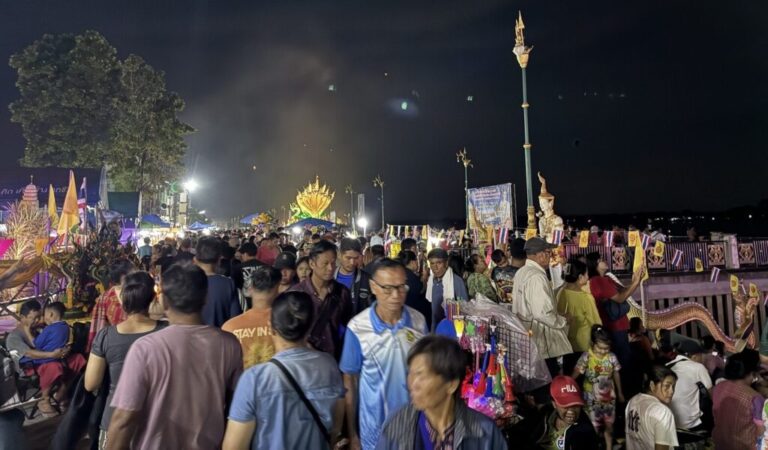
The annual gathering combines religious devotion, local folklore and tourism, bringing thousands of people to communities along the Thai-Lao border in anticipation of a spectacle whose origins remain unproven.
Fireballs that vanish without a trace
Known in Thai as bang fai phaya nak, the Naga Fireballs are described by witnesses as small, reddish-pink or ruby-red spheres that emerge above the Mekong River, rise into the night sky and disappear within seconds.
According to descriptions published by Phon Phisai district authorities, the lights range in size from a human thumb to a goose egg or orange. They are reported to appear about one to 30 metres above the water, rise to heights of approximately 50 to 150 metres and remain visible for five to 10 seconds.
Unlike conventional fireworks, the reported fireballs produce no sound, smoke, ash, flame or smell. Witnesses also describe them disappearing suddenly without gradually shrinking or following the downward arc typical of fireworks.
The lights are usually reported between sunset and about 23:00 on the night of Ok Phansa, the full-moon day marking the end of the three-month Buddhist rains retreat.
Around 20 locations across Nong Khai province are associated with sightings, with Phon Phisai among the best-known places to watch.
The phenomenon has never been conclusively explained, and the competing accounts of its origin have made it a subject of enduring debate.
A sacred offering to the Buddha
For many local residents, the fireballs are inseparable from the legend of the Naga, a powerful serpent associated with the Mekong River and deeply rooted in religious and cultural beliefs across northeastern Thailand.
According to one traditional account, the Naga King once sought ordination as a Buddhist monk after being inspired by the Buddha’s teachings. When he was later discovered to be a serpent rather than a human, he was required to leave the monkhood. The tradition of calling a novice monk a nak is linked to this story.
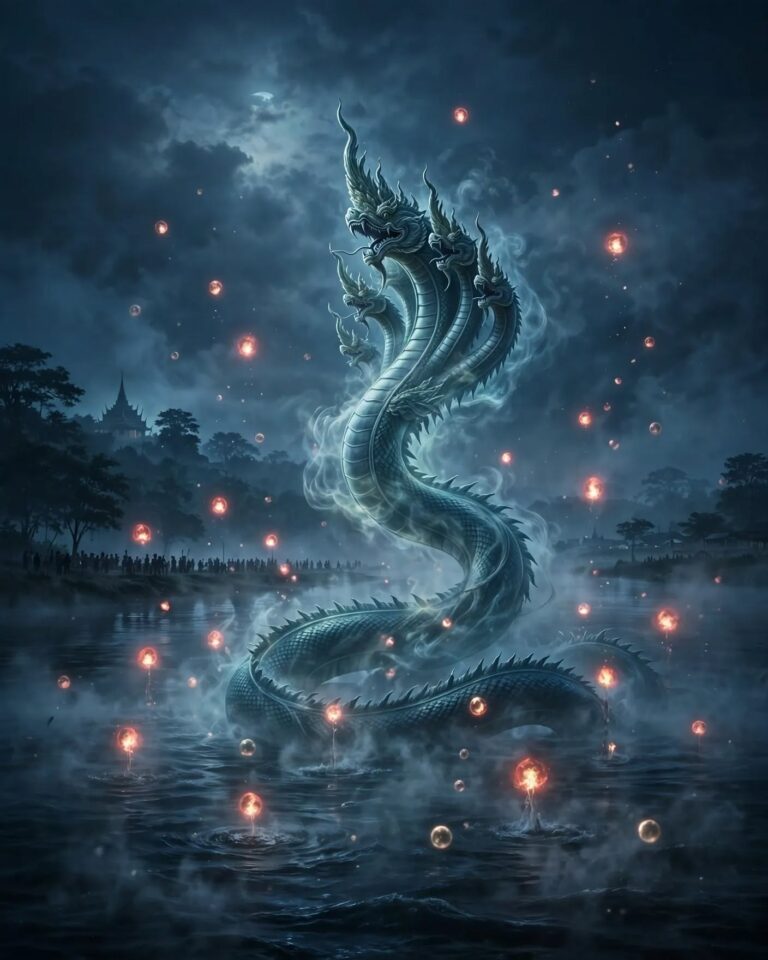
The legend of the fireballs is connected to another episode in Buddhist tradition: the Buddha’s return to Earth after spending three months in Tavatimsa Heaven, where he preached to his mother.
The Naga King and his followers are said to have welcomed the Buddha’s return by releasing glowing fireballs as offerings. The lights are therefore regarded by believers not merely as an unusual sight, but as an expression of devotion and a reminder of the Buddha’s teachings.
For communities along the Mekong, the annual event is an opportunity to honour the Naga, make offerings and participate in rituals that connect religious belief with the river that has shaped their lives.
The belief also gives the gathering a significance beyond tourism. Visitors come not only to see whether the lights appear, but also to take part in a shared cultural tradition.
Science has yet to settle the mystery
Despite decades of public interest, the cause of the Naga Fireballs remains disputed.
One proposed explanation suggests that gases produced by decomposing organic matter beneath the riverbed could rise and ignite. However, questions remain over whether such a process could produce the reported colours, movements and behaviour of the lights.
Another controversial explanation emerged after a 2002 television documentary suggested that some apparent fireballs could have been tracer rounds fired from the Lao side of the Mekong. The programme prompted public anger in Nong Khai, and the claim has remained contentious.
Researchers and sceptics have continued to question whether every reported sighting has the same origin. Observations of lights along the river do not, by themselves, establish that they originate underwater or that they are produced by a single mechanism.
No explanation has been conclusively established, leaving the phenomenon caught between local belief, scientific scrutiny and competing interpretations.
For believers, the absence of a definitive scientific answer does not diminish the spiritual meaning of the event. For others, the mystery itself is part of what makes the fireballs compelling.
A night of faith, crowds and caution
On Monday, police and rescue volunteers were deployed across Nong Khai to assist visitors and protect public safety. About 400 police officers were assigned throughout the province, including along routes from Nong Khai town to Rattanawapi district, to manage traffic and reduce congestion.
Authorities also urged parents to supervise children playing with fireworks and firecrackers, warning them to handle the devices carefully and avoid disturbing people gathered to watch the fireballs.
The event stretches beyond a single viewing site. Communities along the Mekong organise religious ceremonies and cultural activities around the end of Buddhist Lent, turning the riverbank into a meeting place for residents, pilgrims and tourists.
At Phon Phisai, visitors waited through the heat for darkness to fall, their attention fixed on the water and the sky above it.
Whether the lights are ultimately explained by science or remain an enduring mystery, the annual gathering demonstrates the strength of a tradition that continues to draw people to the Mekong.
For those waiting along the river, the hope is simple: to see a light rise from the water, vanish into the night and become part of a story they can tell for years to come.
KioskNews shows a cleaned-up reading view extracted from the publisher’s page — the original always lives on their site, not ours.