House, Wedding, Car: What Should Come First When All Three Arrive Together?
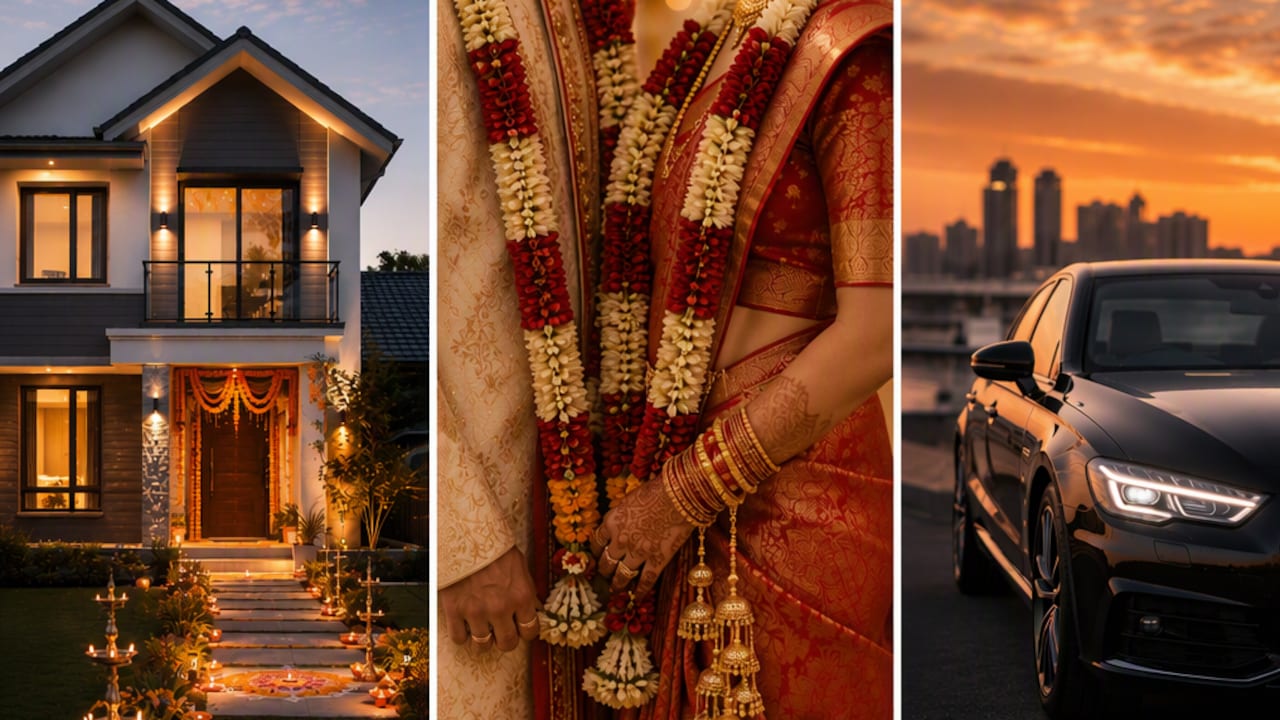
A house, a wedding and a car can each feel like a once-in-a-lifetime purchase. But when all three arrive at the same time, a family's savings and monthly income can come under pressure. The challenge is not just deciding what to manage first. It is making sure that one big decision does not leave the family struggling to pay for everything else.
For many households, buying a home means taking a long-term loan. A wedding can involve family expectations and social obligations, while a car brings its own loan repayments, insurance and running costs. When these expenses overlap, even a family with substantial savings can find itself short of money.
The answer lies in prioritising expenses, keeping borrowing under control and protecting an emergency fund before committing to all three. Vikram Subburaj, CEO of Giottus.com, told NDTV that households need to look beyond the immediate excitement of major purchases and assess how these decisions will affect their finances over the coming years.
Also Read | Layoffs Are Rising In Tech, But These Skills Are Helping People Unlock Better Pay
House, Wedding, Car: The Numbers Behind The Decision
Consider a couple with savings of Rs 30 lakh and a combined monthly take-home income of Rs 1.5 lakh. They plan to buy a house worth Rs 60 lakh, spend Rs 10 lakh on a wedding and purchase a car worth another Rs 10 lakh.
On paper, their savings appear substantial. But a closer look at the numbers tells a different story.
Assume they finance 80 per cent of the house price through a home loan. The down payment would be Rs 12 lakh. Another Rs 6 lakh could go towards stamp duty, registration, basic furnishing and moving expenses. This takes the upfront housing cost to Rs 18 lakh.
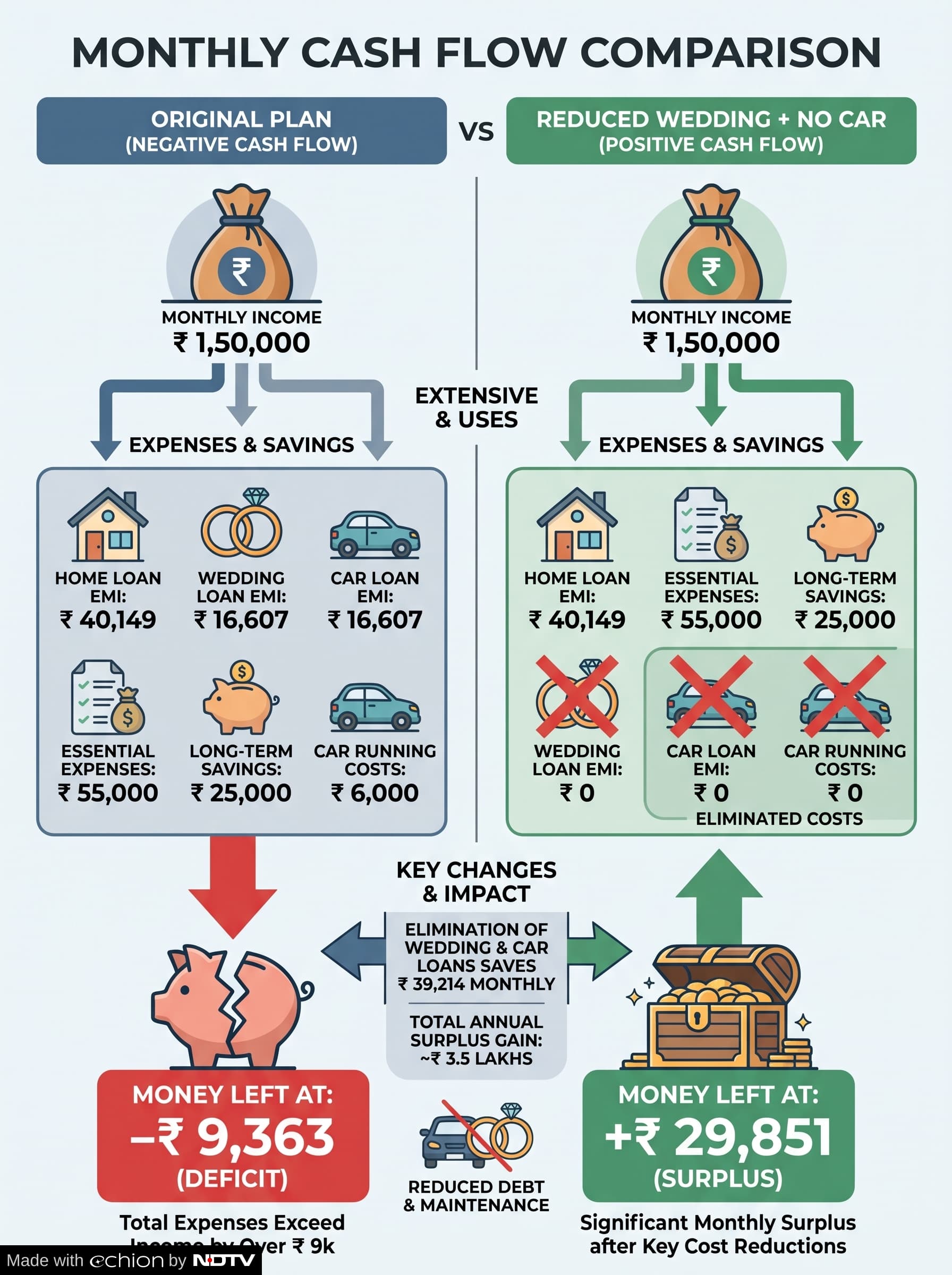
A Rs 48 lakh home loan at an assumed interest rate of 8 per cent over 20 years would mean an EMI of around Rs 40,149.
The wedding adds another expense. If the couple pays Rs 5 lakh from savings and borrows the remaining Rs 5 lakh at 12 per cent for three years, the monthly repayment would be about Rs 16,607.
The car would need Rs 2 lakh upfront, with the remaining Rs 8 lakh financed through a five-year loan at an assumed interest rate of 9 per cent. That would add another EMI of around Rs 16,607.
Together, the three purchases would require Rs 25 lakh upfront, leaving the couple with just Rs 5 lakh in savings. Their combined monthly loan repayments would reach Rs 73,363.
Now consider their regular expenses. If essentials cost Rs 55,000 a month, long-term savings require Rs 25,000 and the car adds Rs 6,000 in running costs after accounting for existing transport expenses, their total monthly commitments would reach Rs 1,59,363.
That is Rs 9,363 more than their monthly income.
Being able to arrange the down payment does not necessarily mean a household can comfortably afford the purchase.
Why The Wedding Budget Matters
A wedding can be particularly difficult to scale back because the decision often involves more than the couple. Family expectations, guest lists and social obligations can push spending beyond the original budget.
The financial pressure is not new. The Reserve Bank of India's Household Finance Committee report of 2017 highlighted how strongly marriage-related savings goals could weigh on rural households.
Among the lowest-income fifth of customers served by Kshetriya Gramin Financial Services (KGFS) in three states, the desired savings for marriage amounted to 117 per cent of annual household income. The corresponding figure for the highest-income fifth was 15 per cent.
These figures represented savings aspirations, not actual wedding expenditure. Still, they illustrate how marriage can become a major financial goal, particularly for households with limited resources.
Vikram Subburaj, CEO of Giottus.com, highlights the importance of looking at major financial commitments together rather than treating each purchase as an independent decision. A wedding budget that appears manageable on its own could affect how much a family can put towards a house or retain for emergencies.
Households also need to distinguish between expenses that build long-term financial security and those that can be postponed. A home may provide stability, while a car may be essential for work or caregiving. The right order depends on the family's needs, not just the price of each purchase.
What Should Come First: House, Wedding Or Car?
For the illustrative couple, reducing the wedding budget from Rs 10 lakh to Rs 5 lakh would eliminate the need for the wedding loan.
That would save them Rs 5 lakh in borrowing and avoid nearly Rs 5.98 lakh in total repayments over three years, including interest.
Postponing the car would free up another Rs 16,607 a month in EMI payments and Rs 6,000 in additional monthly running costs.
With these two changes, the couple would need Rs 23 lakh upfront for the house and smaller wedding. They would retain Rs 7 lakh in savings.
After paying for essentials, the home loan and long-term savings, they would have around Rs 29,851 left each month. Compared with the original plan, their monthly finances would improve by Rs 39,214.
The remaining Rs 7 lakh would also provide a larger safety net. It could cover roughly seven months of essential expenses and home loan repayments if investment contributions were paused during an emergency.
Under the original plan, the Rs 5 lakh left in savings would cover fewer than four months of these expenses.
Subburaj's central consideration for households facing multiple big-ticket purchases is the need to balance immediate aspirations with the ability to meet future obligations. Families should calculate the combined EMI burden and account for regular living costs before signing up for loans.
A Practical Order To Follow
For this couple, the more manageable sequence would be to buy the house, keep the wedding within Rs 5 lakh and postpone the car.
That does not mean a house must always come first. If a vehicle is essential for earning an income or caring for a family member, it may deserve priority. In that case, the household should adjust its home budget or wedding spending accordingly.
The first step is to agree on a wedding budget and calculate the upfront cost of the house, including registration and other charges. Next, estimate the combined EMIs and regular expenses. Finally, check how much money will remain in savings after the purchases.
The goal is not to avoid every major expense. It is to ensure that buying a house, celebrating a wedding or owning a car does not leave the family financially stretched for years.
When all three arrive together, the smartest decision may not be to choose one and abandon the others. It may be to decide which purchase can wait.
KioskNews shows a cleaned-up reading view extracted from the publisher’s page — the original always lives on their site, not ours.