'Please appreciate, see students' future': Top court refuses to reopen FIRs over CJP's July stir
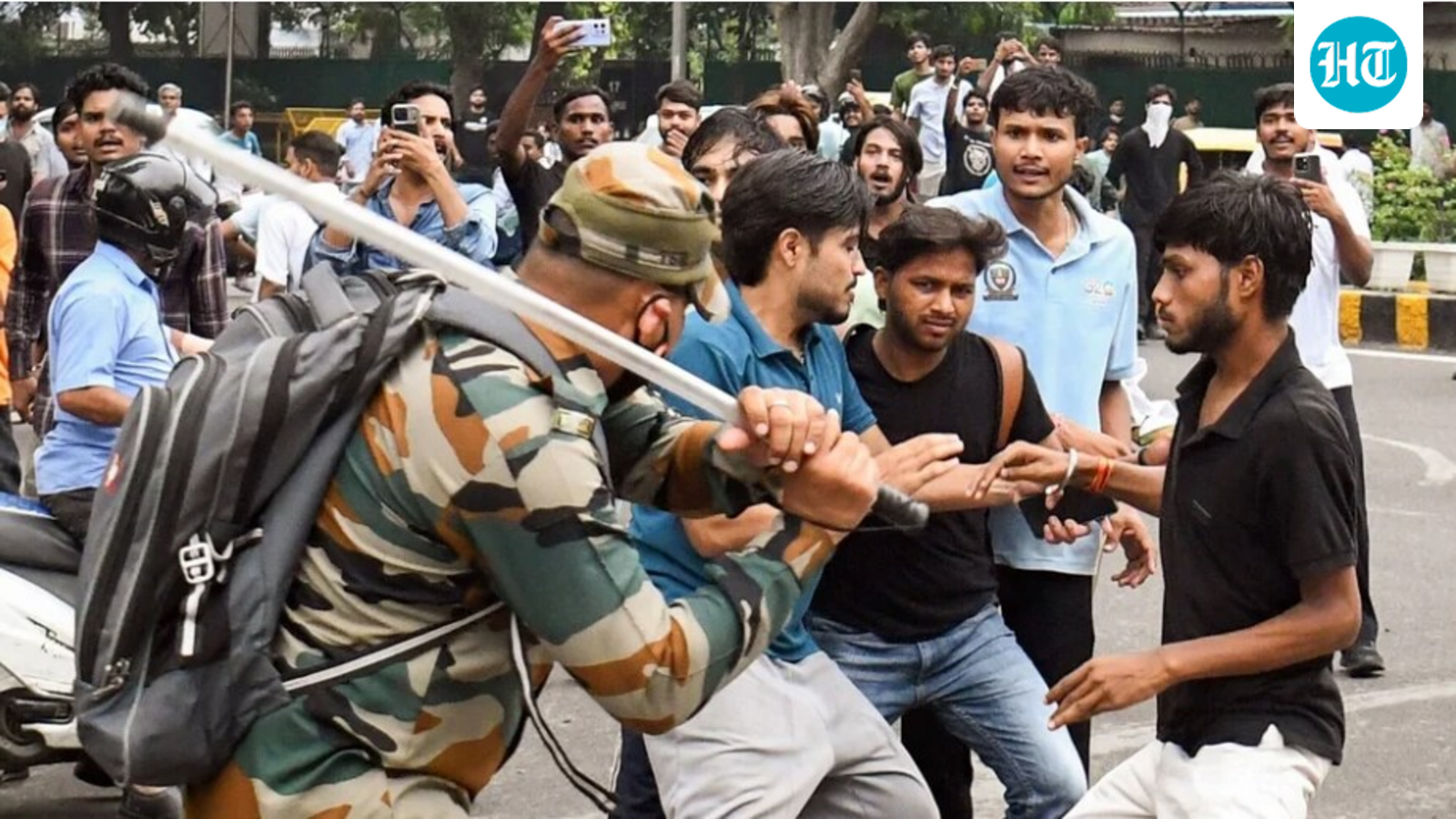
The Supreme Court on Friday refused to reopen investigations into FIRs registered in connection with the July protests led by the Cockroach Janta Party (CJP), saying it had invoked its extraordinary powers under Article 142 of the Constitution to spare young students and their parents the ordeal of prolonged criminal proceedings.
A bench, comprising Chief Justice of India Surya Kant and justices Joymalya Bagchi and V Mohana, also questioned the attempt to challenge its September 1 order quashing the FIRs, observing that the fresh petition filed by L Ramanathan was essentially seeking a review of the earlier decision in a manner that could not be permitted.
“There is no guarantee we keep passing 100% correct orders,” remarked the bench, while responding to advocate Mathews J Nedumpara, who appeared for Ramanathan and argued that the court’s intervention could set a bad precedent by encroaching on the police’s independent authority to investigate offences.
Also Read | Jantar Mantar 2.0 brings new demand, new crowds and biggest security deployment since Trump visit
“You say we should not have invoked Article 142 and quashed FIRs. Please appreciate, these are young students. We have to see their parents, their future. We don’t want them to have to come to court over and over again,” said the bench, underlining that the decision was guided by the need to prevent students from being trapped in protracted litigation over the protests.
The bench also drew a distinction between the students and protesters involved in the cases and individuals with serious criminal backgrounds, referring to an earlier order in which it had allowed the withdrawal of cases against members of Parliament and legislative assemblies who had staged protests and caused damage to public property.
“Your client should see our order. It has made a distinction between students, protesters and those with serious criminal background,” it added.
The September 1 order had brought an end to criminal proceedings arising from the protests, directing that FIRs registered between July 20 and 25 would not be pursued or investigated and would be treated as closed. It also prohibited the registration of fresh FIRs in connection with the same incidents.
The latest petition sought a declaration that the police enjoyed independent authority over the maintenance of law and order and criminal investigations, just as the judiciary exercised its authority over the administration of justice. It also sought directions to ensure that investigations into the FIRs relating to the Jantar Mantar protests were conducted independently, fairly and in accordance with law.
Nedumpara argued that the police’s investigative domain should not be interfered with unless its actions were contrary to law or actuated by mala fides, which would require adjudication of disputed questions of fact. He also contended that public interest litigation could not be used to substitute the court’s own view for the settled legal position.
“Everyday people come as if this (court) is their private property,” he said, questioning the maintainability of petitions filed in the absence of actual litigants.
The bench, however, defended its earlier intervention, pointing to the extraordinary circumstances of the Covid-19 pandemic and the public reaction to the crisis. Referring to cases involving protests and damage to public property in Himachal Pradesh, the judges said the court had taken into account the unprecedented nature of the pandemic and the fact that those involved were not hardened criminals.
The court had last month allowed withdrawal of 65 criminal cases against former and sitting politicians in Himachal Pradesh on finding that none of the cases involved grave or heinous crimes and all crimes pertained to staging of dharnas and using force against public officials during the Covid-19 pandemic.
The proceedings also come against the backdrop of the Supreme Court’s decision to constitute a high-powered committee of inquiry (HPEC), headed by former Supreme Court judge justice R Subhash Reddy, to independently examine competing allegations arising from the July 20 student protest. These include allegations of excessive use of force by the police, violence against security personnel and damage to public property. The committee has been authorised to receive documentary evidence, representations and even anonymous complaints to protect witnesses.
The July 20 march to Parliament came amid the wider agitation over alleged leaks of the NEET examination paper, which had triggered demands for a retest and the resignation of then education minister Dharmendra Pradhan. The protests, catalysed and led by the CJP, also targeted the government’s handling of the examination controversy.
Pradhan resigned on July 25, while the government subsequently set up a committee headed by Infosys chairman Nandan Nilekani to recommend reforms in the examination process and initiated measures to strengthen the National Testing Agency (NTA), which conducts the test.
KioskNews shows a cleaned-up reading view extracted from the publisher’s page — the original always lives on their site, not ours.