10 Great Noir Thrillers That Are Quietly Intense

Diego Pineda has been a devout storyteller his whole life. He has self-published a fantasy novel and a book of short stories, and is actively working on publishing his second novel.
A lifelong fan of watching movies and talking about them endlessly, he writes reviews and analyses on his Instagram page dedicated to cinema, and occasionally on his blog. His favorite filmmakers are Andrei Tarkovsky and Charlie Chaplin. He loves modern Mexican cinema and thinks it's tragically underappreciated.
Other interests of Diego's include reading, gaming, roller coasters, writing reviews on his Letterboxd account (username: DPP_reviews), and going down rabbit holes of whatever topic he's interested in at any given point.
There are many ways in which a thriller film—noir thrillers definitely included—can be great, but something that's kind of non-negotiable is a sense of intensity. This is what thrillers are all about, after all: suspense, tension, and constantly wondering what could possibly happen next. However, where some of history's best noir thrillers achieve their intensity by being remarkably loud, fast-paced, and action-packed, others have benefited from a far quieter kind of intensity.
These are films which are absolute masterclasses in narrative restraint, atmospheric dread, and psychological pressure rather than noisy action or constant barrages of moments of shock. Instead, these films can be claustrophobic, slow-burning, and—if done right—sometimes even more intense than your regular noir thriller. Indeed, noir has given us several of the greatest thrillers in history, and a few key ones show that quiet intensity is by no means an oxymoron of any kind.
10 'In a Lonely Place' (1950)

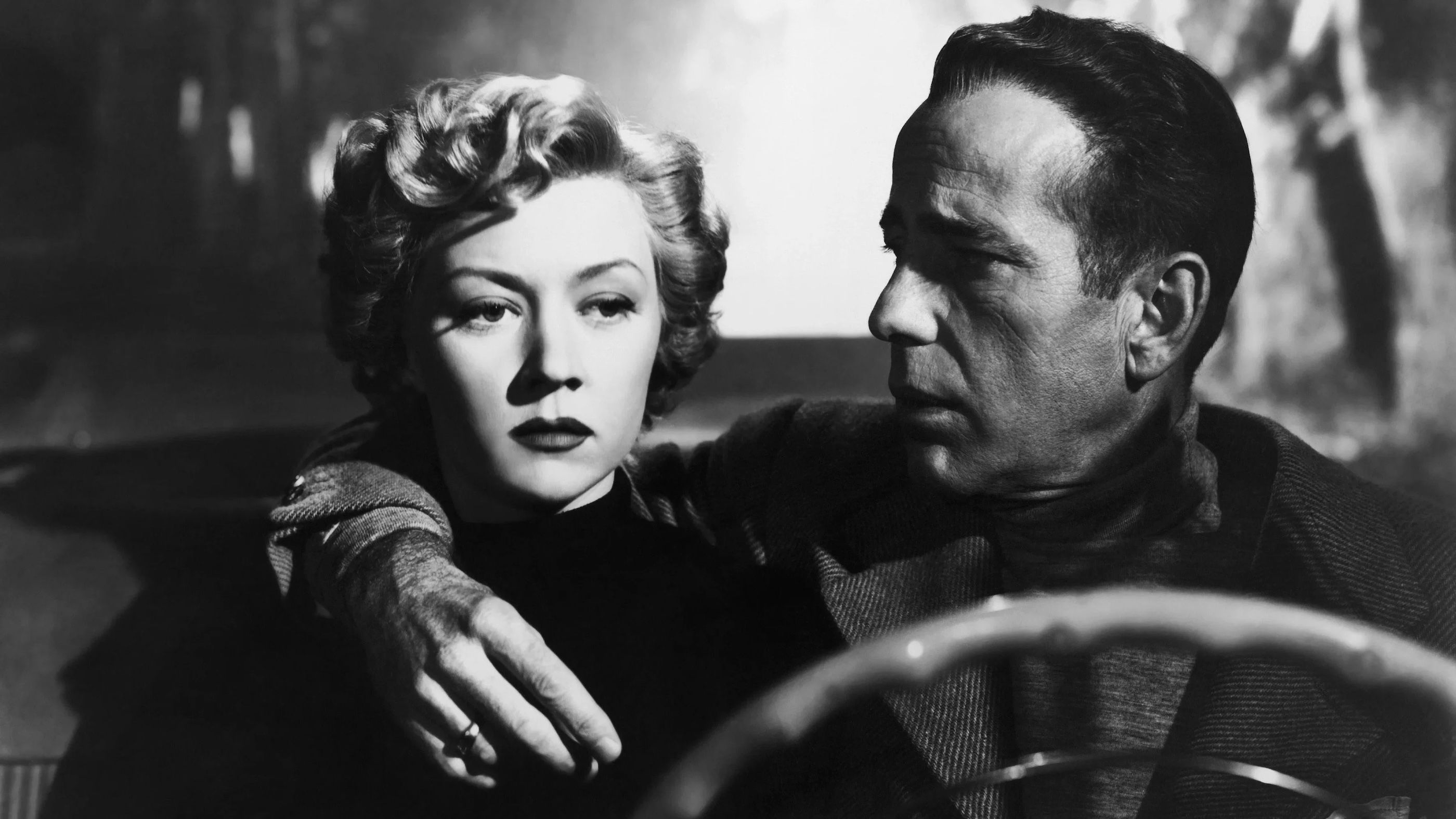
Based on Dorothy B. Hughes' 1947 novel of the same title, In a Lonely Place is often praised as one of the most nearly-perfect noir movies of all time. Packed with some of the best direction of Nicholas Ray's career and a subtle Humphrey Bogart performance that's nonetheless often counted among his best, it truly is a must-see for anyone interested in understanding Golden-Age Hollywood noir.
Transforming a crime story that may seem simple on the surface into an intimate, psychologically deep portrait of a toxic relationship.
The film is a masterfully intelligent subversion of both the murder mystery and traditional noir genres, transforming a crime story that may seem simple on the surface into an intimate, psychologically deep portrait of a toxic relationship. Violence itself is treated with such ambiguity, and the story is explored with a lack of melodrama so uncharacteristic for a classic noir, that In a Lonely Place's intensity ends up feelnig all the quieter as a result.
9 'Le Samouraï' (1967)

Though the noir genre was distinctly born in Hollywood out of post-WWII disillusionment and the rising popularity of hard-boiled detective fiction, other countries throughout history have produced several noir and neo-noir masterpieces as well. Case in point: Jean-Pierre Melville's Le Samouraï, a Franco-Italian co-production which has a strong claim to the title of "most iconic film noir ever to come out of Europe."
Though it's one of those movies that are masterclasses in favoring style over substance while still delivering a remarkably well-rounded final product, Le Samouraï's style is so notoriously subtle and minimalistic that its intensity ends up feeling incredibly precise and restrained. Dialogue is stripped down to the bare minimum, the film's aesthetic is intentionally cold and bare, and our main character operates so much like he's almost a clockwork mechanism that the film ends up feeling incredibly existential.
8 'No Country for Old Men' (2007)
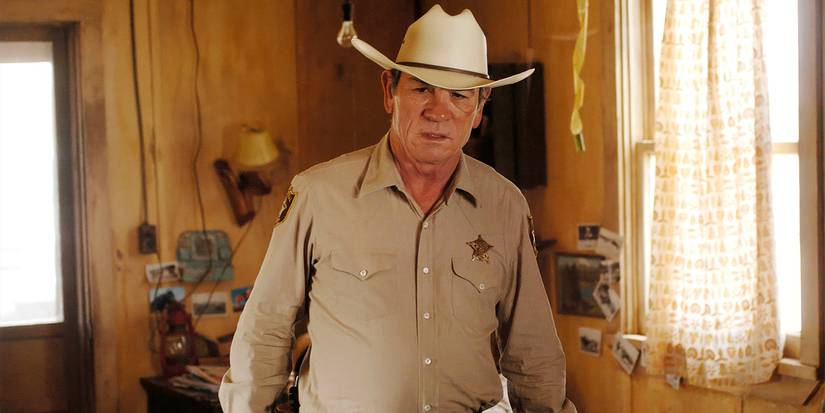
There's really no question as to what the Coen brothers' best 21st-century film so far is: It has to be their Oscar-winning No Country for Old Men, based on the Cormac McCarthy novel of the same name (which he actually originally envisioned as a screenplay). It's one of the bleakest thrillers of all time, one that blends tropes and aesthetic elements from both the neo-noir and neo-Western genres in order to tell a fatalistic story about progress and change.
What's so remarkable about the way the Coens direct No Country is that they offer long stretches of tension as cold and quiet as the vast Texas landscape, only to abruptly interrupt those stretches with loud explosions of violence. These explosions almost always have something to do with Javier Bardem's Anton Chigurh, who's among the most memorable and effective antagonists in the history of noir and neo-noir thrillers.
7 'The Night of the Hunter' (1955)

Actor Charles Laughton loved Davis Grubb's 1953 novel The Night of the Hunter so much that he wanted to make his debut as a director with a film adaptation. With a script written by James Agee, he made The Night of the Hunter. Tragically, the film was such a critical and commercial flop that it discouraged Laughton from ever directing a movie again. Little did he know, his film would end up becoming a cult classic, and is today praised as one of those perfect horror movies that are pure cinema.
But though it's a psychological horror noir, this masterpiece—one of the most special and unique ever produced during Hollywood's Golden Age—is also remarkably and hauntingly dreamlike in how it approaches tension and intensity. The film treats its Southern Gothic story so much like a classic fairy tale that it makes it all the scarier and more hard-hitting.
6 'Memories of Murder' (2003)

As further proof that there are plenty of masterful neo-noirs from countries other than the United States, there's Bong Joon Ho's Memories of Murder, which happens to be among the heaviest mystery movies of all time. That heaviness stems largely from its being based on the real-life police investigation of the string of rapes and murders that assailed the Korean city of Hwaseong in the late '80s, a case which was unsolved at the time of the movie's production and release.
Where a more traditional crime neo-noir might have approached this story with a stronger focus on fast-paced plotting and explosive action, Bong instead lasers in on the oppressive silence of its countryside setting. The tension is high and the pure evil of its real-life story packs a hell of a punch, but the pure existential agony of the lack of closure was all Bong needed to make Memories of Murder unforgettable.
Collider Exclusive · Villain Personality Quiz Which Criminal Mastermind Would Be Your Nemesis? Lecter · Joker · Moriarty · Chigurh
Four of the finest criminal minds ever put on screen. One of them would look at you and see something worth their time. Eight questions decide which one comes for you, why they picked you, and what they would want when they arrived.
🍷Lecter
🃏Joker
♟️Moriarty
🪙Chigurh
01
What would a criminal mastermind notice about you first? Great villains choose their opponents carefully. Something about you got their attention.
02
How do they make first contact? The introduction tells you everything about what is coming next.
03
What do you actually believe about right and wrong? Every nemesis is really an argument about the thing you believe most.
04
What finally gets under your skin? Everybody has a pressure point. Finding yours is the whole plan.
05
They have made their move. How do you fight back? This is the part of the film where the audience finds out who you are.
06
What would they use against you? A good villain never brings a weapon you have not already handed them.
07
What do they actually want from you? The money is never the point. Something else always is.
08
How does it end between the two of you? Eight questions in, this is the one that decides who comes for you.
The Case File Is Complete Your Nemesis Is…
Four criminal masterminds. One of them was always going to be yours. Here is who comes for you, why they picked you out of everyone available, and what they want from the encounter.
Hannibal Lecter
Your nemesis does not want to beat you. He wants to know you completely, and he is patient enough to wait for it. The frightening part is how good the conversation is.
- Lecter is the most dangerous kind of opponent: the one who finds you interesting. He never raises his voice, because he has never needed to.
- You keep a great deal to yourself and you are careful about what you show. That reserve is exactly the door he would knock on.
- The films understood something other thrillers missed. The horror is not the violence. It is being perfectly understood by the wrong person.
- He would be unfailingly polite about all of it. That is the worst part.
The Joker
Your nemesis is not after money, territory or revenge. He is after a demonstration, and you are the person he has chosen to prove his point on.
- The Joker only picks opponents who believe in something. Your decency is not a defence against him. It is the entire reason he showed up.
- He has no plan you can predict and nothing you can take away, which removes every tool you would normally reach for.
- His whole argument is that you are one bad day away from being him, and you would spend the rest of your life proving him wrong.
- He would call it a magic trick. You would call it the worst night of your life.
Moriarty
Your nemesis respects you, which sounds flattering until you work out what it means. He chose you because nobody else was worth his time.
- Moriarty is the original criminal mastermind, the template every later one borrows from: a mind the equal of the hero's, pointed the wrong way.
- You enjoy being the cleverest person in the room. He is counting on exactly that, and he has already built the room.
- This is the rare nemesis who would be genuinely disappointed if you lost badly. He needs the game to be worth playing.
- It ends the way these things always end. Two people, one problem, and only one way down.
Anton Chigurh
Your nemesis has no personal interest in you whatsoever, and that is precisely what makes him unsurvivable. You are not a rival. You are a stop on the way.
- Chigurh does not negotiate, gloat or explain. He arrives, he asks one question, and the answer was decided long before you opened your mouth.
- You trust yourself to handle things. He is the one problem in the world that has no interest in how capable you are.
- No Country for Old Men rewrote the screen villain by removing the thing audiences quietly rely on: the sense that talking might work.
- Call it. He will wait.
5 'Double Indemnity' (1944)
Billy Wilder was a filmmaker from Hollywood's Golden Age who was never afraid to push the envelope, challenge the system, and constantly prove that he was far ahead of his time. From this style came what many would very reasonably call the single best classic noir film of the era: Double Indemnity, based on James M. Cain's novel of the same name and co-written by Wilder and hard-boiled novelist Raymond Chandler.
Double Indemnity could be argued to be the definitive blueprint for the entire noir genre, though its intensity doesn't come from the tropes that traditionally define lesser noir stories. Instead, it's tense and suspenseful thanks to its inescapable air of moral claustrophobia, its genius framing device, and the dynamic between Walter (one of the best noir protagonists in film history) and Phyillis (perhaps the greatest femme fatale in all of cinema).
4 'The Conversation' (1974)

Even though it's the film that won the Best Picture Academy Award in 1975, The Godfather Part II, that's almost inarguably the most noteworthy Francis Ford Coppola movie from 1974, it's nevertheless remarkable that he directed another one of the greatest masterpieces of '70s Hollywood cinema that same year: The Conversation, a mystery neo-noir which won the Palme d'Or when it premiered at the Cannes Film Festival.
It's one of the most intelligent classic movies of its time, and that intelligence is absolutely all it needs in order to keep the audience at the edge of their seats over the course of nearly two hours. Whereas other paranoid thrillers from the '70s rely far more on high-adrenaline chases and high-stakes political conspiracies, The Conversation is all about small details, suffocating isolation, and the weight of subjectivity. For a film whose narrative is all about sound, it's ironic how quietly intense The Conversation is.
3 'Cure' (1997)
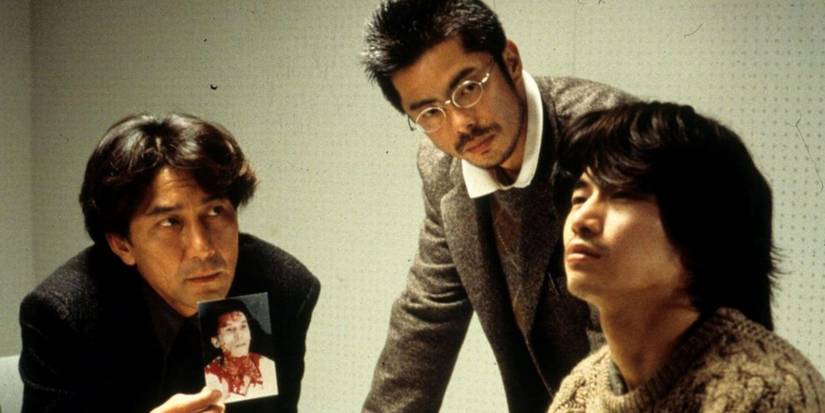
Written and directed by Kiyoshi Kurosawa, Cure is one of the greatest and most acclaimed J-horror movies of all time, a cult classic unlike anything else the psychological horror genre has ever produced. This profound thematic study of the nature of evil and violence, however, is also almost undeniably a neo-noir, one of the bleakest detective procedurals in the history of cinema.
Any lesser filmmaker might have taken Cure's chilling premise as a perfect excuse to deliver a movie full of jump scares and supernatural tension, but not Kurosawa. The way he makes Cure one of those thriller movies that are masterclasses in suspense is by holding up a dark mirror to the audience and forcing them to confront an inherently terrifying question: How far could they be pushed before they recurred to their most primal, most violent impulses?
2 'Mulholland Drive' (2001)

Surrealism has been around in cinema since the infancy of the medium as a storytelling art form, but it has been auteurs like David Lynch who have re-defined the genre for future generations. People looking to get into Lynch's work may as well start with what many would say is the best work of the late artistic genius: Mulholland Drive, one of the most influential thriller movies of all time.
Almost all of Lynch's oeuvre operate on dream logic so masterfully intuitive and powerful that the term "Lynchian" has been coined to describe art that emulates the same kind of surreal, dreamlike tone of the director's work. Mulholland Drive in particular is a potent weaponization of Lynch's own signature brand of narrative logic, quietly yet oh-so-effectively poking at the viewer's subconscious dread until the story and the protagonist's psyche both come undone.
1 'Chinatown' (1974)

Based on a Robert Towne screenplay that's among the smartest, most airtight, and most downright perfect scripts ever written for a feature film, Chinatown is arguably the peak of neo-noir filmmaking. From its production values to its fascinating plot to its star-studded cast, it really is one of the most genuinely flawless movies in the history of American cinema.
Chinatown is also one of the most hopeless movies of all time, however, but it's how it reaches the third act that seals its nihilistic thesis that makes it such a potent and rewatchable film. The reason that explosive final section is as powerful as it is is that everything that has come before is so potently quiet, elegant, and understated. It's a slow-burn, that's for sure, but one so impeccably made from top to bottom that it becomes impossible to take one's eyes off of the screen.
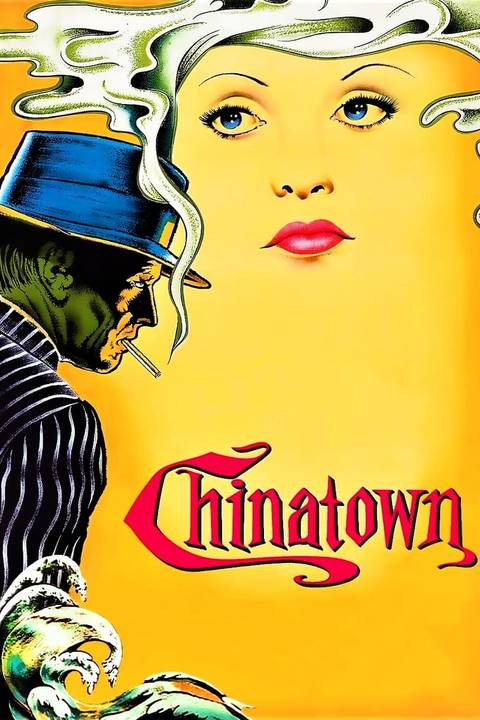
Chinatown
- Release Date
- June 20, 1974
- Runtime
- 130 minutes
- Director
- Roman Polanski
- Writers
- Robert Towne
KioskNews shows a cleaned-up reading view extracted from the publisher’s page — the original always lives on their site, not ours.