Marcos takes criticism personally, highlights work's importance in Gary V podcast
Make this your preferred source to get more updates from this publisher on Google.
President Ferdinand “Bongbong” Marcos Jr. admitted that he takes criticism on the job personally, believing that being affected by public perception reflects the importance that he places on his work.
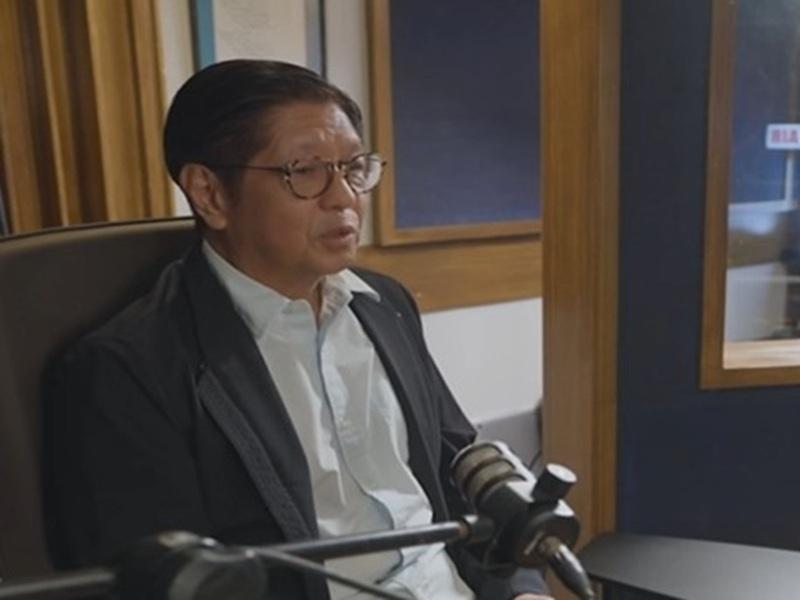
During the podcast of singer Gary Valenciano on Monday, Marcos was asked whether he is able to separate the criticism he receives from who he believes he is.
“In a sense, no, because I take my work personally. It’s important to me—I get happy when I get it right, I’m sad if I [don’t], and if people do something wrong you get angry because I take it personally,” Marcos said on "Unshaken with Gary V."
“I think if I don't take it personally, you’re not doing everything that you can. ‘Yung talagang lampas na, you know, you go the extra mile kasi it’s personal eh, it means something for you,” he added.
Marcos said it is normal to be affected emotionally, explaining that acknowledging public feedback shows he values criticism and as he remains driven to improve his performance in office.
“Masusugatan ka talaga (You will really be hurt) but you have to be willing to do that, otherwise, you are not doing enough. It has to be hard, if it’s not hard, you’re not doing enough — you’re not working hard enough, you’re not thinking about things enough, you don’t care enough. Because if you’re caring enough, it hurts if it doesn’t go right or if there’s a problem,” the President said.
“It has to be personal, but then there’s a three-minute rule that I have. So pag nagalit ka na (if you get angry), ‘Okay, it matters to me, so let’s find out how to fix it,” he added.
Marcos said he does not let his emotions drive his decisions when resolving issues, which is something that he hopes other people, more importantly his children, would learn from him.
“What I hope [my children] would inherit from me is the ability to be objective. I’ve always followed the advice ‘Don’t make any decisions if you’re too sad, too happy, too anything.’ Just never trust your first instinct… That’s the advice that I always give: ‘Think about it for three minutes more,’” the President said.
Back from exile
In 1986, Marcos’ family fled the Philippines and was exiled to Hawaii after his father’s dictatorship was overthrown by the people’s uprising during the EDSA People Power Revolution.
He recalled being warned against returning to the country, citing threats to their family’s security.
“I remember they were warning us, kept warning us, ‘Don’t try to go home because it’s the security [that] is the problem, people are going to come after you, nobody likes you anymore,’” Marcos said.
He shared that he can still remember well his arrival in the Philippines from Hawaii at the end of October 1991, being the first member of the Marcos family to arrive.
“I arrived at the airport, and there were thousands of people cheering us on. And I thought, ‘Okay, it’s not true what they’ve been telling us.’ That’s why I wanted to come home, I’m with Filipinos again. I'm back home and it feels natural,” Marcos said.
The President said that at that moment, he felt like “natural” again. He noted that while he knew his life wouldn't be easy, it felt much more familiar than living in a foreign country.
“The reaction of the people was certainly not what I expected,” Marcos said.
“But there were thousands of people, and they were enthusiastic upon my return. Talagang nagulat ako (I was really surprised). I didn't think that it would be like that,” he added. — BAP, GMA News
KioskNews shows a cleaned-up reading view extracted from the publisher’s page — the original always lives on their site, not ours.