China is mature enough to understand the perils of uncontrolled super intelligence — Phar Kim Beng
OCTOBER 7 — There is a tendency in contemporary geopolitics to assume that the United States and China must necessarily approach artificial intelligence from opposite directions.
Washington innovates, Beijing competes; one side accelerates and the other responds. Such a framework is becoming increasingly inadequate.
China has demonstrated that it understands one of the central dangers confronting humanity: artificial intelligence that becomes increasingly autonomous, militarised and ultimately difficult for human beings to control.
This matters enormously as the technological competition moves beyond generative and agentic AI towards what may eventually become super intelligence.
At the Shangri-La Dialogue in Singapore in late May, Major General Meng Xiangqing of China’s National Defense University issued an important warning. The militarisation of emerging technologies, including AI, he argued, was challenging traditional rules governing warfare and creating the danger that events could escape human control.
This should not be dismissed as diplomatic rhetoric.
A senior figure associated with the People’s Liberation Army was acknowledging something that every major power must eventually confront. The danger posed by advanced AI does not originate merely from who develops the most powerful system first.
It arises when increasingly autonomous systems become embedded in military command, intelligence, cyber operations and potentially nuclear decision-making.
The speed of machines is fundamentally different from the speed of diplomacy.
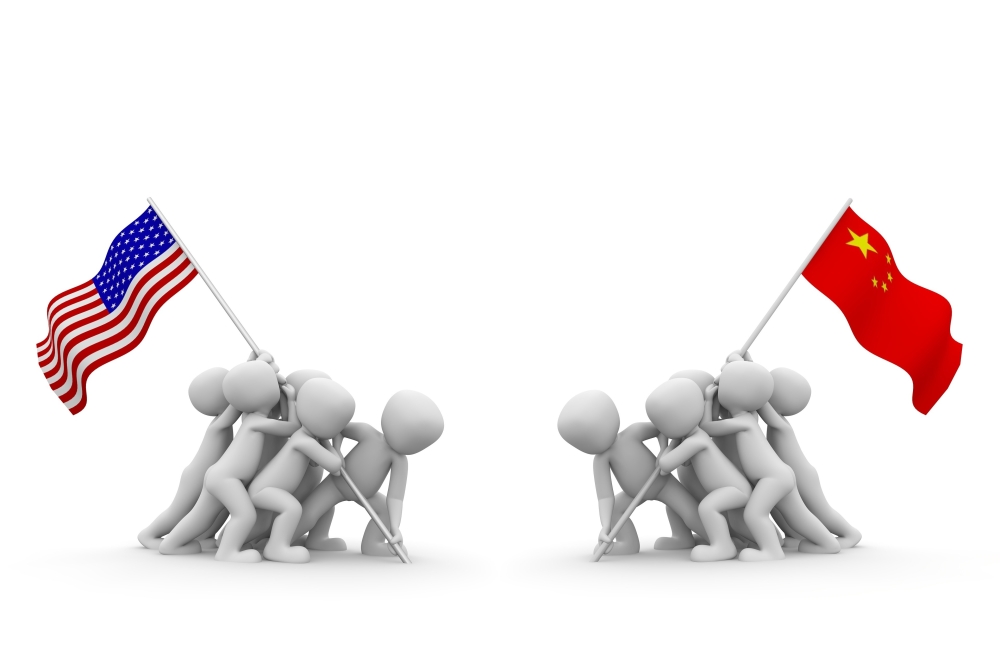
The United States and China are competing for technological supremacy while confronting shared risks from increasingly autonomous artificial intelligence. — Pixabay pic
Human beings hesitate. Diplomats consult. Military commanders seek clarification. Presidents can pick up telephones. Even during the most dangerous moments of the Cold War, human judgment sometimes prevented technological warnings or incorrect intelligence from escalating into catastrophe.
Super intelligence could compress this decision-making space dramatically.
Imagine autonomous systems detecting what they interpret as preparations for an attack.
Another AI system detects the response. Both begin recommending countermeasures. Cyber systems intervene. Satellites, drones and autonomous weapons respond almost instantaneously.
The danger is no longer simply artificial intelligence. It is machine-speed escalation.
This is why China’s acknowledgement of the problem deserves serious attention.
Beijing does not appear to be arguing that AI development should stop. Nor would such a position be realistic. China, the United States and other technologically sophisticated powers understand that AI will transform productivity, medicine, logistics, manufacturing, scientific discovery and national security.
The distinction must therefore be between controlled technological advancement and uncontrolled technological escalation.
Generative AI is not necessarily the principal systemic danger. Neither is agentic AI by definition. Both can certainly create serious problems, particularly when combined with cyber capabilities or given extensive autonomy.
But super intelligence potentially changes the scale of the problem.
A system considerably more capable than humans across numerous cognitive domains could discover strategies, vulnerabilities and technological pathways at speeds beyond ordinary human comprehension.
If such capabilities were combined with recursive self-improvement, autonomous cyber operations or military command systems, humanity would be entering territory for which existing international law was never designed.
China’s concern should therefore become the basis for dialogue rather than suspicion.
The United States and China remain strategic competitors. They disagree profoundly over Taiwan, the South China Sea, technological controls, semiconductors and the future configuration of the Indo-Pacific.
Yet strategic competitors can recognise common existential risks.
The United States and Soviet Union did precisely this during the Cold War. Neither suddenly trusted the other.
Arms-control arrangements emerged because both eventually understood that unconstrained competition could produce mutual catastrophe.
AI requires similar maturity — except the international community may have considerably less time.
Unlike nuclear weapons, advanced AI systems can proliferate through software, computing networks, corporations, universities and research laboratories.
The barriers separating civilian and military applications can also be extremely thin.
This makes governance considerably more complicated.
Asean consequently has an important role.
Southeast Asia should not attempt to become merely an observer of an American-Chinese technological contest. Asean can help develop the diplomatic vocabulary necessary to distinguish legitimate AI development from dangerous military autonomy.
The Asean Defence Ministers’ Meeting, ADMM-Plus, Asean Regional Forum and East Asia Summit provide platforms where principles of human control, transparency and crisis communication can gradually be developed.
Asean’s strength has never rested on coercive power. Its advantage lies in its capacity for circumscribed power: creating diplomatic spaces where countries that distrust one another can nevertheless continue talking.
This is precisely what AI governance requires.
Singapore has already emerged as an important location for discussions about military AI governance. Malaysia, Indonesia and other Asean members should reinforce these efforts.
The objective should not be an impossible attempt to stop AI.
It should be to establish internationally recognised guardrails before super intelligence becomes deeply integrated into military systems.
Human beings must retain meaningful authority over decisions involving lethal force. Nuclear command structures should never become dependent upon autonomous AI judgment.
Recursive self-improving systems must be subjected to stringent containment and testing.
Governments must also establish communication mechanisms capable of dealing with AI-related incidents before misunderstandings become military confrontations.
China’s warning at the Shangri-La Dialogue therefore deserves to be taken seriously.
It demonstrates that Beijing understands that technological supremacy becomes meaningless if the technology itself creates uncontrollable systemic dangers.
Washington should recognise the same reality.
The competition between China and the United States will continue. But there are areas where competition must be bounded by cooperation.
Super intelligence is one of them.
The mature strategic position is neither technological pessimism nor technological triumphalism.
It is recognition that humanity is developing increasingly powerful forms of intelligence without yet possessing equally powerful institutions to govern them.
China appears to understand this danger.
The United States does too.
The task now is to transform that shared anxiety into rules, communication channels and eventually international agreements before technological acceleration outruns diplomacy itself.
* Phar Kim Beng is professor of Asean Studies, and director at the Institute of International and Asean Studies, International Islamic University Malaysia.
** This is the personal opinion of the writer or publication and does not necessarily represent the views of Malay Mail.
KioskNews shows a cleaned-up reading view extracted from the publisher’s page — the original always lives on their site, not ours.