Life, death and Sharon Strzelecki: Magda Szubanski’s raw new memoir is full of tender truths
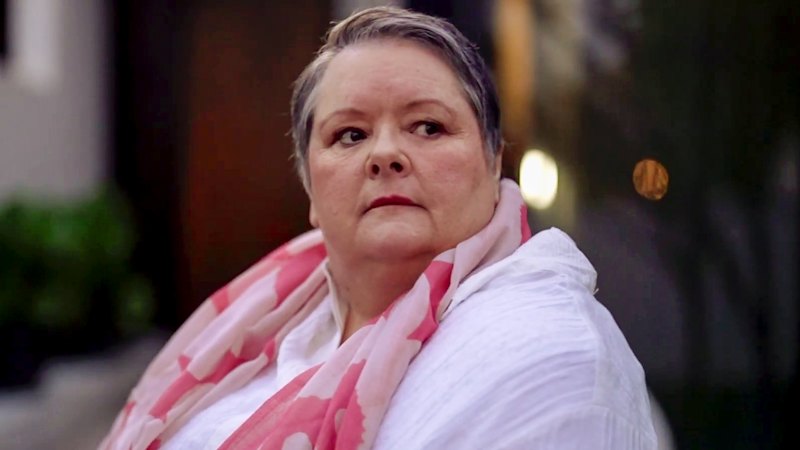
There’s one thing you need to know about Magda Szubanski’s latest memoir, and it’s this: she understands her place in the Australian consciousness. Sure, she tries to underplay it when she says that through all the characters she’s created over the years, “most especially Sharon Strzelecki – people feel they know me. More than that – they feel through me.”
One thousand yeses. Szubanski recognises she is our national mascot. Not just because of Sharon, the netball-playing loyal friend to Kim, of Kath and Kim, but because of her own personal bravery, charm and dead-set relatability. Our own efforts with our families succeed and fail. Our own efforts with our bodies succeed and fail. And like Magda, about half of us get cancer before 85. She knows us. She is us.
And in I Can’t Tell You But I Will, she gives us all the reasons why we, as a nation, have adored and adopted her. She’s not a wanker. She’s amazingly humble about her achievements. And she’s adorably self-deprecating. These are the characteristics we admire in any prominent Australian – and even among the rest of us – and in one package, they are irresistible.
It’s no surprise then that the geniuses who ran the marriage equality campaign recruited her to be its face. In return, she has recruited the successful campaign to be the underlying narrative which draws her memories, her recollections, her histories, all together. She admits she was sceptical about the slogans, resistant to being told to be a certain way once she’d come out on national television. But one thing is clear. She listens to people who know more than she does. Sure, she can be a tiny bit disingenuous when she writes: “What do I even bring to the fight, apart from fame? And what is fame, other than a giant popularity contest? It’s not real power.” Yeah nah, Magda. Your sheer recognisability gives you power.
Although not with her parents. Szubanski reveals the scarily complex relationship she had with her mother. The love. The loathing. The appalling way they spoke to each other.
I don’t think I’ve ever read a book where I sometimes felt like squinting my eyes or skipping to the next page to avoid reading the intense bits where these two women tear each other apart, stick each other together and do it all over again, the cruelty and the love hand-in-hand. Szubanski doesn’t shirk from exposing her own bad behaviour. And her dad doesn’t come out too well either. One parent was embarrassed by her weight, the other wanted her to know that the “gay gene” didn’t come from him.
“In the psychological war between my parents, I was collateral damage,” she writes. She has, as she confesses, a compulsion to air wounds. “I am the family whistleblower.”
I’d be surprised if many readers don’t look away from the hard bits. And zero surprise our beloved Sharon ended up in therapy, which she absolutely does not mind talking about. There’s a hilarious section where she comes into conflict with her therapist. She tells her that she plans to come out, and the therapist advises “you’re not fully cooked yet, Magda, If you come out before you’ve resolved your internalised homophobia, you’ll screw it up. You’ll do both yourself and the community a disservice. Because of the affection the public has for you, you can get this across in a way that no one else can.”
I won’t do spoilers but when Szubanski writes her therapist was trying to pull “lesbian rank” on her, I started giggling uncontrollably. These two end up in a whole “who is the most lesbian” session. Can it possibly have happened? I sincerely hope so.
The other surprise is the politics of Europe across all its holocausts and upheavals, through its protests and its passion. She explores these not only through her own personal Polish connection but also through Diego, the troubadour who accompanied Szubanski on a trip through Spain to find famous lesbians. Again, no spoilers but sweet, tender, sad.
And then we come to the Catholic Church. It seriously surprises me that any same-sex attracted people anywhere can possibly ever subscribe to an institution which rejects them so vehemently – but that’s one of the glorious things about Sharon, ah Magda:she still has the capacity to surprise us. Including in her description of dining with the brilliant Miriam Margolyes (sure, this is a celebrity memoir, but it still has a sense of humour and a sense of heart). Once again, no spoilers but if you want to be both scandalised and transfixed, get to the bit about lunch and then the cab ride home with the driver who’s got a view on marriage equality.
This book is life, death, the whole damn thing. And thank Magda for the jokes.
I Can’t Tell You But I Will, a memoir by Magda Szubanski (Text Publishing) is out now.
What else is happening in the book world?
- Pulitzer Prizewinner Barbara Kingsolver on her new novel and Appalachian pride
- He lasted 11 days in Trump’s White House. Now the Mooch has a warning
- This novel is the raw, moving reality check Australian fiction needs
- Blood, lies and cartels: Five new crime books to read this month
KioskNews shows a cleaned-up reading view extracted from the publisher’s page — the original always lives on their site, not ours.