Delhi's Winter Pollution Curbs Are Back. Do They Actually Work?
Every winter, Delhi's air worsens, restrictions follow, and the question returns: do they make any difference? Past episodes suggest that the strictest curbs have often been followed by a fall in pollution, though not every time.
On October 21, the Commission for Air Quality Management brought Stage I of the Graded Response Action Plan into force in Delhi and the National Capital Region. If pollution levels rise further, stricter restrictions may follow. The government has begun taking steps to control pollution, but the problem returns every year.
Do The Restrictions Help?
Past episodes show that Delhi's AQI has often fallen after Stage IV of the plan was imposed. On 17 January 2026, the AQI stood at 400. It dropped to 192 within a week. In November 2023, it fell from 454 to 218 over the same period.
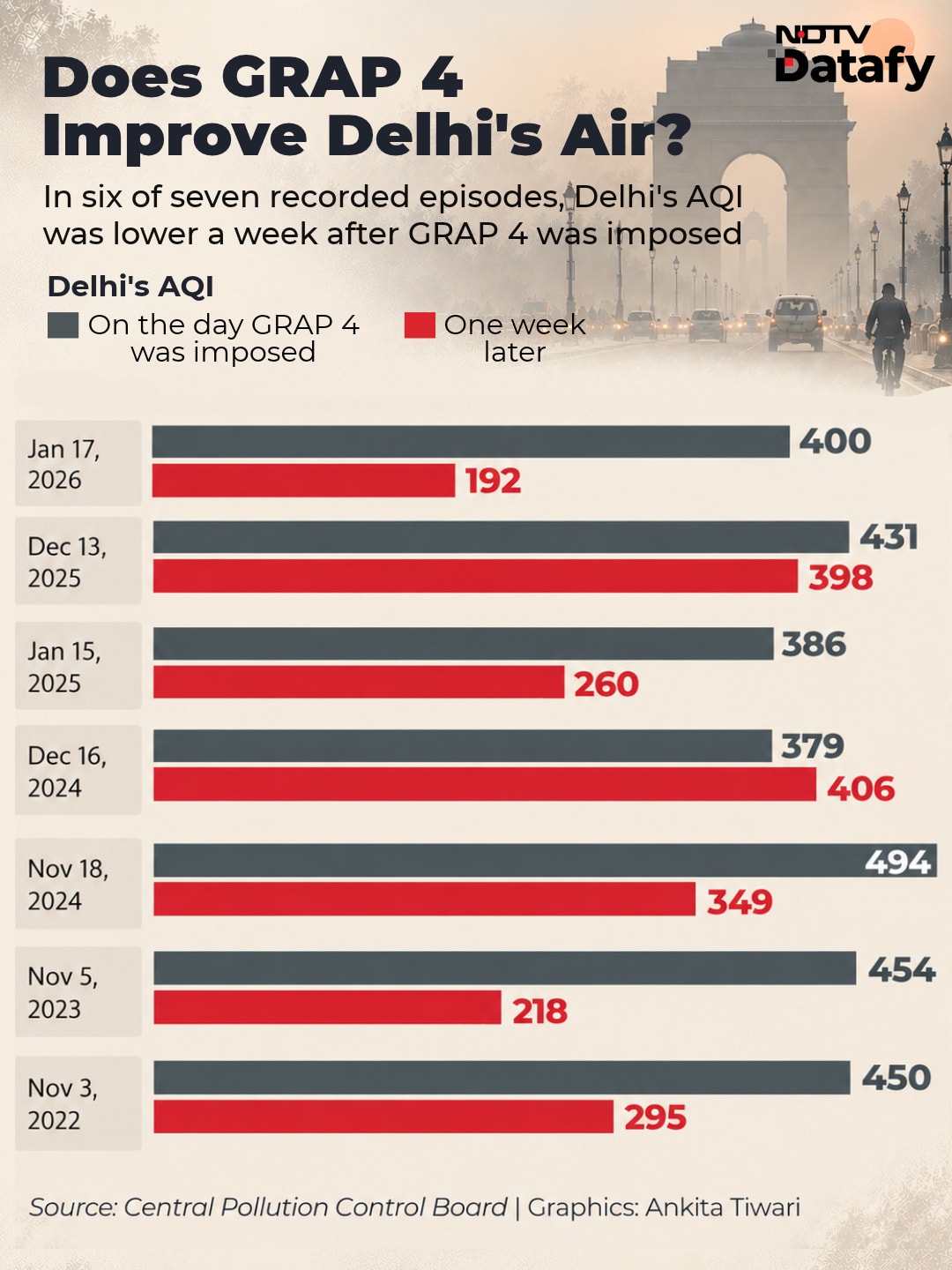
However, the restrictions alone may not be enough to control pollution, as several factors contribute to Delhi's poor air quality. In December 2024, for instance, the AQI rose from 379 to 406 in the week after Stage IV came into force.
Beyond Stubble Burning
Stubble burning often becomes the focus of the pollution debate every winter. But data from the Ministry of Earth Sciences' Decision Support System show that it is only one part of the problem.
Pollution from cities around Delhi was the biggest contributor to the city's PM2.5 pollution, at 37 per cent. The Capital will prohibit the entry of vehicles below Bharat Stage VI emission standards from 1 November to 31 January 2027.
READ | Farm Fires Are Rising: How Much Do They Add To Delhi's Pollution?
Vehicles were the second-biggest contributor at 20.8 per cent, while stubble burning contributed 10.9 per cent.
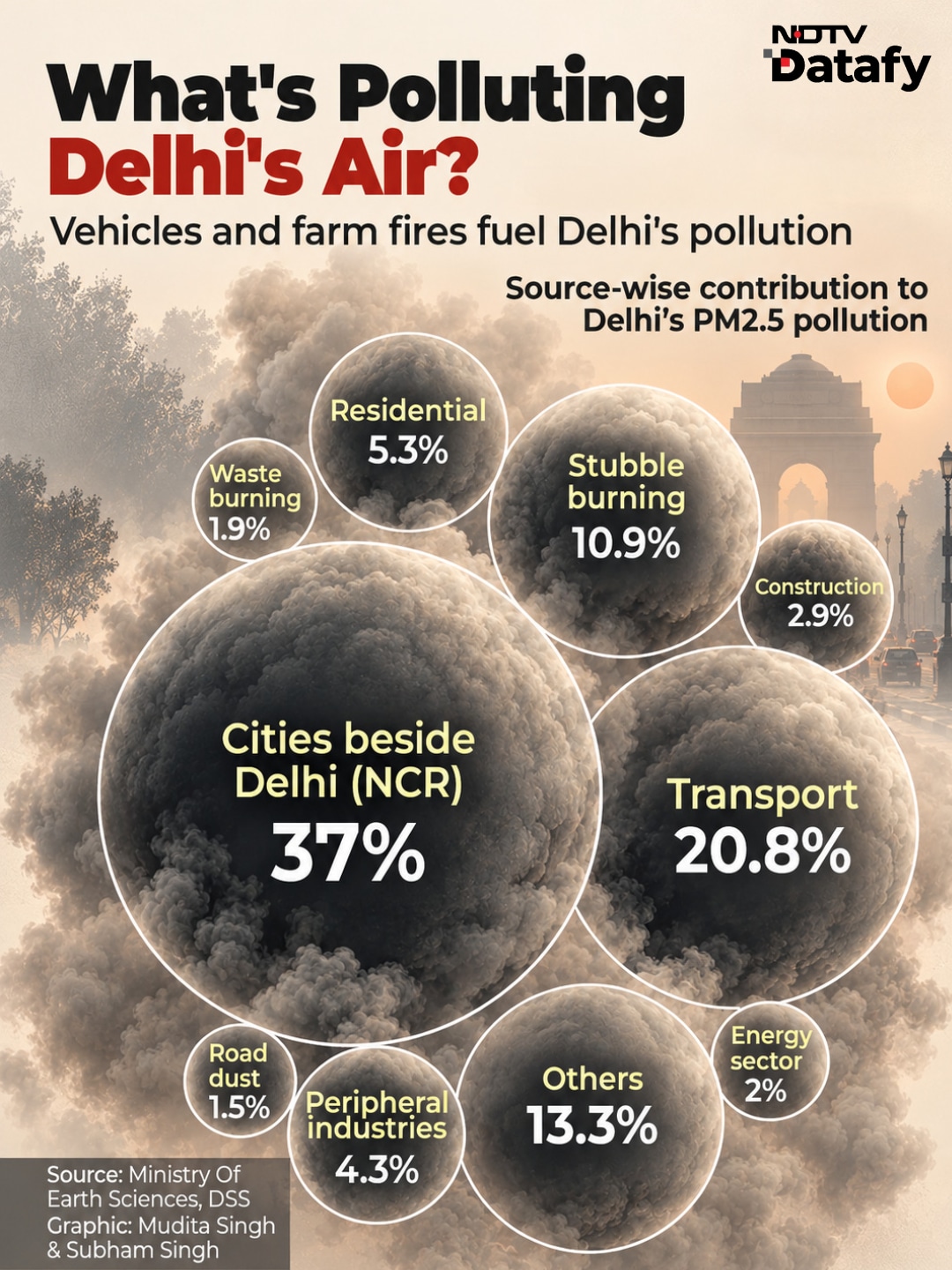
This means pollution from the wider region and from transport was a bigger contributor than farm fires. Stage IV appeared to work in most of the cases we analysed.
Of the seven episodes, five showed a significant fall in AQI. One showed only a small change: in December 2025, it declined by just 33 points, from 431 to 398. In one episode, the AQI increased.
READ | At 15 Degrees, Delhi Records October's Lowest Minimum Temperature In 3 Years
Why Stage IV May Work
Why did Stage IV work in most cases? One reason could be its restrictions on certain petrol and diesel vehicles and trucks. These restrictions can help limit vehicle emissions, which can in turn help control pollution.
KioskNews shows a cleaned-up reading view extracted from the publisher’s page — the original always lives on their site, not ours.